86.1% vs 38.8%: Plant Based Meat vs Chicken Protein Test
An Indian lab test found plant-based seekh kebabs scored 86.1% protein bioavailability against 38.8% for chicken. Here is what the plant based meat vs chicken protein result really means.
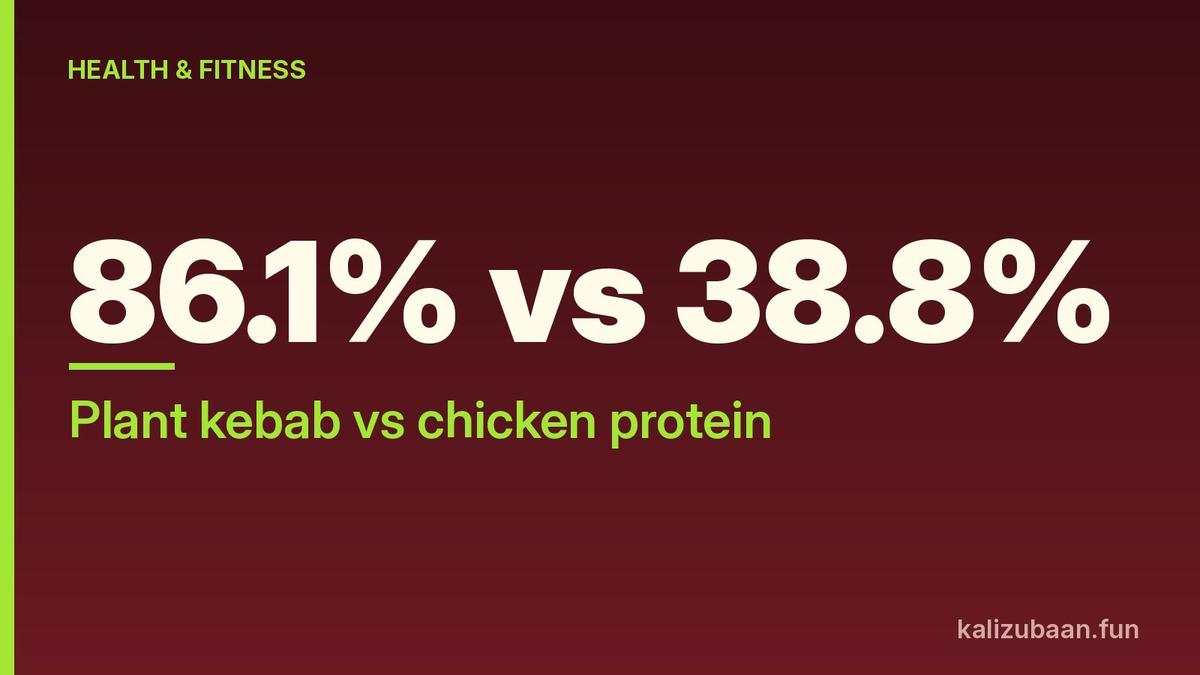
A plant-based seekh kebab scored 86.1% on protein bioavailability in a new Indian lab test. The chicken kebab it was compared with scored 38.8%.
That is the headline from a plant based meat vs chicken protein study by scientists at CSIR-IHBT in Palampur and the Good Food Institute (GFI) India, presented in Delhi on October 26. Before you swap your chicken tikka for soya nuggets, though, the full picture is more mixed than the headline.
Quick answer
- In the lab test, all five plant-based products had a higher share of absorbable protein than their chicken counterparts.
- But the chicken products held more total (crude) protein and released more amino acids during digestion.
- The researchers say this does not prove plant-based meat is healthier, only that it is nutritively comparable.
- The work is an in vitro (test-tube) report, not yet a journal paper, so treat it as an early signal.
What did the plant based meat vs chicken protein study find?
The study found that every plant-based product tested had a higher protein bioavailability percentage than the matching chicken product.
The plant-based kebabs scored 80.8% and 86.1% against 38.8% for chicken, the nugget scored 61.2% against 43.4%, and the patties came in at about 57% and 58% against 21.2% (The Hindu).
The team tested five cooked plant-based products: two burger patties, a nugget and two seekh kebabs.
"Bioavailability" here means protein in a form the body can actually use. So the question was not "how much protein is on the plate", but "how much of it gets through".
How do the numbers compare side by side?
Put side by side, the plant-based versions beat chicken in every pair, and the gap is biggest for the burger patties.
Here are the figures The Hindu reported from the press conference (The Hindu):
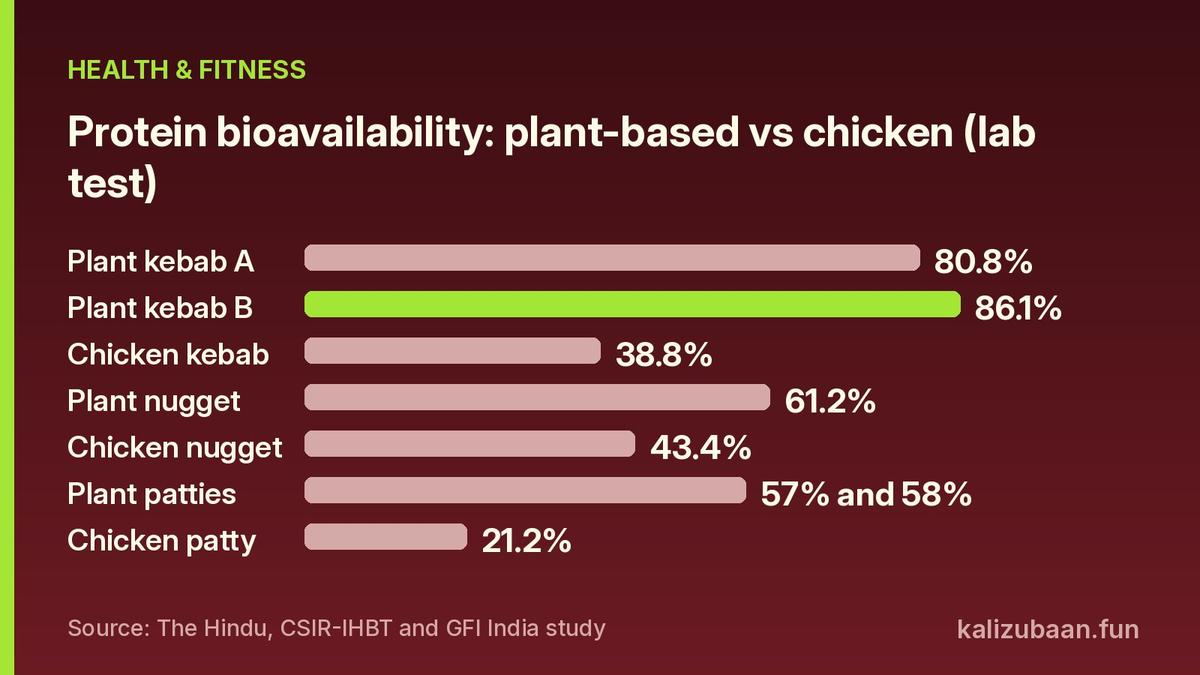
Source: The Hindu, CSIR-IHBT and GFI India study
What most guides miss: a higher percentage is not the same as more protein. The chicken products started with more crude protein, so a lower share of a bigger amount can still add up to a similar or larger total. The percentages tell you about efficiency, not about how much protein your plate delivers.
That is why the researchers chose their words carefully.
Does this mean plant-based meat is healthier than chicken?
No. The scientists behind the study say the results show plant-based meat is nutritively comparable, not healthier.
Dr. Padma Ishwarya, senior scientist at GFI India, told The Hindu that "healthier" is too broad a term and that further studies are needed for health claims (The Hindu).
There are two more catches.
First, the chicken products held more crude protein and released more amino acids, the building blocks of protein, during digestion.
Second, an earlier 2024 analysis of about 120 plant-based products in the Indian market found saturated fat and sodium levels were comparable to animal-derived products. In other words, a plant-based nugget is still a processed nugget.
On the plus side, plant-based products supply dietary fibre, which animal-derived products do not.
How was the test done?
The test used an in vitro method that copies human digestion in a lab, rather than feeding the food to people or animals.
Samples went through a two-minute salivary phase, then a stomach phase with digestive enzymes at pH 2 to 3, and then an intestinal phase, following the international INFOGEST protocol (The Hindu).
After that, an ultrafiltration membrane picked to mimic the pore size of the human intestine acted as a filter. Whatever passed through was counted as bioavailable, and only free amino acids were measured.
Each sample was adjusted to start with 40 milligrammes of protein, so every product was compared from the same starting point.
Animal studies are still the gold standard, Dr. Ishwarya said, but they are slow and need ethical clearances. The lab method is faster and easier to repeat. The team plans tests across laboratories next year so NABL-accredited labs can use the method.
What is plant-based meat actually made of?
Plant-based meat in India is mostly made from soya, with pea or wheat gluten also used, and shaped by extrusion.
Extrusion pushes the material through a die under heat and pressure to give it a meat-like bite, and Dr. Ishwarya said the products contain no synthetic chemicals beyond ingredients such as spices and texturisers (The Hindu).
She also drew a line between plant-based meat and plant-based foods in general. Crisps and cereals are plant-based foods. Plant-based meat is made specifically to copy animal meat.
What does this mean for your plate in India?
For most Indian readers, this study is a reason to stay curious about plant-based meat, not a reason to overhaul your diet.
If you are vegetarian and pick up a plant-based kebab now and then, this early data suggests a good share of its protein is usable (The Hindu). That is useful to know.
If you eat chicken, the study does not say you should switch. Chicken still carried more total protein in these tests.
A few practical checks before you buy:
- Read the label for sodium and saturated fat, since the 2024 market analysis found them on par with meat products.
- Treat plant-based meat as a processed food, the same way you would treat frozen chicken nuggets.
- Keep your everyday protein sources, like dal, paneer, curd and eggs, as the base of your diet.
- Wait for the full journal papers. The team says detailed manuscripts will follow and more products will be tested in the next phase.
Who should be careful?
Anyone with a health condition that limits salt, fat or protein should check with a doctor before adding processed plant-based meat to their diet.
Because the earlier market analysis found sodium levels comparable to animal-derived products, people watching their blood pressure should read labels closely (The Hindu). People with kidney disease, diabetes or soya allergies should ask a doctor or dietitian first.
FAQs
Is plant based meat protein better than chicken protein?
In this lab test, a higher share of the plant-based protein was absorbable. But chicken had more total protein and released more amino acids, so neither is simply "better".
Is plant-based meat healthy?
The researchers did not claim it is healthier. An earlier analysis found its saturated fat and sodium levels were similar to meat products, though it does add dietary fibre.
Who did this study?
Scientists from CSIR-IHBT, Palampur, and the Good Food Institute India. It is a report on GFI's website reviewed by two experts, and journal papers are expected later.
What is plant-based meat made from in India?
Mostly soya, with pea or wheat gluten also used. It is shaped by extrusion, using heat and pressure.
Expert review: pending.
This article is for information only and is not medical advice. Talk to a doctor before changing your diet or training.
Related reading
- 70% Under 41g Protein: Urban India's Plate Gap
- 62% Calories From Carbs: ICMR Plate Fix for India
- ₹2500 to ₹3500: Why Your Daily Whey Scoop Costs More
Sources
Tagged Topics
Keep reading


Thanks for reading Kali Zubaan
Explore more articles in Health & Fitness or return to the main publication feed.


