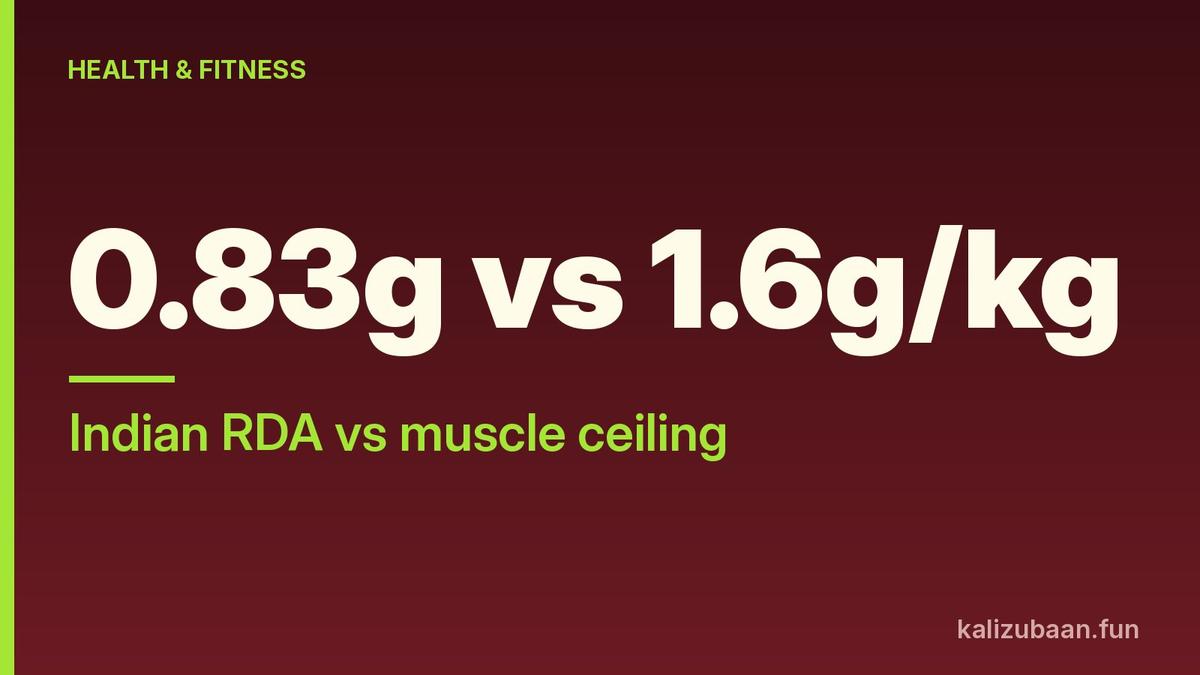
0.83g vs 1.6g per Kilo: High Protein Diet and Gut Health
A UK surgeon says too much protein with too little fibre can ferment in your colon. India's ICMR-NIN puts the adult protein RDA at 0.83g/kg. Here is what a high protein diet means for gut health.
Even an 80-kilo athlete needs only between 128 g and 176 g of protein a day, says UK surgeon Dr Karan Rajan, "not three whole chickens and a whey intravenous drip."
His bigger warning is about what happens to the extra. Eat too much protein with too little fibre, he says, and the leftovers end up feeding the wrong gut bacteria.
Quick answer
- Excess protein on a fibre-poor diet can spill into the colon, where bacteria ferment it, says Dr Karan Rajan.
- India's ICMR-NIN puts the protein RDA at 0.83g/kg body weight for adults.
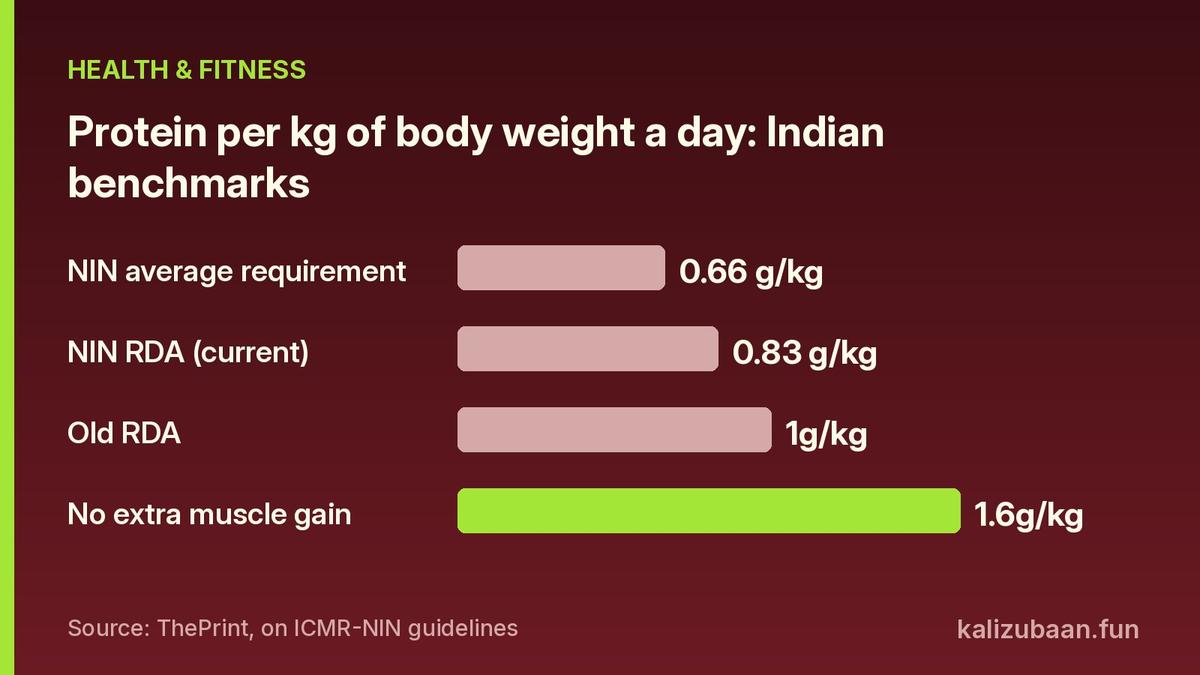
- NIN guidelines say intake above 1.6g/kg/day adds no further muscle gain from resistance training.
- The fix is pairing protein with fibre and eating varied sources like dal, curd, eggs and beans.
This article is for information only and is not medical advice.
What happens to your gut on a high protein diet?
On a protein-heavy, fibre-poor diet, more unabsorbed protein reaches the colon, where gut bacteria ferment it instead of fibre.
Dr Rajan explained that most protein is meant to be broken down and absorbed in the small intestine. When the diet is excessive in protein and low in fibre, leftovers spill into the colon and bacteria switch from fermenting fibre into short-chain fatty acids to "proteolytic or protein fermentation" (The Indian Express).
That fermentation makes byproducts such as ammonia, p-cresols, indoles, phenols and hydrogen sulfide. He said these are linked to a more inflammatory colon and can stress the gut barrier.
"And you get a bacterial shift too," he said, with more species like Bacteroides and Fusobacterium, which you ideally want in lower amounts.
He was clear on one point: protein is not the problem. Imbalance is.
How much protein do you actually need?
For most Indian adults, ICMR-NIN's recommended dietary allowance is 0.83g of protein per kg of body weight a day.
ThePrint reported that NIN's 2020 nutrient requirements cut the RDA from 1g/kg to 0.83g/kg, which meets the needs of 97.5 percent of the population; the estimated average requirement is 0.66 (ThePrint).
Source: ThePrint, on ICMR-NIN guidelines
Dr Rajeev Jayadevan, a Kerala-based medical researcher, told ThePrint that a 60-kg adult needs 50-80 g of protein a day, depending on activity.
Athletes need more. Dr Rajan said evidence-based targets for athletes sit between 1.6 and two grams per kilo per day.
What most guides miss: Dr Rajan's athlete range starts at 1.6g/kg, which is exactly the level above which NIN's guidelines say resistance training gains stop rising. So for most gym-goers, pushing toward the top of that range adds little muscle, but it does add more protein that may reach the colon if fibre is low.
What are the signs your gut is struggling with protein?
Persistent bloating, foul-smelling gas and a heavy feeling after meals are among the early signs, says a Bengaluru GI surgeon.
Dr Adithya V. Naragund of Cytecare Hospitals told The Indian Express that changes in bowel habits, such as constipation or irregular stools, are also common when fibre is low (The Indian Express).
Some people also notice:
- Abdominal discomfort
- Reduced appetite
- A feeling of incomplete digestion
- Worse bad breath, from protein fermentation byproducts
These symptoms can have many causes. If they persist, see a doctor rather than guessing.
Are protein powders a problem?
ICMR-NIN's dietary guidelines advise avoiding protein supplements, saying most people, including athletes, can get enough protein from food.
The guidelines warn that prolonged intake of large amounts of protein powders or high protein concentrate has been associated with bone mineral loss and kidney damage (ThePrint).
Quality is another worry. ThePrint cited an analysis of 36 popular protein supplements sold in India that found 70 percent were mislabeled, 14 percent of brands contained toxins and 8 percent had pesticide residue.
NIN also notes some products contain added sugars, non-caloric sweeteners and artificial flavouring, and are not advisable on a regular basis.
Some groups may still need supplements, such as older adults with muscle loss or people recovering from surgery. Experts quoted by ThePrint said this should happen only under medical supervision.
How do you eat high protein without hurting your gut?
Pair protein with fibre at every meal and spread it across the day instead of loading it into one sitting.
Dr Naragund suggests a plate where half is fibre-rich vegetables and whole grains, one quarter is protein, and the rest is healthy fats (The Indian Express).
On an Indian plate, that is easy to build:
- Protein: dal, rajma, chana, eggs, paneer, curd, tofu or lean meat.
- Fibre: sabzi, salad, whole grains and pulses.
- Gut support: curd or buttermilk, which Dr Naragund lists as helpful fermented foods.
Dr Rajan's advice is variety. Do not just rotate whey, chicken and beef. Use yoghurt, eggs, beans, tofu and lentils, and foods like edamame that bring protein and fibre together.
NIN guidelines add that a combination of cereals, millets and pulses provides most amino acids.
Who should be careful with a high protein diet?
Anyone with kidney problems or an ongoing health condition should get advice from a doctor or dietitian before raising protein sharply.
ICMR-NIN links prolonged high intake of protein concentrates with kidney damage (ThePrint). Experts quoted in the same report said a qualified dietitian, not a gym trainer, should assess whether you need supplements.
FAQs
Can too much protein cause bloating and gas?
It can. Dr Adithya V. Naragund says persistent bloating and foul-smelling gas are early signs that protein intake may be too high for your gut, especially when fibre is low.
How much protein should an Indian adult eat daily?
ICMR-NIN's RDA is 0.83g per kg of body weight. Dr Rajeev Jayadevan says a 60-kg adult needs 50-80 g a day, depending on activity.
Is a high protein diet bad for gut health?
Not by itself. Dr Karan Rajan says the problem is excess protein on a fibre-poor diet, so pair protein with fibre and vary your sources.
Do I need protein powder to build muscle?
ICMR-NIN says most athletes can get enough protein from food alone, and that intake above 1.6g/kg/day adds no further muscle gain from resistance training.
This article is for information only and is not medical advice. Talk to a doctor before changing your diet or training.
Related reading
- 70% Under 41g Protein: Urban India's Plate Gap
- 86.1% vs 38.8%: Plant Based Meat vs Chicken Protein Test
- 2 Tiny Proteins: Why the Mediterranean Diet Helps Your Heart
Sources
Tagged Topics
Keep reading
Thanks for reading Kali Zubaan
Explore more articles in Health & Fitness or return to the main publication feed.