4.7 kg vs 4.1 kg Fat: Is Weight Loss and Fat Loss Different?
Yes. Weight loss is anything that leaves the scale, including water, glycogen and muscle. Fat loss is only fat mass. In one study, women who lifted weights lost less weight but more fat.
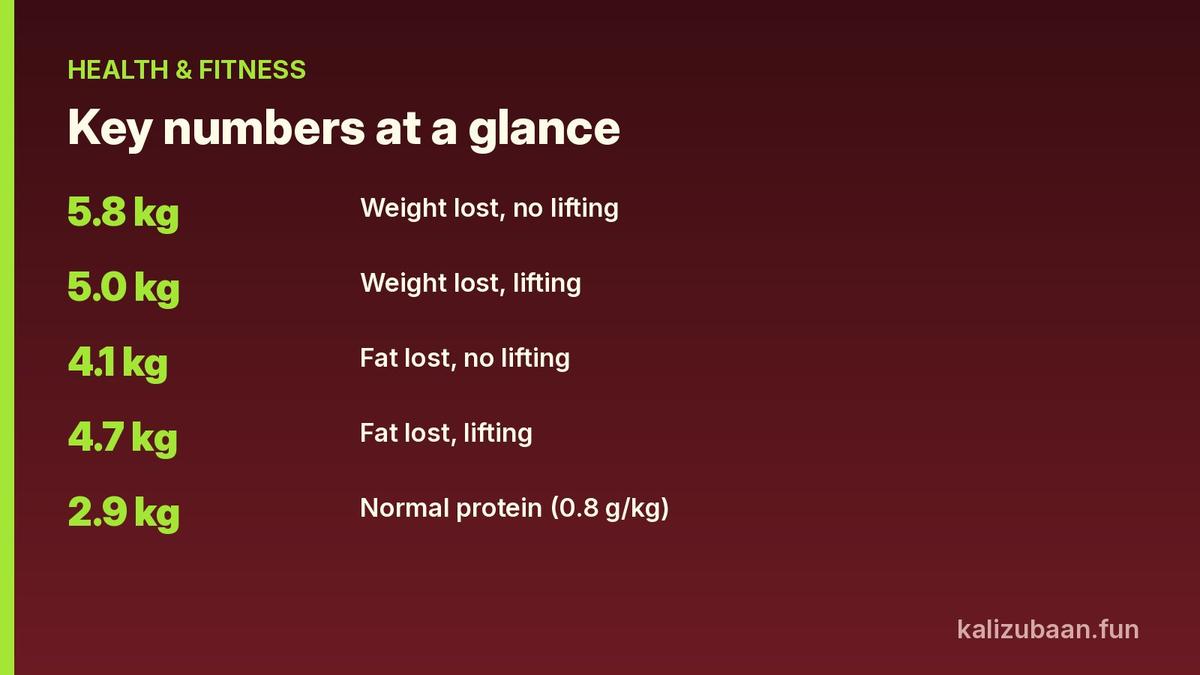
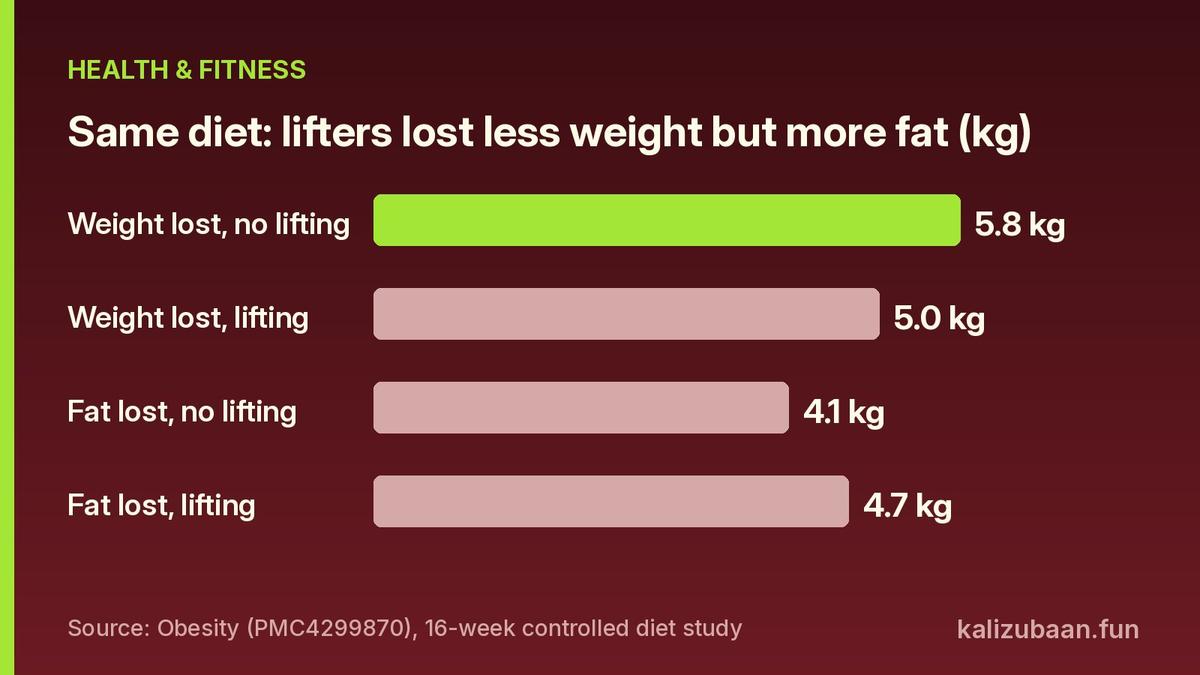
Two groups of overweight older women ate the same diet, 500 kcal a day below their needs. One group also lifted weights 3 days a week. The lifters lost less on the scale, 5.0 kg against 5.8 kg, yet they lost more fat, 4.7 kg against 4.1 kg.
That one result answers the question most people type into Google. The scale and your body fat are not the same thing, and chasing the wrong number can cost you muscle.
Quick answer
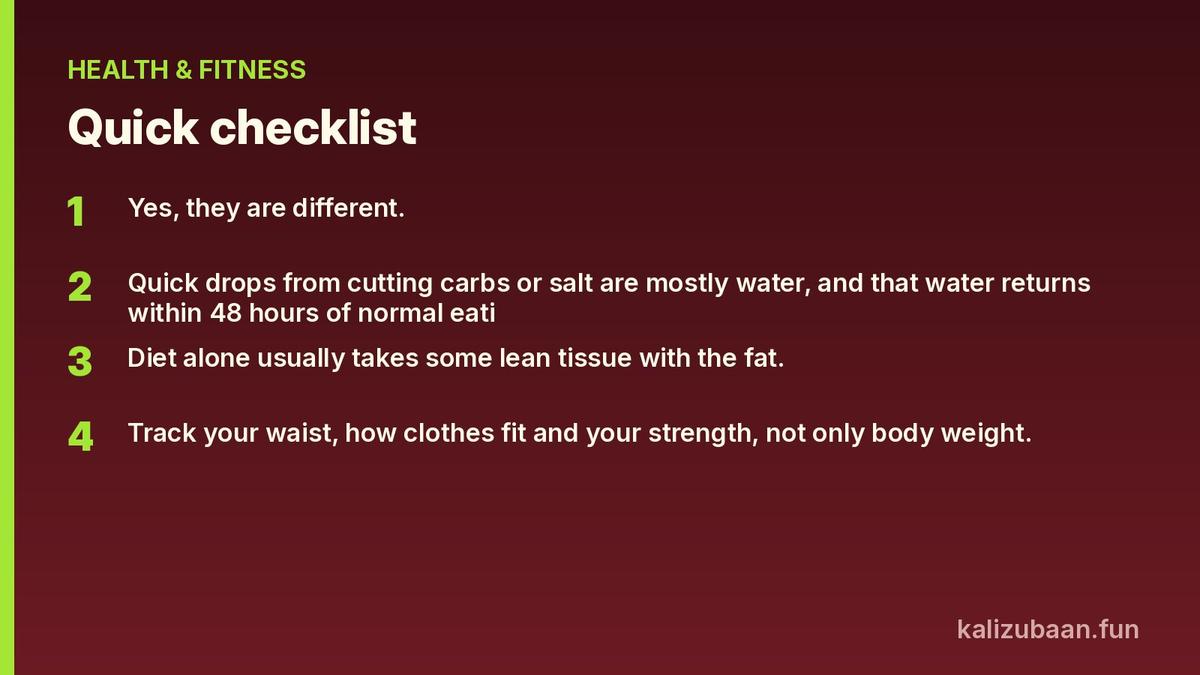
- Yes, they are different. Weight loss is any drop on the scale: fat, water, glycogen, muscle and even bone. Fat loss means losing fat mass only.
- Quick drops from cutting carbs or salt are mostly water, and that water returns within 48 hours of normal eating, says a nutrition coach quoted by The Indian Express.
- Diet alone usually takes some lean tissue with the fat. Strength training and higher protein reduced that lean loss in controlled studies.
- Track your waist, how clothes fit and your strength, not only body weight.
This article is for information only and is not medical advice. Talk to a doctor before changing your diet or training, especially if you have diabetes or another condition.
Is weight loss and fat loss different?
Yes: weight loss is any fall in total body weight, while fat loss is a fall in fat mass alone, and the two can move very differently.
Certified nutrition coach Varun Rattan told The Indian Express that weight loss can include muscle, water and even bone, while fat loss refers only to fat mass. Nutritionist Nancy Dehra put it more simply in the same piece: fat loss shows in the mirror and in progress pictures, and may or may not show on the scale.
Most people who say "I want to lose weight" actually want less body fat. Doctor Shikha Sharma made the same point to BBC News Hindi: people ask for weight loss but really want to shed extra fat and look fit. Her line, roughly translated, is that the world wants fat loss but does weight loss.
The difference matters because muscle is not dead weight. It helps you move, keeps you strong as you age and soaks up blood sugar. Losing it to see a smaller number is a bad trade.
What does the bathroom scale actually measure?
The scale measures everything you are made of at once: fat, muscle, organs, bone, water, glycogen and the food in your gut.
Body composition science splits the body into compartments that can include fat, bone, water and muscle, and a standard scale cannot tell them apart (Wikipedia: Body composition). Researchers use tools like DEXA scans, underwater weighing or isotope tests for total body water to separate them.
Everything that is not fat gets lumped together as fat-free mass. A review in Obesity Reviews describes fat-free mass as the sum of glycogen, protein, water and associated minerals. It also notes that glycogen losses are rapid once a low-calorie diet starts, and because glycogen and protein hold water, the water goes with them.
That explains the classic first-week "miracle". You cut carbs, glycogen drops, water follows, and the scale falls fast. Very little of that early drop is fat.
Home body-fat scales try to estimate fat using bioelectrical impedance. Wikipedia notes that this method is highly sensitive to hydration and water intake, so a glass of water or a salty dinner can shift the reading. Treat those numbers as a rough trend, not a lab result.
How much of the weight you lose is actually fat?
Roughly three-fourths fat and one-fourth fat-free mass is the popular rule of thumb for dieting alone, but research says the real split changes with your training, protein, sex and starting body fat.
The "Quarter FFM Rule" traces back to a 1984 paper and says about one-fourth of weight lost on a diet is fat-free mass. The authors of the Obesity Reviews analysis concluded the rule is "at best an approximation" and that the share of lean tissue lost depends on energy intake, diet composition, sex, baseline fat, activity and other factors.
Exercise is the biggest factor you control. In a 16-week controlled study published in Obesity, eight women did resistance training 3 days a week and eight stayed sedentary, on the same 500 kcal/day deficit.
Source: Obesity (PMC4299870), 16-week controlled diet study
The sedentary group's fat-free mass fell by 1.6 kg, which the authors calculated as 28% of their weight loss. In the lifting group, fat-free mass barely moved, down just 0.3 kg.
What most guides miss: by the scale, the sedentary group "won" by 0.8 kg. By fat, the lifters won by 0.6 kg, and nearly all of their weight loss was fat. If those women had judged progress by body weight alone, the group doing the harder, better thing would have looked like it was failing.
One honest caveat: the study authors found that the sedentary group's fat-free loss appeared to be mostly body water rather than protein. Still, keeping that lean compartment stable is exactly what you want while the fat comes off.
Does eating more protein protect muscle while you diet?
Yes, in controlled trials a higher-protein diet cut lean mass loss during dieting, even though it did not change how much fat people lost.
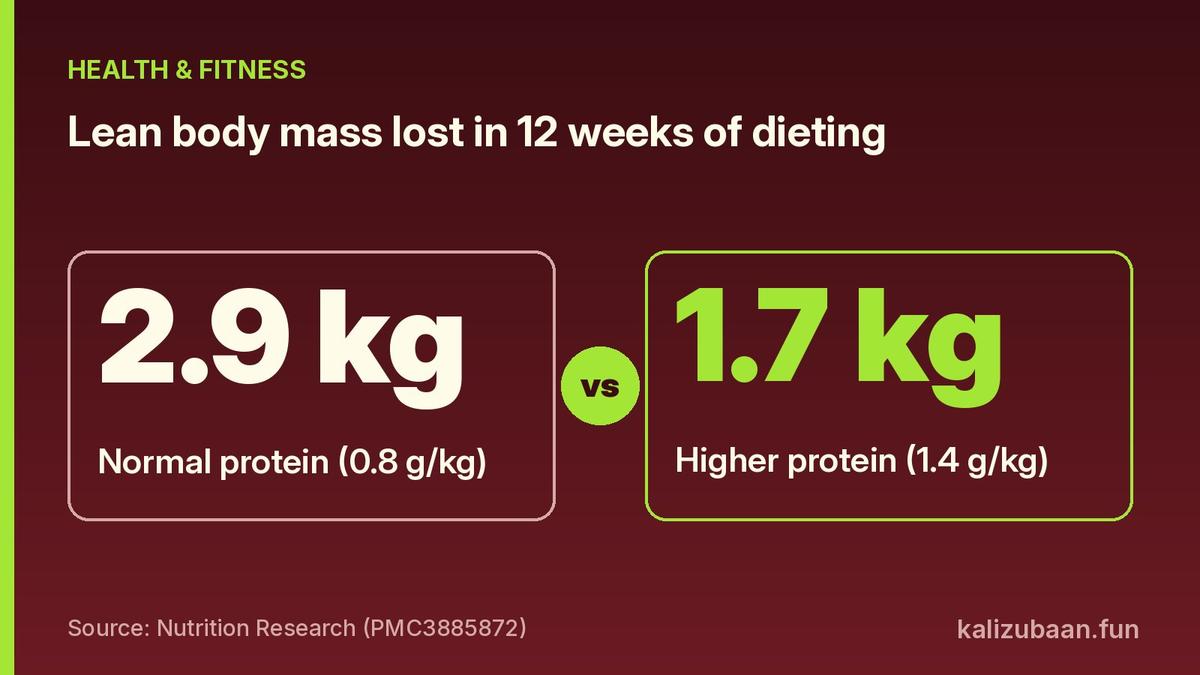
Researchers in Nutrition Research put 43 men and 45 women with overweight or obesity on a diet 750 kcal a day below their needs for 12 weeks. Half ate 0.8 g of protein per kg of body weight a day, the RDA level, and half ate 1.4 g per kg.
Source: Nutrition Research (PMC3885872)
Everyone lost weight, lean mass and fat. But the normal-protein group lost more lean body mass than the higher-protein group, 2.9 kg against 1.7 kg. Arm and leg lean mass, which is mostly muscle, made up 65% of the total lean mass lost.
The same paper notes that a moderate 500-750 kcal/day deficit with more dietary protein is a commonly recommended approach, partly because it helps preserve lean body mass. If you want a deeper look at protein on an Indian plate, see our guide on whether food or whey should come first.
Why do crash diets lose muscle instead of fat?
Very large calorie cuts make the body break down muscle for energy alongside fat, and they shed water that comes straight back.
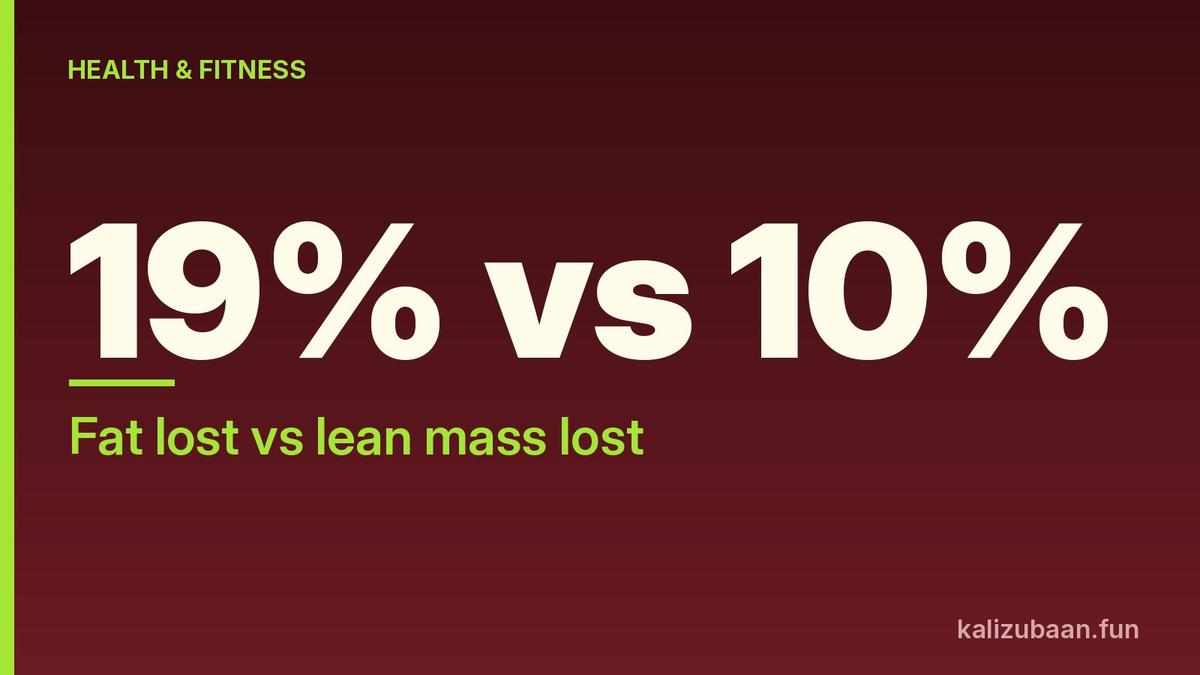
Dietitians quoted by India Today say that when weight comes off too fast through crash diets or extreme calorie cuts, nearly 40% of the loss can come from muscle. That is especially risky for people with diabetes, because muscle helps the body pull glucose out of the blood.
Rattan warned in The Indian Express that eating below your basal metabolic rate for long periods can push the body into a "power saving mode", cause lethargy and potentially cost more muscle than fat. Drastic carb cuts, salt cuts or diuretics mostly remove water, he said, not fat.
Weight-loss drugs raise the same question. Our earlier piece on lean mass loss and Ozempic covers why muscle matters there too.
How do you lose fat and not muscle?
Eat in a moderate calorie deficit, get enough protein, lift weights a few times a week and judge progress by your waist and strength, not only the scale.
Here is what the sources above agree on:
- Keep the deficit moderate. The Nutrition Research paper describes 500-750 kcal/day as moderate. Avoid crash diets and long stretches below your BMR.
- Raise protein. In the trial above, 1.4 g per kg protected more lean mass than 0.8 g per kg.
- Lift something. Resistance training 3 days a week kept fat-free mass almost steady in the 16-week study.
- Do not drop carbs completely. Dehra told The Indian Express that carbs help you stick to the plan for longer. Choose baked over fried food, and use soups and salads to stay full.
- Sleep and stay hydrated. India Today's experts list portion control, balanced meals, hydration and good sleep as part of healthy fat loss.
For a realistic weekly pace, see how fast you can lose weight without a fad diet.
How can you tell if you are losing fat, not just weight?
Your waist, your clothes and your strength tell you more than the scale: if your waist shrinks and your lifts hold steady while weight drops slowly, you are mostly losing fat.
Doctor Shikha Sharma told BBC News Hindi that fat is light but takes up a lot of space, so she recommends an inch tape over a weighing machine. When weight stays the same but clothes get looser, she said, that can be a sign of fat loss.
India Today's experts give the same advice for people with diabetes: celebrate inches lost, not just kilos dropped, and watch fasting glucose and energy levels too.
A simple weekly check:
- Measure your waist at the same spot, same time, before breakfast.
- Take a photo in the same light.
- Note whether your strength is going up, flat or down.
- Weigh yourself, but look at the weekly average, not one day.
Belly fat matters more than the number on the scale for health risk. Our post on abdominal obesity and why the same BMI is not the same risk explains why.
FAQs
Is weight loss and fat loss the same?
No. Weight loss is any drop in body weight, including water, glycogen and muscle. Fat loss is a drop in fat mass only. They often happen together, but not always in equal amounts.
Why did I lose weight quickly in the first week of my diet?
Mostly water and glycogen. The Obesity Reviews analysis notes that glycogen losses are rapid at the start of a low-calorie diet, and glycogen holds water. Water lost by cutting carbs or salt can return within 48 hours of normal eating.
Can you lose fat without losing weight?
Yes, it can happen if you gain or keep muscle while losing fat, so the scale barely moves. Looser clothes and a smaller waist are signs this is happening.
How much protein helps protect muscle while dieting?
In one 12-week trial, dieters eating 1.4 g of protein per kg a day lost 1.7 kg of lean mass, against 2.9 kg for those eating 0.8 g per kg. Ask a doctor or dietitian what suits you, especially if you have kidney disease.
Is cardio or weight training better for fat loss?
Both help, but weight training is what protected lean mass in the study above. India Today's experts suggest resistance training to keep muscle plus moderate cardio.
Expert review: pending.
This article is for information only and is not medical advice. Talk to a doctor before changing your diet or training.
Related reading
- 0.5 to 1kg a Week: How to Weight Loss Fast Without a Fad Diet
- 10% Lean Mass Lost: Ram Kapoor's Ozempic Weight Loss Warning
- 39.5% Abdominal Obesity: Why Same BMI Is Not Same Risk
Sources
- Obesity: Resistance Training Preserves Fat-free Mass Without Impacting Changes in Protein Metabolism After Weight Loss in Older Women
- Nutrition Research: Regional, but not total, body composition changes in overweight and obese adults consuming a higher-protein, energy-restricted diet are gender specific
- Obesity Reviews: Weight Loss Composition is One-Fourth Fat-Free Mass, A Critical Review and Critique of This Widely Cited Rule
- The Indian Express: Weight loss vs fat loss, understanding the difference
- India Today: Weight loss vs. fat loss, the key difference every diabetic should know
- BBC News Hindi: Weight loss or fat loss, is it possible eating roti and rice?
- Wikipedia: Body composition
Tagged Topics
Keep reading
Thanks for reading Kali Zubaan
Explore more articles in Health & Fitness or return to the main publication feed.