10% Lean Mass Lost: Ram Kapoor's Ozempic Weight Loss Warning
Ram Kapoor says Ozempic without workouts is trouble. Trial data backs him: about 19% fat lost, but lean mass fell 10% too. Here is what that means for any weight loss diet plan.
"Ozempic without workout matlab marega tu." That is actor Ram Kapoor's blunt take on weight loss drugs, and the numbers behind it are surprisingly close to his point.
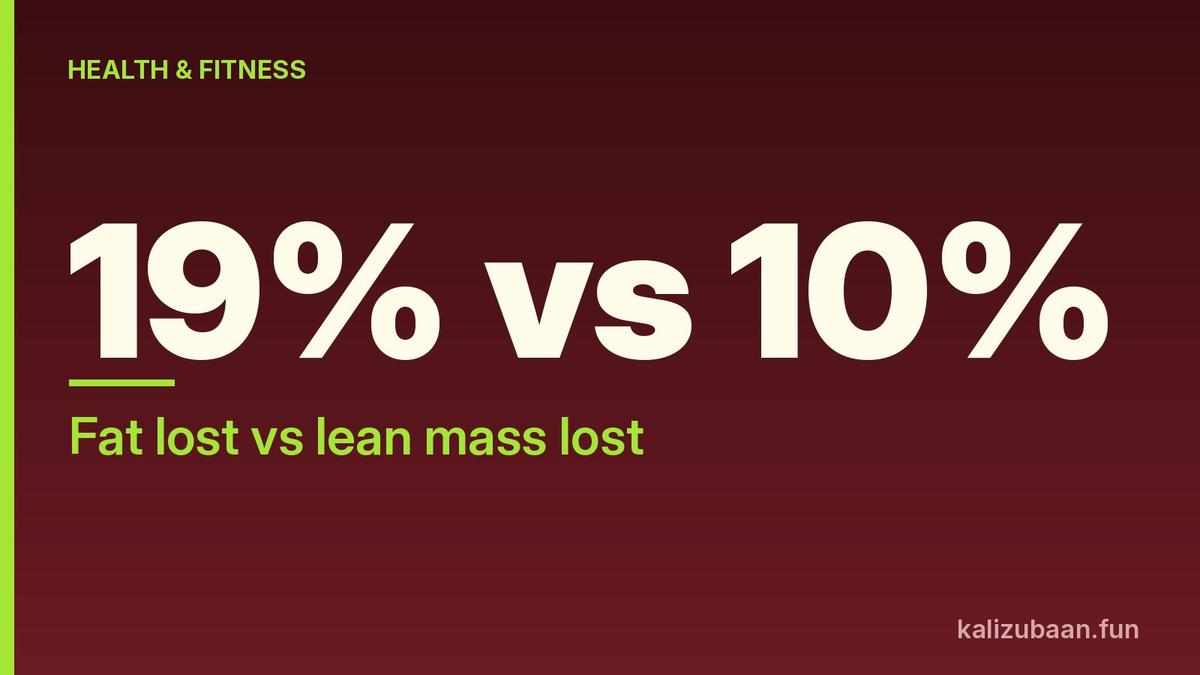
In one big semaglutide study, people lost about 19% of their fat mass. But their lean body mass also fell by about 10%. Weight loss on the scale is not the same as getting healthier.
Quick answer
- Ram Kapoor is not against Ozempic. He says take what your doctor advises, but do not skip workouts.
- In the STEP 1 body-scan substudy, semaglutide was linked to roughly 19% less fat mass and 10% less lean body mass.
- People who stopped semaglutide in the STEP 4 trial regained about 6.9% of their body weight over 48 weeks.
- Doctors quoted by Indian Express suggest strength training two to three times a week, plus enough protein.
What Ram Kapoor actually said
In an interview with Mashable India, the actor was asked about his physique. He said his body comes from working out, while he called his wife Gautami's physique god gifted.
When the talk moved to people being judged for taking Ozempic, he was relaxed about it. Anyone who wants to take it should take it, he said. His real worry was people thinking a weight loss injection replaces exercise.
"Ozempic se sirf patle hote ho, muscle loss hota hai," he said. In plain English: Ozempic only makes you thinner, and you lose muscle.
He added that you should follow your doctor, whether that means Ozempic or Mounjaro. But there is no shortcut to working out.
What is Ozempic, in simple words
Ozempic is a brand name for semaglutide. It is a GLP-1 medicine prescribed for type 2 diabetes, and the same drug is also sold under names like Wegovy.
It works partly on appetite. Semaglutide acts on brain signals that make you feel full, so people tend to eat less.
The most common side effects are nausea, diarrhea, vomiting, constipation and abdominal pain. These are usually mild to moderate and tend to peak in the first 8-to-12-week phase when the dose is being increased.
The weight loss itself is real. In one major trial, body weight fell 14.9% at week 68 with semaglutide, compared with 2.4% on placebo. Those trials ran at 536 sites in 33 countries, including India.
The catch: fat and muscle both go
Dr Rajiv Kovil, a diabetes and obesity specialist at Zandra Healthcare, told Indian Express that Ozempic is "not a magic bullet". Someone can lose a lot of weight without exercise, but the question is what happens to their muscle, strength and long-term metabolic health.
The STEP 1 DEXA substudy shows why. DEXA is a body scan that splits your weight into fat and lean tissue.
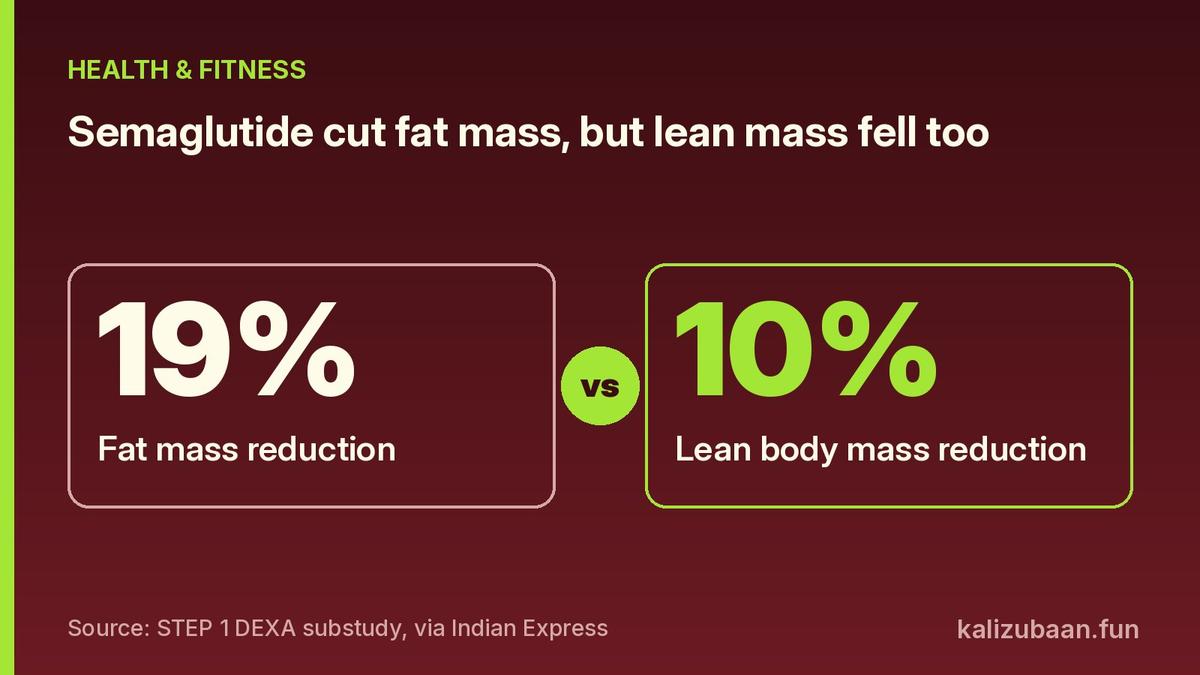
Source: STEP 1 DEXA substudy, via Indian Express
One honest caveat matters here. Lean body mass includes more than skeletal muscle, so the 10% figure is not a direct measure of muscle loss.
Still, Dr Kovil says some muscle loss is expected with big weight reduction. That is exactly why resistance training and enough protein matter more, not less, on these drugs.
Why losing muscle is a problem
Dr Aparna Govil Bhasker, a bariatric surgeon in Mumbai, explained that less muscle can hurt your strength and body composition. It can also lower the energy your body burns, which makes keeping the weight off harder.
Low muscle is a known health risk in general. Loss of lean body mass is linked with weaker immunity and poor wound healing. Muscle weakness raises the risk of falls, fractures and disability.
Exercise is the main tool against muscle loss. Lack of exercise is a significant risk factor, and exercise can dramatically slow the rate of muscle loss.
What happens when you stop the drug
Weight regain is the other worry. In the STEP 4 trial, people who stopped semaglutide regained about 6.9% of their body weight over the next 48 weeks. That happened even though they kept getting lifestyle advice.
In another follow-up, after 120 weeks, patients kept only about a third of their original loss, 5.6% out of the original 17.3%.
"This reinforces why medication must be accompanied by sustainable behavioural changes," Dr Kovil said.
The good news: muscle function can hold up
Losing lean mass does not automatically mean losing strength. The SEMALEAN study found that fat mass fell by about 18% over 12 months. Lean mass dropped at first and then stabilised.
Even better, handgrip strength improved by 4.5 kg in that study. So with the right habits, people on these drugs can still get stronger.
How to protect muscle on any weight loss diet plan
These steps come from what the doctors in the Indian Express report recommend. They apply whether you use medicine or not.
- Lift something. Strength training at least two to three times a week. Bodyweight squats, push-ups and resistance bands count when you are starting out.
- Keep walking. Dr Kovil also suggests walking and aerobic exercise on top of strength work.
- Eat enough protein. Dr Bhasker recommends pairing exercise with a balanced, protein-rich diet. On an Indian plate, that can mean dal, paneer, curd, eggs or chana at most meals.
- Get nutrition counselling. A dietitian can build a weight loss diet plan that fits your food habits and your medicine.
- Do not self-prescribe. Weight loss drugs need a doctor's prescription and follow-up.
Who should be extra careful
Anyone with diabetes, kidney disease, a thyroid history, or who is pregnant or planning a pregnancy should only use these medicines under close medical supervision. The US label for semaglutide carries a boxed warning about thyroid C-cell tumours, based on rodent studies.
If you already have low muscle or are older, ask your doctor about a strength plan before you start.
FAQs
Is Ram Kapoor against Ozempic? No. He said anyone who wants it can take it, as long as they follow their doctor and keep working out.
Does Ozempic cause muscle loss? In the STEP 1 substudy, lean body mass fell about 10%. Lean mass includes more than muscle, so this is not a pure muscle number, but doctors say some muscle loss is expected with big weight loss.
Will I regain weight if I stop? In the STEP 4 trial, people who stopped regained about 6.9% of their body weight over 48 weeks.
How often should I strength train on a weight loss drug? Dr Rajiv Kovil suggests at least two to three times a week, along with walking and good protein intake.
This article is for information only and is not medical advice. Talk to a doctor before changing your diet or training.
Sources
Tagged Topics
Keep reading

Thanks for reading Kali Zubaan
Explore more articles in Health & Fitness or return to the main publication feed.


