5g vs 30–35g: Protein Oats for Weight Loss Breakfast
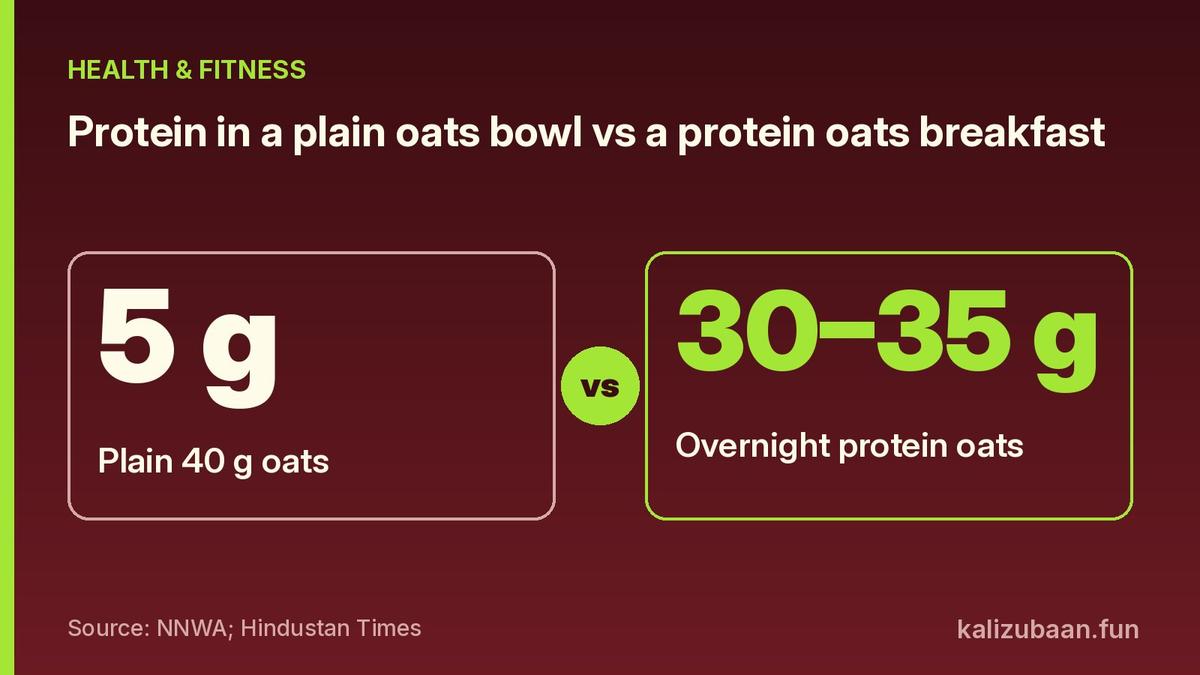
A typical 40 g bowl of plain oats has about 5 g of protein. Protein oats for weight loss work when you add milk, curd or yoghurt, which is how one overnight bowl reaches 30 to 35 grams.
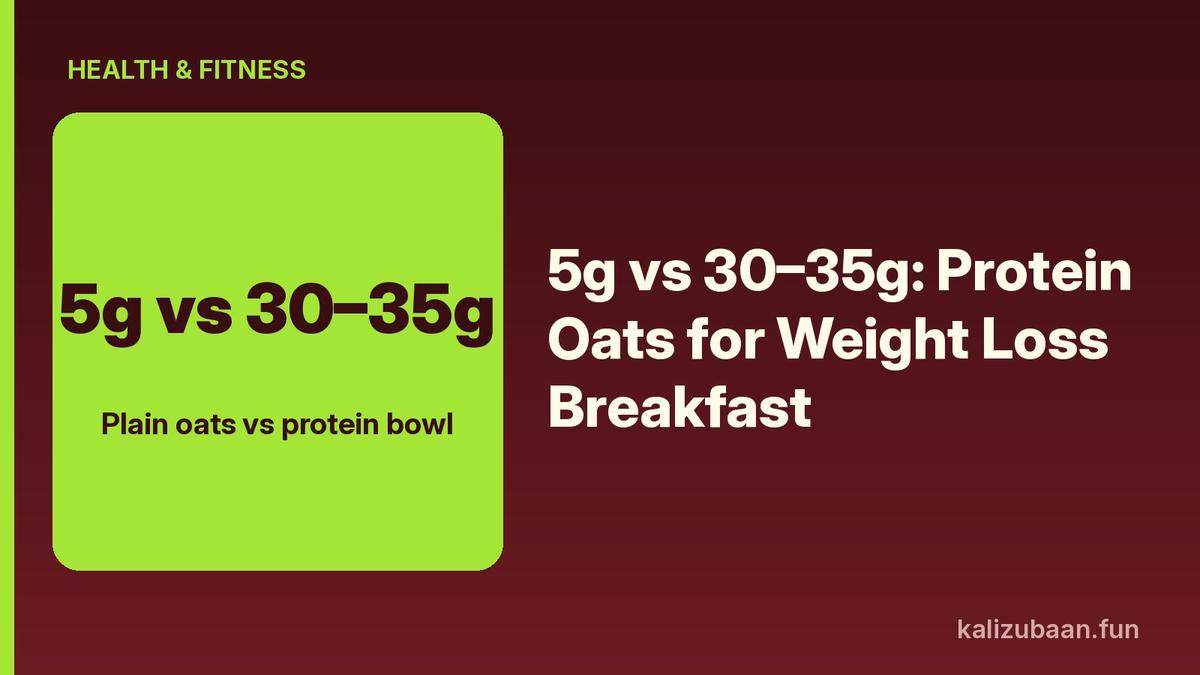
Search for protein oats for weight loss and the packets look like a gym breakfast in a sachet. A typical 40 g serving of plain rolled oats has only about 5 g of protein. The useful meal is oats plus milk, curd, yoghurt or powder, not a prettier box on its own.
Quick answer
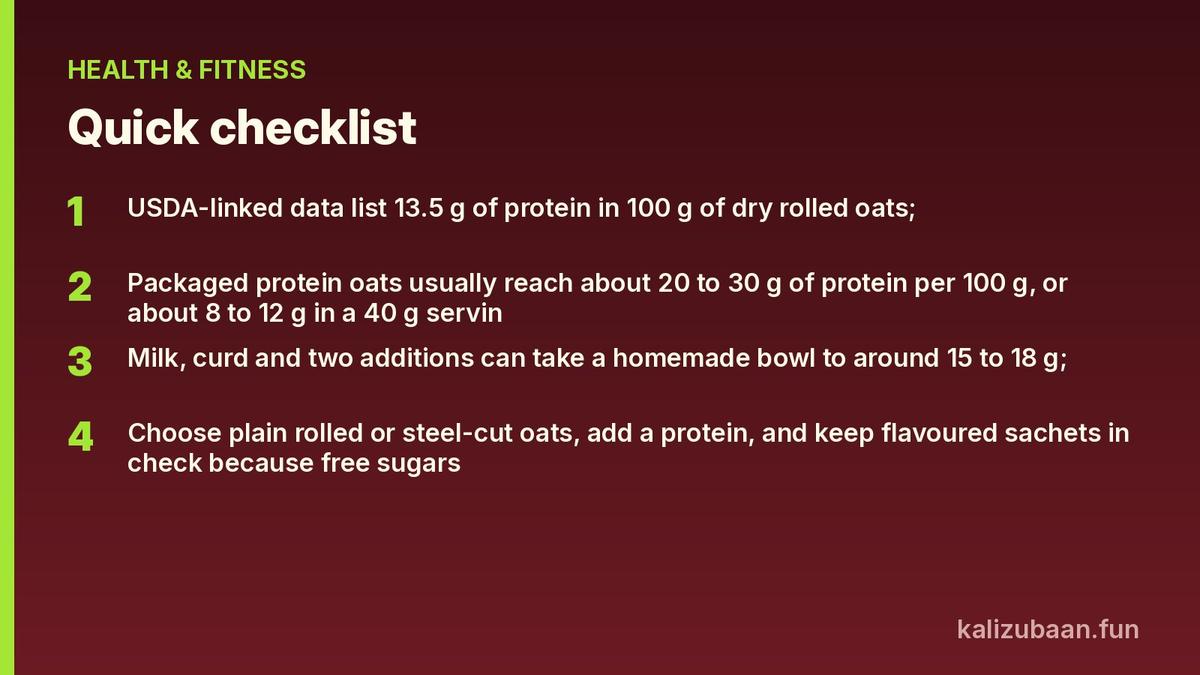
- USDA-linked data list 13.5 g of protein in 100 g of dry rolled oats; a typical 40 g bowl of plain oats has about 5 g.
- Packaged protein oats usually reach about 20 to 30 g of protein per 100 g, or about 8 to 12 g in a 40 g serving.
- Milk, curd and two additions can take a homemade bowl to around 15 to 18 g; one overnight oats recipe with high-protein yoghurt reaches 30 to 35 grams.
- Choose plain rolled or steel-cut oats, add a protein, and keep flavoured sachets in check because free sugars should stay under 10% of daily energy.
This article is for information only and is not medical advice. Talk to a doctor before changing your diet or training.
How much protein is in plain oats and protein oats?
Plain rolled oats have about 13.5 g of protein per 100 g dry, which is only about 5 g in a typical 40 g bowl.
My Food Data's USDA record for old-fashioned rolled oats lists 13.5 g of protein, 10.4 g of fibre, 68.7 g of carbohydrate, 5.9 g of fat and 382 kcal per 100 g (My Food Data). NNWA, citing the Indian Food Composition Tables (IFCT 2017), puts oats at about 13.6 g of protein per 100 g dry and about 5 g in a 40 g serving (NNWA).
Dry oats give about 370 to 390 kcal per 100 g, so a 40 g serving is roughly 150 to 155 kcal before anything is added. Packaged protein oats mix in whey, milk protein or soy protein isolate and typically reach about 20 to 30 g of protein per 100 g instead of 12 to 13 g, or about 8 to 12 g in a 40 g serving.
Do protein oats for weight loss actually work?
They can help you stay full, but oats alone do not reliably produce significant weight loss.
Hindustan Times quotes gastroenterologist Dr Manickam saying oats can support weight loss because their fibre keeps you full longer and reduces overeating (Hindustan Times). He also said it is better to combine oats with some protein, especially for people with diabetes, and that plain rolled or steel-cut oats beat sugary instant flavours.
Another Hindustan Times piece, quoting Dr Shah, says oat beta-glucan slows digestion and supports satiety hormones such as PYY and GLP-1 (Hindustan Times). Harvard adds that beta-glucan can increase satiety, but trials have not consistently shown significant weight loss from oats alone (Harvard T.H. Chan School of Public Health).
A Danish study reported by Hindustan Times followed 30 women with obesity, aged 18 to 30, for three days. A breakfast of skyr and oats increased satiety and concentration, but it did not cut overall energy intake versus skipping breakfast or a carbohydrate-rich meal (Hindustan Times). WHO lists oats among whole grains and says adults generally do well with protein at 10–15% of daily energy, about 50–75 grams for someone consuming about 2000 calories a day (WHO).
What should you add to protein oats for weight loss?
Add milk, curd, yoghurt, seeds, an egg or a protein powder so the bowl reaches a useful protein range.
NNWA starts with milk instead of water, which adds about 6 g of protein per 200 ml of toned milk and takes a bowl of about 150 kcal to nearer 270 kcal (NNWA). About 100 g of curd adds about 3 g more. Peanut butter adds about 4 g a tablespoon, seeds about 2 to 4 g, and an egg about 6 g and 70 to 80 kcal. With milk and two additions, a 40 g bowl reaches around 15 to 18 g of protein without powder.
Source: NNWA; Hindustan Times
A scoop of whey or plant protein, commonly around 20 to 25 g, can take the bowl to 25 g or more. Hindustan Times published Sharon Rodrigues' overnight bowl of 40 g oats, 150 g high-protein yoghurt, 80 g blueberries and a seed mix: about 350 calories and 30 to 35 grams of protein (Hindustan Times). That is one logged meal, not a promise oats will copy her 40 kg loss over five months.
What most guides miss: USDA-linked data showing 13.5 g of protein per 100 g line up with NNWA's about 5 g in a 40 g serving, so plain oats are a fibre-rich cereal, not a high-protein meal. A branded protein oats sachet at about 8 to 12 g per serving still sits below the 15 to 25 g breakfast range NNWA calls practical, and further below the 30 to 35 grams in the yoghurt-heavy overnight bowl.
Which oats should you buy, and how much is a serving?
Choose plain rolled or steel-cut oats in a 40 to 50 g dry portion, and skip sugary instant flavours when you can.
Dr Manickam said rolled oats cook faster and are easier on the gut, while steel-cut oats keep you full longer, and that daily oats are safe for most people with nuts, seeds, fruits and proteins (Hindustan Times). Medanta suggests 40 to 50 g of rolled oats at breakfast and 40 to 70 g of rolled or steel-cut oats across the day (Medanta).
Harvard cites a meta-analysis in which 3 grams of beta-glucan a day from whole oats modestly decreased blood cholesterol by about 12 points (Harvard T.H. Chan School of Public Health). Medanta ties that 3 g daily target to roughly 70 g of dry rolled oats and to LDL reductions of 5 to 10%. A USDA-linked listing reports 7.52 g of beta-glucan per 100 g of rolled oats (FoodData Explorer).
Watch the sugar line on flavoured protein oats. WHO says free sugars should stay under 10% of daily energy, equal to 50 g, or about 12 level teaspoons, for someone consuming about 2000 calories (WHO).
Who should be careful with protein oats?
Most people can eat oats daily, but start slowly if they bloat you, and ask a doctor if you have diabetes, PCOS, kidney disease or a grain sensitivity.
Dr Manickam said oats may cause bloating if they are introduced suddenly, so raise the amount gradually and drink water. For diabetes, he favoured plain oats in controlled portions, with some protein. Dr Shah recommended protein-rich mixes for insulin resistance or PCOS (Hindustan Times). WHO notes that consuming excessive protein can place a burden on the kidneys (WHO). NNWA cites the ICMR-NIN 2020 adult figure of about 0.83 g of protein per kg a day, around 50 g for a 60 kg adult, and a practical breakfast aim of 15 to 25 g (NNWA).
FAQs
Are protein oats better than regular oats for weight loss?
Not by themselves. Packaged protein oats usually raise a 40 g serving from about 5 g of protein to about 8 to 12 g. The larger jump comes from adding milk, curd, yoghurt, an egg or powder.
How much protein should breakfast have?
There is no official per-meal target. NNWA suggests 15 to 25 g at breakfast, against an ICMR-NIN 2020 daily figure of about 0.83 g per kg, or around 50 g for a 60 kg adult. WHO's adult range is about 50–75 grams a day at 2000 calories.
Can you eat oats every day?
Dr Manickam said daily oats are safe for most people. Introduce them gradually if they cause bloating and choose plain rolled or steel-cut oats over sugary instant flavours.
Do oats help lower cholesterol as well as hunger?
Harvard cites 3 grams of oat beta-glucan a day modestly decreasing blood cholesterol by about 12 points, and Medanta links the same 3 g target to LDL reductions of 5 to 10%.
Expert review: pending.
This article is for information only and is not medical advice. Talk to a doctor before changing your diet or training.
Related reading
- 2.3 kg vs 2.6 kg: Weight Loss Tips on Meal Timing, Tested
- 0.5 to 1kg a Week: How to Weight Loss Fast Without a Fad Diet
- 80% Protein Shortfall: Food First, Then Think About Whey
Sources
- Hindustan Times: Overnight oats for weight loss
- Hindustan Times: Gastroenterologist answers 10 common questions about eating oats
- Hindustan Times: Protein-rich breakfast can increase satiety, improve concentration
- Hindustan Times: Repeat-meal diet plan with overnight protein oats
- WHO: Healthy diet
- My Food Data: USDA rolled oats nutrition
- FoodData Explorer: USDA rolled oats, including beta-glucan
- Harvard T.H. Chan School of Public Health: Oats
- Medanta: Health benefits of oats for weight loss and nutrition
- NNWA: Are protein oats worth buying, or can you make them at home?
Tagged Topics
Keep reading
Thanks for reading Kali Zubaan
Explore more articles in Health & Fitness or return to the main publication feed.


