0.04 kg in 12 Weeks: Does Green Tea Help Weight Loss?
Weight loss green tea is trending, but a Cochrane review found green tea users outside Japan lost just 0.04 kg more than placebo. Here is what the trials show, and who should avoid extracts.
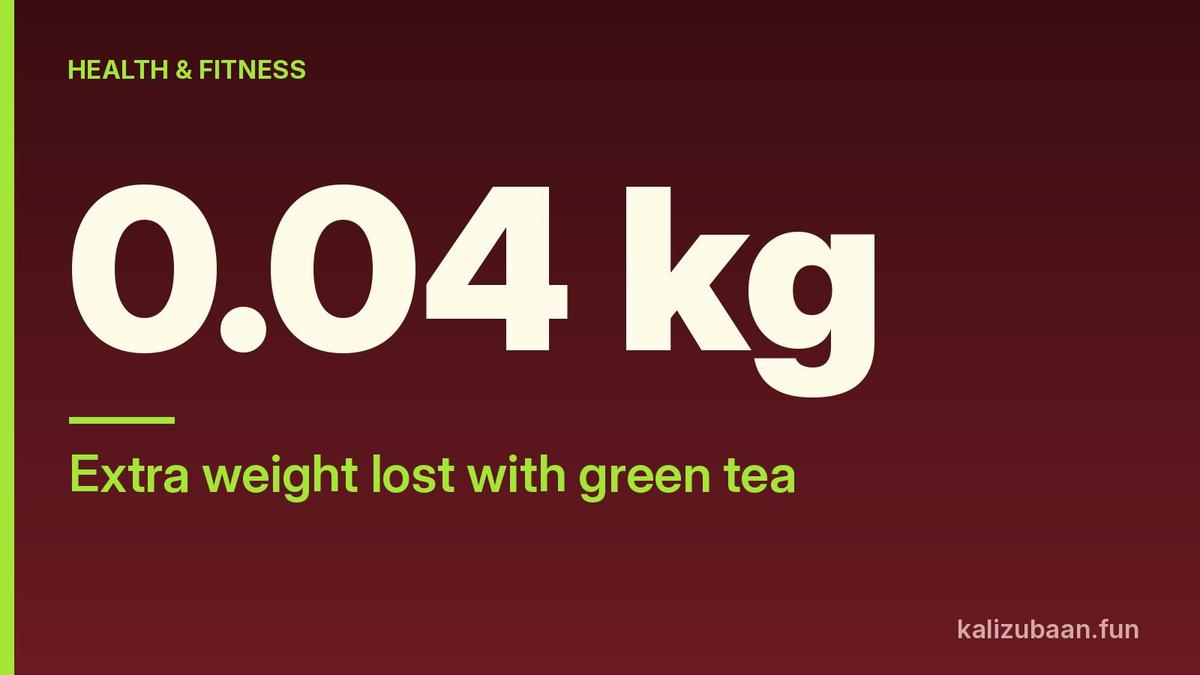
Across six trials outside Japan, people taking green tea preparations for 12 to 13 weeks lost 0.04 kg more than people on a dummy pill. On a bathroom scale, that is close to nothing.
Weight loss green tea searches are rising in India, so it is worth asking the plain question: does green tea help weight loss at all? The best evidence says only a little, and less than most labels suggest.
Quick answer
- A Cochrane review of 15 weight loss studies found green tea's effect was very small and not likely to be clinically important.
- Trials in Japan showed bigger, but inconsistent, results of 0.2 kg to 3.5 kg.
- Adding green tea to exercise gives only a minimal extra benefit, according to a meta-analysis of 10 randomised trials.
- Green tea as a drink is considered safe for adults, but extract capsules have been linked to rare liver injury.
This article is for information only and is not medical advice. Talk to a doctor before changing your diet or training.
Does green tea help weight loss?
Only a little. The largest independent review found green tea preparations produced a small, statistically non-significant weight loss in overweight or obese adults.
The Cochrane review pooled 15 weight loss studies and three weight maintenance studies, with 1945 participants completing them (Cochrane). Each ran for 12 to 13 weeks, and neither group knew whether it got green tea or a control.
Its conclusion was blunt. The weight loss "was statistically not significant, was very small and is not likely to be clinically important."
Similar results showed up for body mass index and waist size. Green tea also showed no benefit for keeping weight off after a diet.
Why did trials in Japan show bigger results?
Japanese studies reported more weight loss, but they were too different from each other to combine, so their results are less reliable than the pooled figure.
Cochrane split the studies into two groups. Six studies outside Japan, with 532 participants, showed a mean difference of just -0.04 kg (Cochrane).
The eight studies in Japan, with 1030 participants, showed weight loss ranging from -0.2 kg to -3.5 kg in favour of green tea.
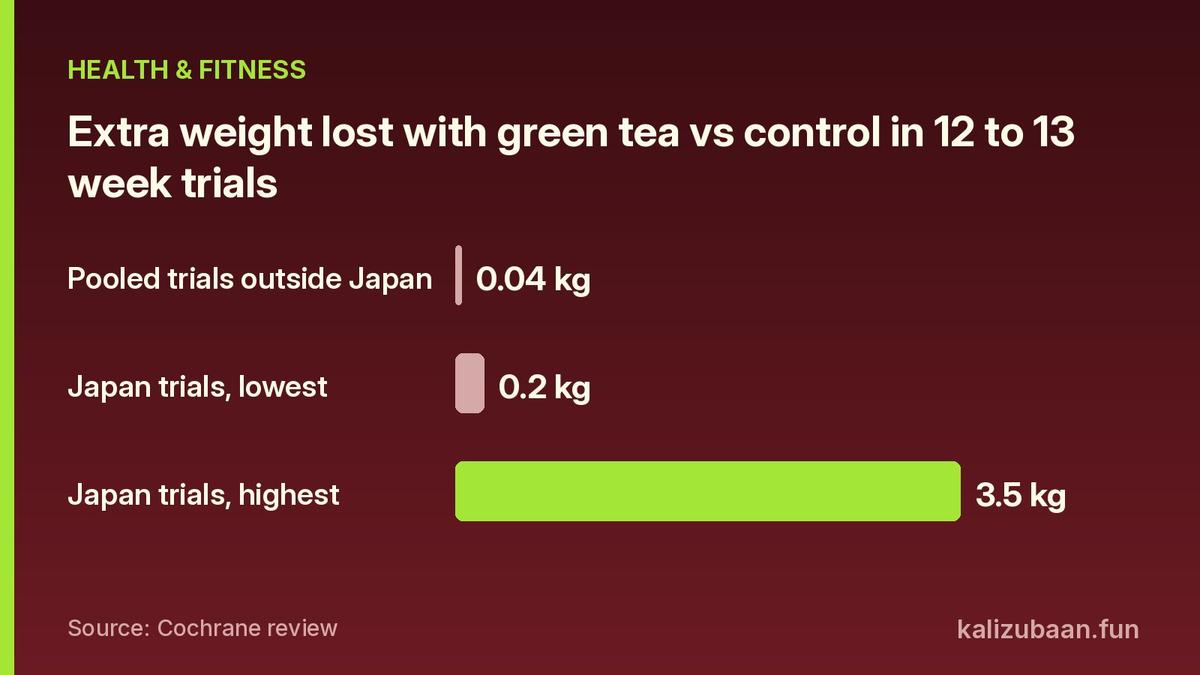
Source: Cochrane review
Waist results followed the same pattern. Outside Japan, the change was -0.2 cm. In Japan, it ranged from a gain of 1 cm to a loss of 3.3 cm.
What most guides miss: even the best Japanese result of 3.5 kg came from preparations with more catechins and caffeine than a normal cup, and the pooled result outside Japan of 0.04 kg is less than one-sixtieth of the 2.5 kg that one meta-analysis treats as the smallest fat loss that matters clinically. A cup of green tea after dinner is not the same product the trials tested.
Is green tea extract different from green tea you drink?
Yes. Most weight loss trials tested extracts that are much stronger than tea brewed from a tea bag.
Cochrane notes that green tea weight loss preparations contain a higher concentration of catechins and caffeine than the typical green tea beverage made from a tea bag and boiling water (Cochrane).
The US National Center for Complementary and Integrative Health says the catechins and caffeine in green tea and its extracts may have a modest effect on body weight (NCCIH). It adds that results vary with the product and with how physically active a person is.
So if you see a "fat burner" capsule with green tea on the label, remember that the evidence behind it is the same weak evidence, at a higher dose.
Does green tea work better with exercise?
Slightly. Green tea added a small, consistent effect on weight when combined with exercise, but researchers called the extra benefit minimal.
A systematic review and meta-analysis of 10 randomised trials compared exercise plus green tea against exercise plus placebo in overweight or obese people (PMC). Out of 1,015 studies screened, those 10 made the cut.
The trials ran from 8 weeks to 24 weeks, most commonly with three exercise sessions a week. The most frequent green tea dose was 500 mg a day.
The authors concluded that green tea "could have quite minimal additive benefit over exercise-induced weight loss." It did not improve cholesterol or triglycerides beyond what exercise did.
The same paper says a modest 5%–10% reduction in body weight brings notable health improvements. That kind of loss comes from diet and exercise, not from a supplement.
Is green tea safe for weight loss?
Green tea as a drink is considered safe for most adults, but concentrated extract capsules carry rare risks and can interact with some medicines.
NCCIH says no safety concerns have been reported for green tea consumed as a beverage by adults (NCCIH). But green tea does contain caffeine.
Extract supplements are another story. Side effects include nausea, constipation, abdominal discomfort and increased blood pressure. Liver injury, though uncommon, has been reported, mainly with tablets or capsules.
NCCIH also says green tea can lower blood levels of the beta-blocker nadolol and the cholesterol drug atorvastatin. If you take any medicine, check with your doctor before using green tea supplements.
During pregnancy, caffeine intake should stay moderate, and green tea counts towards it.
FAQs
How much weight can green tea help you lose?
Very little. A Cochrane review found people outside Japan lost 0.04 kg more than a control group over 12 to 13 weeks, which is not clinically important.
Is drinking green tea after meals good for weight loss?
The trials mostly tested concentrated extracts, not a cup after meals. Green tea is a fine low-calorie drink, but there is no strong evidence that it burns fat.
Are green tea fat burner capsules safe?
Extract supplements can cause nausea, constipation and higher blood pressure, and have rarely been linked to liver injury. Talk to a doctor first, especially if you take medicines.
Does green tea help weight loss with exercise?
It may add a small extra effect, but a meta-analysis of 10 trials called the benefit minimal. Exercise and diet do most of the work.
Expert review: pending.
This article is for information only and is not medical advice. Talk to a doctor before changing your diet or training.
Related reading
- 2.3 kg vs 2.6 kg: Weight Loss Tips on Meal Timing, Tested
- 250 Calories a Samosa: Why Diet and Gym Must Work Together
- 54% in Remission: Can Type 2 Diabetes Be Reversed With Diet?
Sources
Tagged Topics
Keep reading
Thanks for reading Kali Zubaan
Explore more articles in Health & Fitness or return to the main publication feed.