54% in Remission: Can Type 2 Diabetes Be Reversed With Diet?
In a new trial, 54% of adults under 45 put type 2 diabetes into remission in 24 weeks with a low-calorie diet and exercise, versus 4% on usual care. Here is what they did.
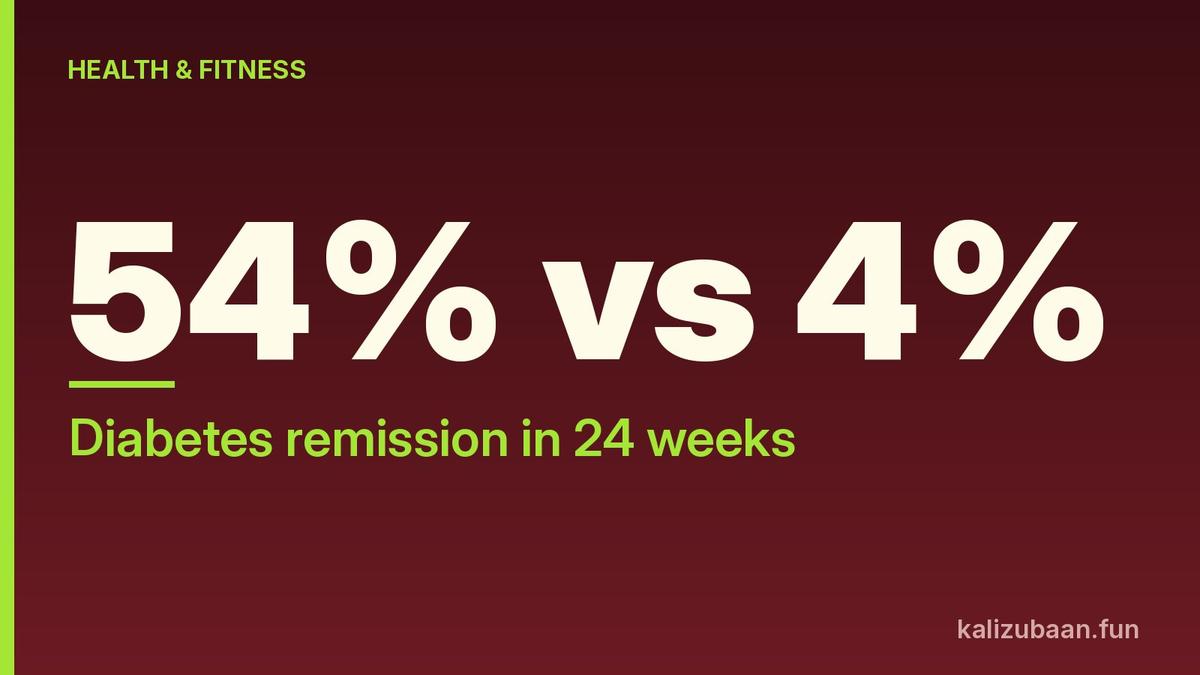
Twenty-seven out of 50. That is how many young adults with type 2 diabetes reached remission in six months on a strict diet and exercise plan, in a trial presented this year. On usual care, only two of 46 got there.
So can type 2 diabetes be reversed? The honest answer is more careful than the headlines, but the numbers are striking.
Quick answer
- In the RESET for Remission trial, 54% of adults under 45 reached remission after 24 weeks, against 4% on usual care.
- The plan combined 800 to 900 calories a day with supervised aerobic and resistance exercise.
- Remission means blood sugar stays below the diabetes threshold without medicine. It is not a permanent cure.
- This was a medically supervised programme. Do not try a very low-calorie diet or stop medicines on your own.
Can type 2 diabetes be reversed?
It can go into remission for some people, meaning blood sugar falls below the diagnostic level without medication, but researchers stress this is not necessarily a permanent cure.
To count as remission in the new trial, participants needed an HbA1c below 6.5% (48 mmol/mol) and no glucose-lowering medication for at least 12 weeks (ScienceDaily). HbA1c reflects average blood sugar over about three months.
The WHO also says type 2 diabetes can be treated, and its consequences avoided or delayed, with diet, physical activity, medication and regular screening (WHO).
What did the new diabetes study find?
More than half the people on the combined diet and exercise programme reached remission in 24 weeks, while almost no one on standard care did.
The trial enrolled 96 adults aged 18 to 45 with early-onset type 2 diabetes and obesity in the UK and Canada; 27 of 50 in the intervention group reached remission, against two of 46 on usual care (ScienceDaily). After adjustment, the programme group was 21 times more likely to reach remission.
The participants had a mean age of 38 years. Of those enrolled, 86 (90%) completed the final checks.
The results were presented at the European Association for the Study of Diabetes meeting and published in The Lancet Regional Health Americas.
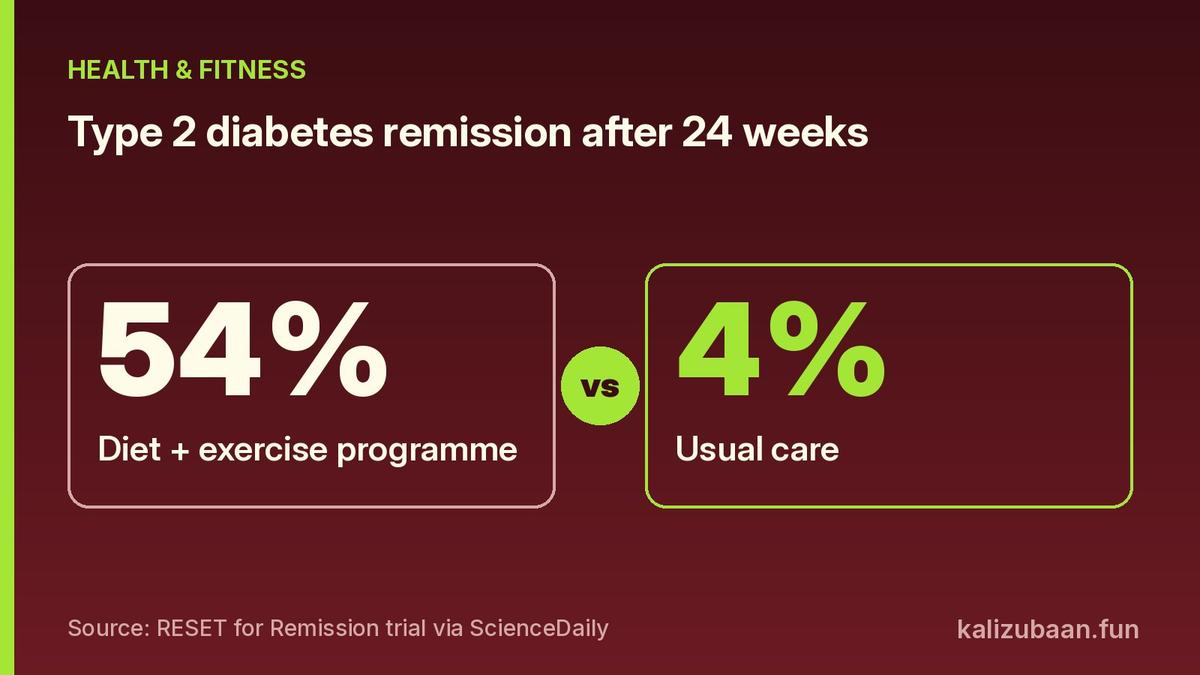
Source: RESET for Remission trial via ScienceDaily
What most guides miss: the remission rate jumped more than thirteenfold, from 4% to 54%, yet the programme group's extra weight loss over the control group was a modest 7.5 kg. Most of that gap, 6.6 kg, was fat, not muscle.
What diet did the trial participants follow?
They ate 800 to 900 calories a day for the first 12 weeks, mostly from meal-replacement products, then moved to a diet built to hold the weight off.
The restricted diet was 30% protein, 50% carbohydrate and 20% fat, and participants were told to drink at least two litres of calorie-free fluids daily (ScienceDaily).
For the first two weeks, every meal was a formulated shake. From weeks three to 12, one normal meal a day was allowed, with targets of 60 to 90 g of protein, one portion of fruit and two portions of non-starchy vegetables.
From weeks 13-24, the focus shifted from losing weight to keeping it off.
Why did exercise matter so much?
Resistance training protected muscle during rapid weight loss, so people lost fat rather than strength.
The combined group's average weight fell from 100.7 kg to 92.3 kg, a drop of 8.4 kg; the control group lost just 1.2 kg (ScienceDaily). Supervised aerobic and resistance sessions ran twice a week, plus one session on their own (weeks 1-12).
The researchers explain that calorie restriction alone usually strips both fat and muscle. When weight returns, the body may regain proportionally more fat, raising the risk of sarcopenia, a loss of muscle mass and strength.
Building strength work into the hardest phase was their answer, and the trial showed muscle preservation was achievable.
What does this mean for Indians with diabetes?
Diabetes is common and rising fast in countries like India, so a plan that adds structured exercise to diet is worth discussing with your doctor.
The WHO says the number of people with diabetes rose from 200 million in 1990 to 830 million in 2022, rising faster in low- and middle-income countries (WHO). In 2022, 14% of adults were living with diabetes.
The trial focused on people diagnosed before 45. Early-onset diabetes tends to be more aggressive, with complications arriving earlier in life, so younger patients have the most to gain from early action.
On an Indian plate, the trial's daily targets translate into protein at each meal (dal, paneer, curd or eggs), a fruit, and two helpings of non-starchy sabzi. The calorie level itself, though, was set and monitored by a medical team.
Who should be careful?
Anyone on insulin, pregnant, or with kidney disease or other conditions should not attempt this approach without close medical supervision.
The trial excluded people using insulin, and medicines were stopped only under the study's medical supervision (ScienceDaily). At least one side effect hit 43 of the 50 intervention participants, mostly constipation, headaches, dizziness and fatigue early in the diet.
No severe adverse events were reported, and the effects generally resolved. Still, the authors say longer studies are needed to see if remission lasts outside a closely monitored trial.
FAQs
Can type 2 diabetes be reversed permanently?
Not necessarily. Remission means blood sugar stays below the diagnostic level without medicine, but researchers say it does not mean the disease is cured, and longer studies are needed.
What HbA1c level counts as diabetes remission?
In this trial, remission meant an HbA1c below 6.5% (48 mmol/mol) with no glucose-lowering medication for at least 12 weeks.
How many calories a day did the remission diet allow?
Participants ate 800 to 900 calories daily in the intensive phase, under medical supervision, before moving to a weight-maintenance diet.
Can I stop my diabetes medicine if I diet and exercise?
Only with your doctor. In the trial, medicines were stopped under the study team's medical supervision, not by participants on their own.
Expert review: pending.
This article is for information only and is not medical advice. Talk to a doctor before changing your diet or training.
Related reading
- 0.5 to 1kg a Week: How to Weight Loss Fast Without a Fad Diet
- 2.3 kg vs 2.6 kg: Weight Loss Tips on Meal Timing, Tested
- 10% Lean Mass Lost: Ram Kapoor's Ozempic Weight Loss Warning
Sources
Tagged Topics
Keep reading

Thanks for reading Kali Zubaan
Explore more articles in Health & Fitness or return to the main publication feed.