39.5% Abdominal Obesity: Why Same BMI Is Not Same Risk
ICMR-INDIAB found abdominal obesity in 39.5% of Indian adults. Two people with the same BMI can still face very different diabetes and heart risks.
Two people can share the same weight and BMI and still face very different risks of diabetes, heart disease and fatty liver. Dr Saurabh Juneja told The Indian Express the gap often sits in body composition: how much muscle you carry, how much fat you carry, and where that fat is stored.
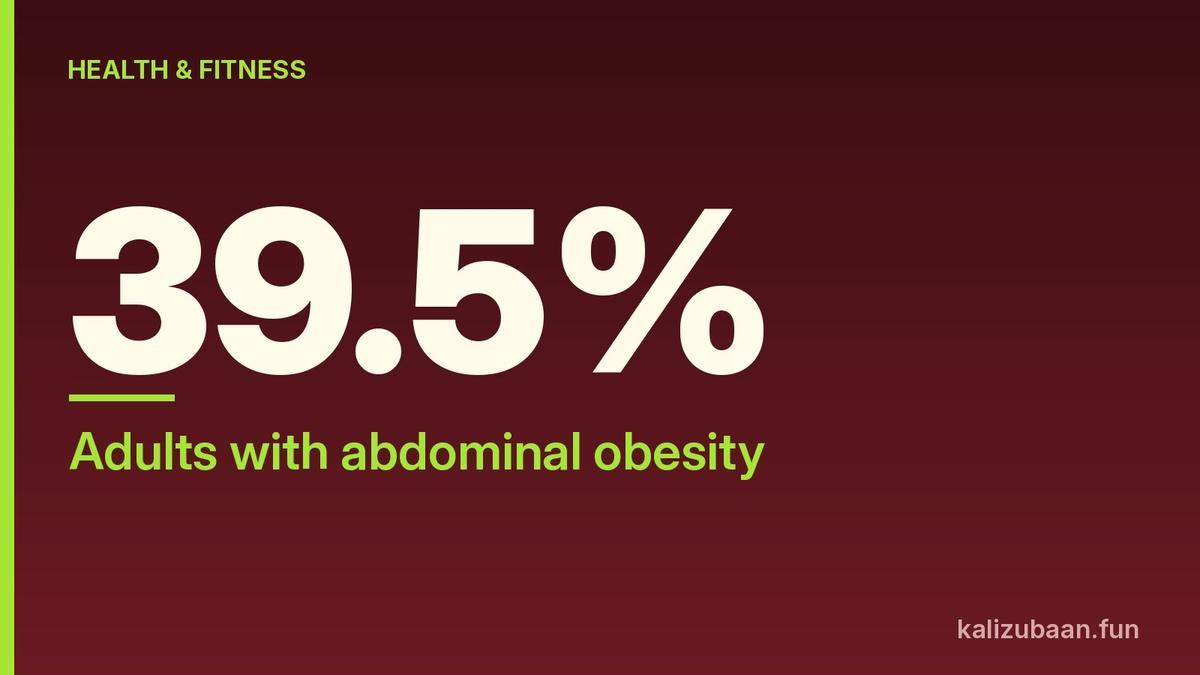
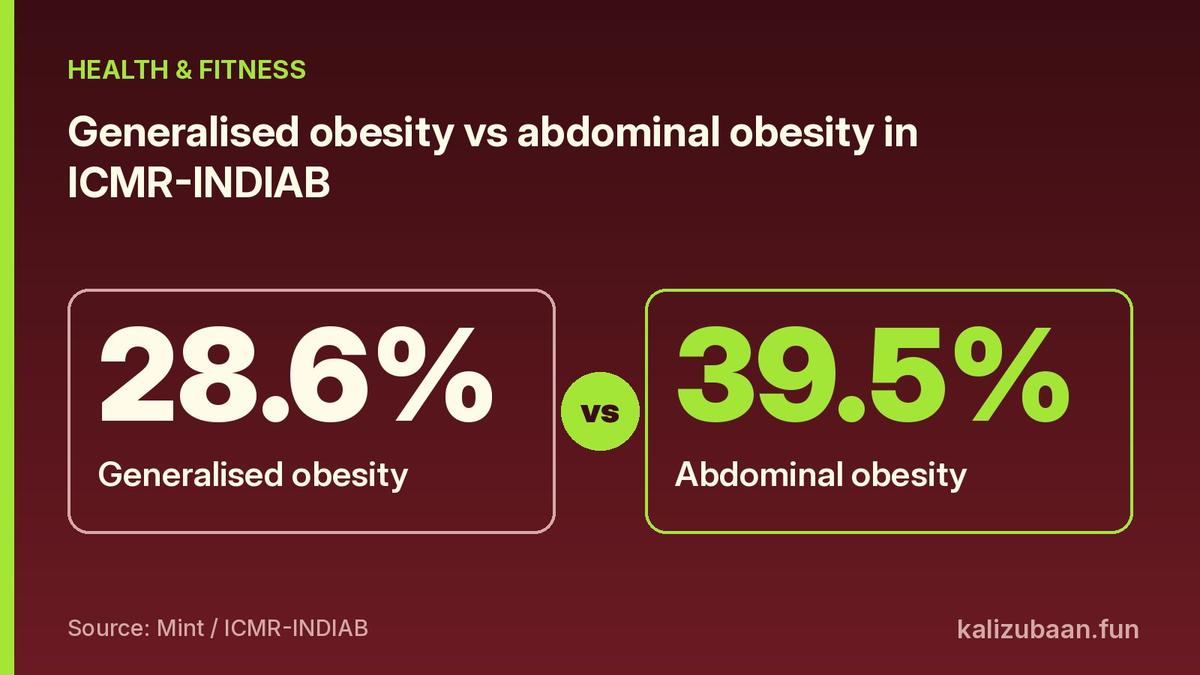
That is not a niche gym debate in India. ICMR-INDIAB estimated abdominal obesity in 39.5% of adults, about 351 million people in 2021, even while generalised obesity stood at 28.6%.
Quick answer
- BMI only compares weight to height; it does not show fat, fat location or muscle, Dr Juneja told The Indian Express.
- Visceral fat around organs is metabolically active and can raise inflammation, insulin resistance, cholesterol problems and liver fat.
- ICMR-INDIAB put national abdominal obesity at 39.5%, diabetes at 11.4% and prediabetes at 15.3%.
- For that survey, abdominal obesity meant waist circumference of 90 cm or higher in men and 80 cm or higher in women.
BMI is a blunt starting point
"BMI only measures weight relative to height. It does not show how much fat a person has, where that fat is stored, or how much muscle they carry," Dr Juneja, director and HOD of CTVS and Cardiac Sciences at ISIC Multispeciality Hospital, told The Indian Express.
Two people with identical BMI readings can look nothing alike inside. One may have more muscle and less harmful fat. The other may carry excess fat around internal organs.
That hidden store is visceral fat. Unlike fat just under the skin, it releases fatty acids and inflammatory substances that can interfere with blood sugar and fat regulation, Juneja explained. The same pattern can raise risk even when BMI looks "normal."
South Asians get a special mention in that interview. They tend to store more fat around the abdomen even at lower body weights, which is why a "fine" BMI can still hide trouble.
What India-scale data adds to the Quora question
The Indian Express piece answers a Quora-style question with a clinician's framing. The numbers that make the India angle concrete come from ICMR-INDIAB, covered by Mint, The Hindu and Hindustan Times.
Mint reported a cross-sectional survey of 113,043 adults aged 20 and above, including 33,537 urban and 79,506 rural residents, run between 2008 and 2020 across the country. National prevalence figures included diabetes 11.4%, prediabetes 15.3%, hypertension 35.5%, generalised obesity 28.6%, abdominal obesity 39.5%, hypercholesterolemia 24% and high LDL cholesterol 20.9%.
For 2021, the same reporting stream estimated 101 million people with diabetes, 136 million with pre-diabetes, 315 million with high blood pressure, 254 million with generalised obesity and 351 million with abdominal obesity. Another 213 million had hypercholesterolemia and 185 million had high LDL cholesterol.
Source: Mint / ICMR-INDIAB
The Hindu's data brief adds the waist rule used in that survey: abdominal obesity meant a waist circumference of 90 cm or higher for men and 80 cm or higher for women. Overall, abdominal obesity showed up in 39.5% of people, while hypertriglyceridemia showed up in 32.1%.
The sex split is striking. More women (49.6%) had abdominal obesity than men (28.8%), even though men had higher diabetes (12.1% vs 10.7%) and hypertension (38.7% vs 32.6%).
Why visceral fat changes disease risk
Juneja walks through three pathways that BMI cannot see.
Diabetes. Excess visceral fat releases fatty acids and inflammatory substances that make cells less responsive to insulin. When insulin resistance builds, blood sugar can rise and type 2 diabetes risk climbs.
Heart disease. Visceral fat feeds high blood pressure, unhealthy cholesterol patterns and chronic inflammation. Those changes damage blood vessels and raise the risk of heart disease and stroke, he said.
Fatty liver. Fat stored around abdominal organs can accumulate in the liver. Not everyone with fatty liver develops inflammation or lasting damage, but in some people the disease progresses over time.
He also flags "normal-weight obesity": a normal BMI with excess visceral fat or relatively low muscle. Such people may look healthy and still develop insulin resistance, fatty liver, abnormal cholesterol and heart disease.
Muscle mass matters because muscle helps regulate blood sugar. Genetics, age, gender, activity, diet quality, sleep, stress, smoking, alcohol and family history all shape risk beyond the scale.
Same BMI, different biology in new research
A 2026 Uppsala University press release on a Nature Communications study pushes the same idea from genetics. Two people with the same BMI may have entirely different risks of type 2 diabetes, depending on the biological mechanisms behind their weight.
Researchers grouped BMI-linked genetic variants into four clusters. Two clusters tied to a moderately or greatly increased diabetes risk. The other two tied to no extra risk or even a protective pattern.
They analysed over 3,000 molecular traits and identified more than 100 metabolic and many clinical biomarkers that help explain the gap. Higher-risk profiles showed unfavourable lipid and metabolite patterns, insulin resistance markers, inflammation and altered amino acid metabolism. Lower-risk profiles showed more efficient lipid transport back to the liver and a more anti-inflammatory setting.
The authors stress that people are mosaics of profiles, not a single label. BMI alone remains too blunt for personal risk, they argue.
What to check beyond the weighing scale
Juneja's practical list is simple and clinical.
- Waist circumference and waist-to-height ratio for abdominal fat
- Fasting blood sugar, HbA1c, lipid profile and liver function tests
- Blood pressure
- In some cases, body composition analysis, ultrasound or advanced imaging for visceral fat and liver fat
That maps cleanly onto the ICMR-INDIAB waist cutoffs of 90 cm for men and 80 cm for women used to define abdominal obesity in the national survey.
State variation is large. Mint noted Goa diabetes prevalence at 26.4% versus Uttar Pradesh at 4.8%, and The Hindu flagged clusters such as Kerala, West Bengal, Sikkim and Goa where diabetes, hypertension, abdominal obesity and high triglycerides all ran high together. One national BMI chart will not capture that.
FAQs
Can two people with the same BMI have different diabetes risk? Yes. Dr Juneja told The Indian Express that body composition and visceral fat can diverge at the same BMI. Uppsala researchers also describe different genetic risk profiles at the same BMI.
What waist size counted as abdominal obesity in ICMR-INDIAB? The Hindu reports the survey defined it as 90 cm or higher for men and 80 cm or higher for women.
How common is abdominal obesity in India? ICMR-INDIAB put national prevalence at 39.5%, with an estimated 351 million people affected in 2021, higher than generalised obesity at 28.6%.
Is a normal BMI enough reassurance for South Asians? Not by itself. Juneja notes South Asians often store more abdominal fat at lower body weights, and normal-weight obesity can still raise metabolic risk.
This article is for information only and is not medical advice. Talk to a doctor before changing your diet or training.
Sources
Tagged Topics
Keep reading
Thanks for reading Kali Zubaan
Explore more articles in Health & Fitness or return to the main publication feed.


