95th Percentile: When Your Child's Baby Fat Becomes Obesity
Chubby cheeks can be healthy, or an early sign of obesity. An endocrinologist explains the BMI-for-age line doctors use and 6 everyday signs parents should discuss with a paediatrician.
In many Indian homes, a chubby child is a proud sign of a well-fed child. Relatives pinch the cheeks, and everyone says the baby fat will melt away once the child grows taller.
Sometimes it does. But a Bengaluru endocrinologist says the real test is not how a child looks. It is where their BMI sits on a growth chart, and the line for obesity is the 95th percentile.
Quick answer
- Doctors judge a child's weight by plotting BMI on an age- and sex-specific growth chart, not by appearance.
- Healthy weight is the 5th to below the 85th percentile, overweight is the 85th to below the 95th, and obesity is the 95th percentile or higher.
- Six everyday signs, from tight clothes to snoring and dark neck patches, are worth raising with a doctor.
- Healthier food at home, family activity, screen limits and kind words help more than diets.
Baby fat or obesity: where doctors draw the line
Dr Manjunath PR, a consultant in endocrinology at Ramaiah Memorial Hospital, Bengaluru, told HT Lifestyle that parents can sometimes be right. Children may go through round, soft phases before a growth spurt.
But what families dismiss as chubbiness can also be a sign of childhood obesity. Appearance alone can't tell you which it is.
Instead, the child's BMI is plotted on a growth chart based on age and sex. That shows how the child compares with other children of the same age and sex.
The three BMI-for-age categories
Dr Manjunath shared the three categories used to assess a child's weight:
- Healthy weight: 5th to below the 85th percentile
- Overweight: 85th to below the 95th percentile
- Obesity: 95th percentile or higher
A child at the 95th percentile has a higher BMI than about 95 out of 100 children of the same age and sex. As he put it, that is more than ordinary baby fat.
These are the same cut-offs used by the US Centers for Disease Control and Prevention, according to Wikipedia's entry on childhood obesity. The WHO uses a slightly different method for ages 5–19 years, based on how far BMI-for-age sits above its growth reference median.
One caution applies. BMI measures weight against height. It does not separate fat from muscle, so a doctor may use other checks too.
How big is the problem?
The endocrinologist cited the WHO, which says around one in five children and adolescents worldwide is overweight. In most regions, obesity has now overtaken underweight as the more common form of malnutrition.
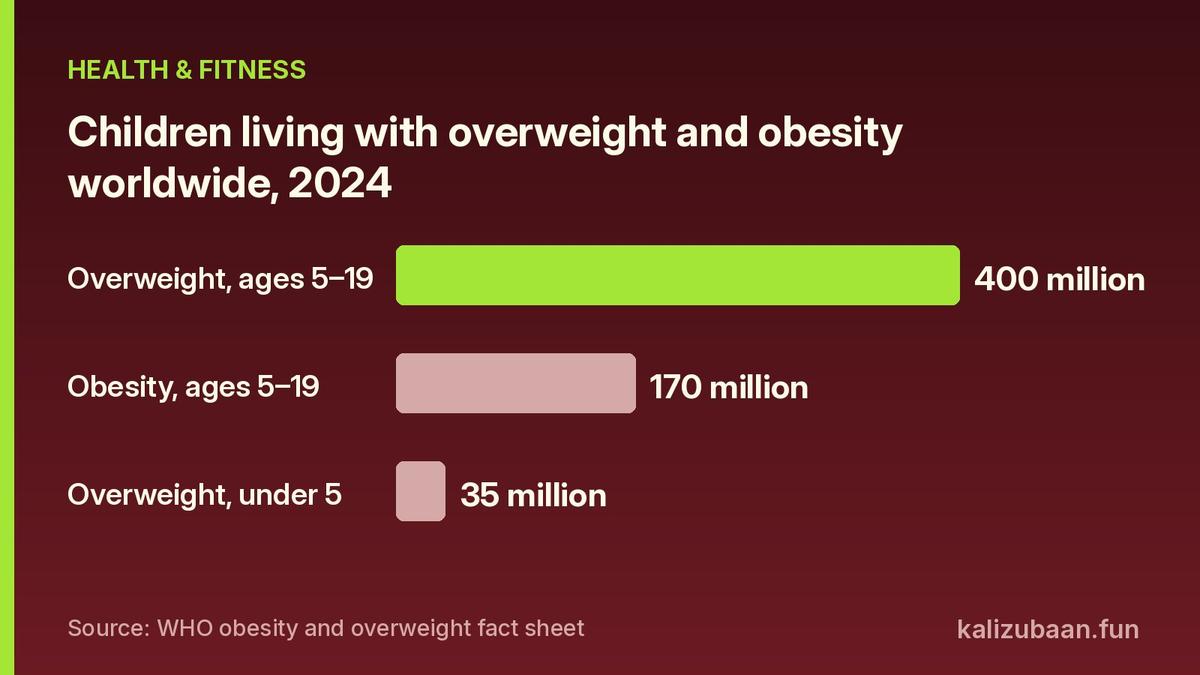
The WHO's latest figures put numbers on that.
Source: WHO obesity and overweight fact sheet
In 2024, 400 million children and adolescents aged 5–19 years were overweight, including 170 million living with obesity. Another 35 million children under the age of 5 were overweight.
Why parents miss it
Dr Manjunath listed a few common reasons. Many parents believe extra weight is normal and will disappear as the child grows taller.
Food is also tied to love. Families use it to celebrate, to show affection and to comfort a crying child, so overeating can go unnoticed.
6 signs worth discussing with a doctor
Beyond the scale, the endocrinologist said these everyday changes deserve a conversation with a doctor:
- Clothes that feel tight even when the length is right.
- Tiredness or breathlessness during play, especially compared with friends.
- Snoring or restless sleep.
- Dark, velvety patches of skin on the neck or underarms, which may point to insulin resistance.
- Eating out of boredom, sadness or stress rather than hunger.
- Avoiding sports or games because of discomfort or worries about body image.
Why it matters later in life
The endocrinologist warned that childhood obesity raises the risk of type 2 diabetes, high blood pressure, heart disease and joint problems later on.
Wikipedia's summary of research adds that overweight children are more likely to grow up to be overweight adults. It also notes that the first problems are often emotional, such as bullying and low self-esteem.
What parents can do at home
Dr Manjunath's advice is practical and doesn't involve crash diets:
- Review the growth chart. Ask your paediatrician to assess your child's growth pattern and explain whether their weight needs attention.
- Change the home, not the child. Keep fruit within reach, cut down sugary drinks, and make treats occasional instead of daily.
- Move as a family. Walk, cycle or go to the playground together so activity becomes a shared habit.
- Limit screens. Set limits, especially during meals and before bed. Wikipedia notes recreational screen time of 2 hours or more a day is linked with a higher risk of obesity.
- Choose words carefully. Talk about energy, strength and health. Avoid labels like "fat" and never push a child onto an extreme diet.
The WHO adds that physical activity in children and adolescents improves fitness, bone health and mental health, and reduces body fat. Yet it says 80% of adolescents don't meet recommended activity levels.
FAQs
At what BMI percentile is a child considered obese? At the 95th percentile or higher for their age and sex, according to the categories the endocrinologist shared.
Will baby fat go away on its own? Sometimes. Children can have soft phases before a growth spurt, but baby fat does not always disappear, so a growth chart check is the safer way to know.
Should I put my overweight child on a diet? The endocrinologist advises against extreme diets. Focus on healthier food at home, more family activity and fewer screens, and get your paediatrician's guidance.
Is noticing my child's weight a sign I'm a bad parent? No. Dr Manjunath says recognising a weight problem does not make anyone a bad parent. Overlooking it is what raises long-term risks.
This article is for information only and is not medical advice. Talk to a doctor before changing your diet or training.
Sources
Tagged Topics
Keep reading
Thanks for reading Kali Zubaan
Explore more articles in Health & Fitness or return to the main publication feed.


