77% of Kids Wary of New Foods: How to Help a Picky Eater Child
An ICMR-NIN study of 150 Hyderabad mothers and children found 77% of kids aged two to seven were moderately wary of new foods. Here is what helped, and how to help a picky eater child at home.
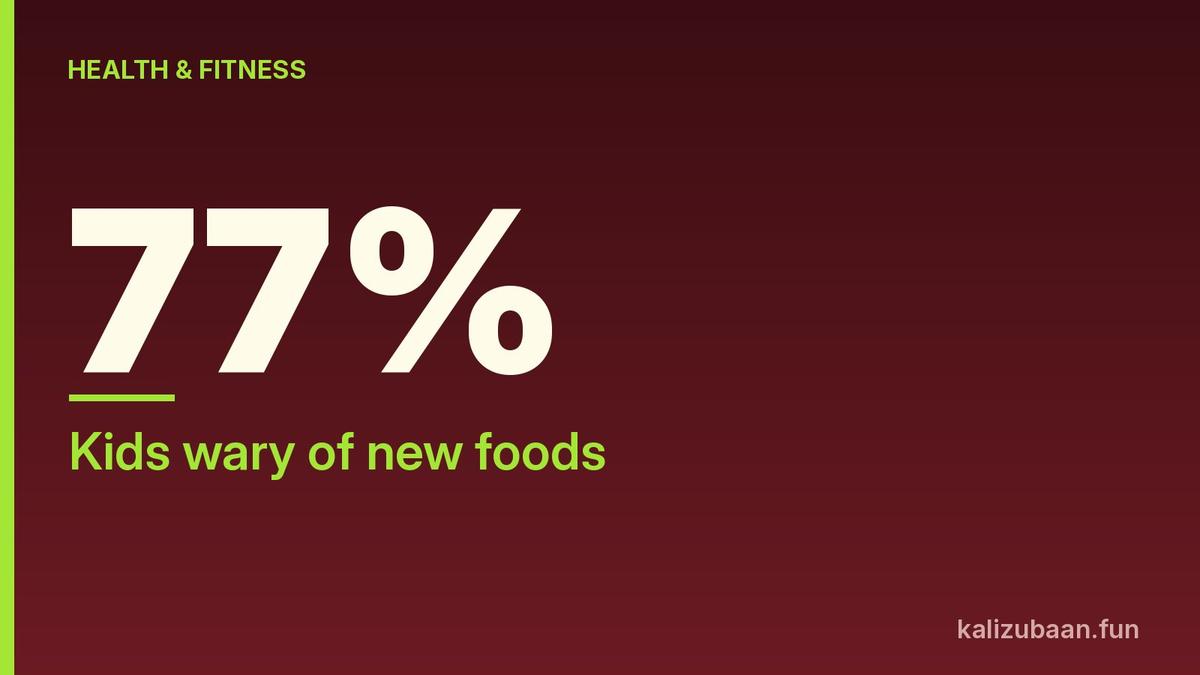
If your child pushes away anything green, you are far from alone. A new ICMR-National Institute of Nutrition study in Hyderabad found nearly 77% of children aged two to seven were moderately wary of trying new foods.
The bigger finding was about mothers. Children whose mothers knew more about feeding, and fed them calmly, were more open to new food.
Quick answer
- Food neophobia means a child refuses unfamiliar or varied foods. In the NIN study, nearly 77% of kids had moderate levels and 11.3% had high levels.
- Children of mothers with better feeding knowledge, attitudes and practices had lower food neophobia scores.
- The lead researcher's advice: offer a variety of foods again and again, without pressure, and keep mealtimes positive.
- The study shows a link, not proof of cause, and it covered one low-income Hyderabad neighbourhood.
This is health information only, not medical advice. Talk to your child's doctor about any worry over eating or growth.
What did the ICMR-NIN study find about picky eaters?
Most children in the study were at least somewhat reluctant to try new foods, and a mother's feeding knowledge and habits were linked to how reluctant they were.
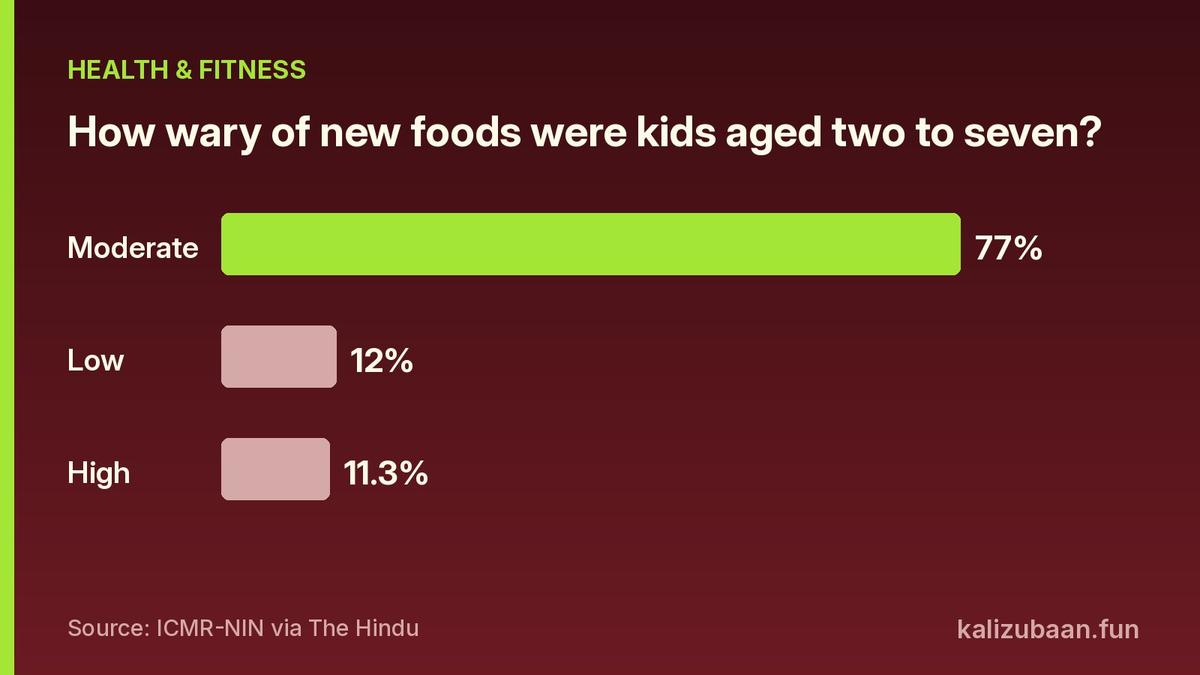
Researchers assessed 150 mother-child pairs in Addagutta, Hyderabad, between August and October 2025, and published the work in the Journal of Nutritional Science (The Hindu). Nearly 77% of the children showed moderate food neophobia, 11.3% high, and 12% low.
Boys scored slightly higher than girls, though the difference between groups was not statistically significant.
The children were scored on the Child Food Neophobia Scale, and their growth was checked against WHO standards (Hyderabad Mail).
How common is picky eating in Indian children?
Very common: earlier Indian research put it at roughly a third of young children, and this Hyderabad group came out higher.
The study paper notes that food neophobia among preschool children worldwide ranges from 14% to 60%, depending on culture and how it is measured, and that Indian evidence points to 30–40% of young children (Journal of Nutritional Science). It usually shows up between the ages of two and six.
Source: ICMR-NIN via The Hindu
What most guides miss: only the low group, about one child in eight, was truly relaxed about new food. That means a fussy phase is the normal case for this age, not a sign you have failed as a parent.
Many parents read a refusal as being fussy, disobedient or already full, the paper says. That can lead to forcing food, which tends to make children more resistant.
Does picky eating affect a child's health?
It can: in this study, children with wasting, a form of acute malnutrition, had higher food neophobia scores.
Children suffering from wasting were more likely to show higher neophobia scores than those with normal nutritional status, which suggests reluctance to try new foods may go with poorer diets (The Hindu).
Over time, a narrow diet can raise the risk of nutrient gaps, the study paper explains. That is why the researchers want feeding advice built into child nutrition programmes.
The study cannot say which comes first. A child might be undernourished because they refuse food, or something else might drive both.
How do you help a picky eater child at home?
The researchers' advice is simple: offer many foods, repeatedly, with no pressure, and respond kindly when your child says no.
Dr. Karthikeyan Ramanujam, Scientist-C at ICMR-NIN and the study's lead author, said caregivers should repeatedly offer a variety of foods without pressure, create positive mealtime experiences and respond supportively when children reject unfamiliar foods (Times of India).
On an Indian plate, that could look like this:
- Put a small spoon of a new sabzi next to the dal-rice your child already likes.
- Offer it again on another day, even if it was refused today.
- Eat the same food yourself, so your child sees you enjoy it.
- Skip the scolding, bribing or force-feeding.
- Keep meals calm, with the TV off if you can.
Children whose mothers scored moderately on feeding knowledge, attitudes and practices had lower neophobia than children whose mothers scored low (Hyderabad Mail).
Who were the mothers in this study?
They were mostly young homemakers from low-income families, which shapes how far the results apply.
The mothers' average age was 26.0 years, 81.3% were homemakers, and 66% of families reported annual household income between INR 100,000 and INR 200,000 (Journal of Nutritional Science).
The researchers cautioned that the study covered a single urban low-income community with a small sample. Because it was cross-sectional, it shows associations but cannot prove that a mother's habits cause a child's food fears.
What does this mean for Anganwadi and POSHAN programmes?
ICMR-NIN wants feeding counselling to become a bigger part of existing government child nutrition schemes.
ICMR-NIN Director Bharati Kulkarni said the findings offer a chance to strengthen behavioural feeding counselling through the Integrated Child Development Services (ICDS) and POSHAN Abhiyaan (The Hindu).
The paper notes that both programmes include maternal nutrition counselling, but advice on feeding behaviour is delivered unevenly and neither one targets food neophobia directly.
FAQs
What is food neophobia in children?
It is a child's reluctance or refusal to try unfamiliar or varied foods. It is most common in early childhood.
Is it normal for my child to refuse new foods?
In the NIN study, nearly 77% of children aged two to seven showed moderate food neophobia, so some reluctance is very common.
Should I force my child to eat vegetables?
The lead researcher advised offering a variety of foods repeatedly without pressure and keeping meals positive, rather than forcing.
When should I see a doctor about picky eating?
If you worry about your child's weight, growth or energy, see a paediatrician. The study linked higher food neophobia with wasting.
Expert review: pending.
This article is for information only and is not medical advice. Talk to a doctor before changing your diet or training.
Related reading
- 50.2% Diversity Score: NIN Diet Link to RA Risk
- 0.83g vs 1.6g per Kilo: High Protein Diet and Gut Health
- 95th Percentile: When Your Child's Baby Fat Becomes Obesity
Sources
- The Hindu: Mother's feeding practices may influence children's reluctance to try new foods: NIN study
- Hyderabad Mail: Nearly 77% of children in Hyderabad study wary of trying new foods
- Times of India: ICMR-NIN study finds 77% of kids aged 2-7 show reluctance to try new foods
- Journal of Nutritional Science: Food neophobia and its determinants among children aged 2-7 years
Tagged Topics
Keep reading
Thanks for reading Kali Zubaan
Explore more articles in Health & Fitness or return to the main publication feed.


