50.2% Diversity Score: NIN Diet Link to RA Risk
ICMR-NIN compared 301 newly diagnosed RA patients with 314 healthy adults in Hyderabad. Only 50.2% of RA patients had high dietary diversity, versus 74.2% of controls.
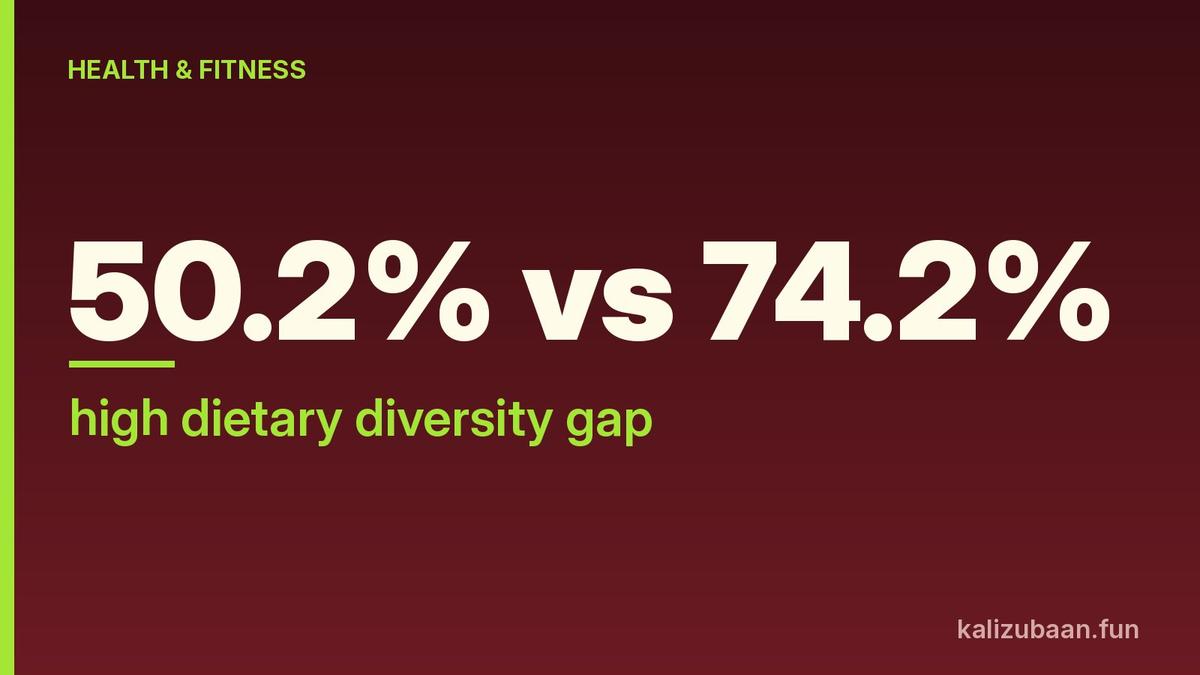
Only 50.2% of newly diagnosed rheumatoid arthritis patients in a Hyderabad study had a high dietary diversity score, against 74.2% of healthy adults. That gap comes from ICMR-National Institute of Nutrition researchers, not a wellness reel. The same case-control work also found more inflammatory eating patterns and thinner micronutrient adequacy among people with RA.
The team is careful on causation. The Hindu report says the study does not prove that poor diet causes RA. It does show a clear association between overall diet quality and who shows up newly diagnosed.
Quick answer
- ICMR-NIN studied 615 adults aged 18 to 55 in Hyderabad: 301 newly diagnosed RA patients and 314 healthy individuals, using a 131-item food frequency questionnaire.
- Only 50.2% of RA patients had a high dietary diversity score, compared with 74.2% of healthy participants.
- Median Dietary Inflammatory Index was 2.18 in the RA group versus 0.37 in controls; median micronutrient adequacy (MPA) was 18.9% versus 32.9%.
- Each one-unit rise in DII was linked to 17% higher odds of RA; each one-unit rise in diversity to 27% lower odds; every 10% rise in MPA to 12% lower likelihood, after age, sex and BMI adjustment.
What the Hyderabad case-control actually measured
The Hindu summarises a case-control study from ICMR-NIN in Hyderabad. Adults aged 18 to 55 filled a validated 131-item food frequency questionnaire. Researchers then scored three diet-quality lenses: Dietary Inflammatory Index (DII), Dietary Diversity Score (DDS), and Mean Probability of Adequacy (MPA) for micronutrients.
That design matters for how you read the headlines. It compares newly diagnosed patients with healthy controls in the same city. It is not a long follow-up that proves diet alone triggers autoimmune disease. Study supervisor Devraj J. Parasannanavar, quoted by The Hindu, stressed overall dietary quality rather than chasing single nutrients.
ICMR-NIN Director Bharati Kulkarni called for long-term and intervention studies to test whether diet changes can prevent or modify RA. The paper itself is in the peer-reviewed journal Nutrients.
The three numbers that drive the story
Dietary diversity is the cleanest contrast for a kitchen audience. Only 50.2% of RA patients sat in the high-diversity band, versus 74.2% of healthy adults.
Inflammatory potential runs the other way. Median DII was 2.18 among participants with RA and 0.37 among controls, which The Hindu reads as greater inflammatory potential in the patient group's food pattern.
Micronutrient adequacy tells a third story. Median MPA was 18.9% in the RA group against 32.9% among controls. That is not a claim that one vitamin fixes joints. It is a whole-diet adequacy score that sat lower when RA was newly diagnosed.
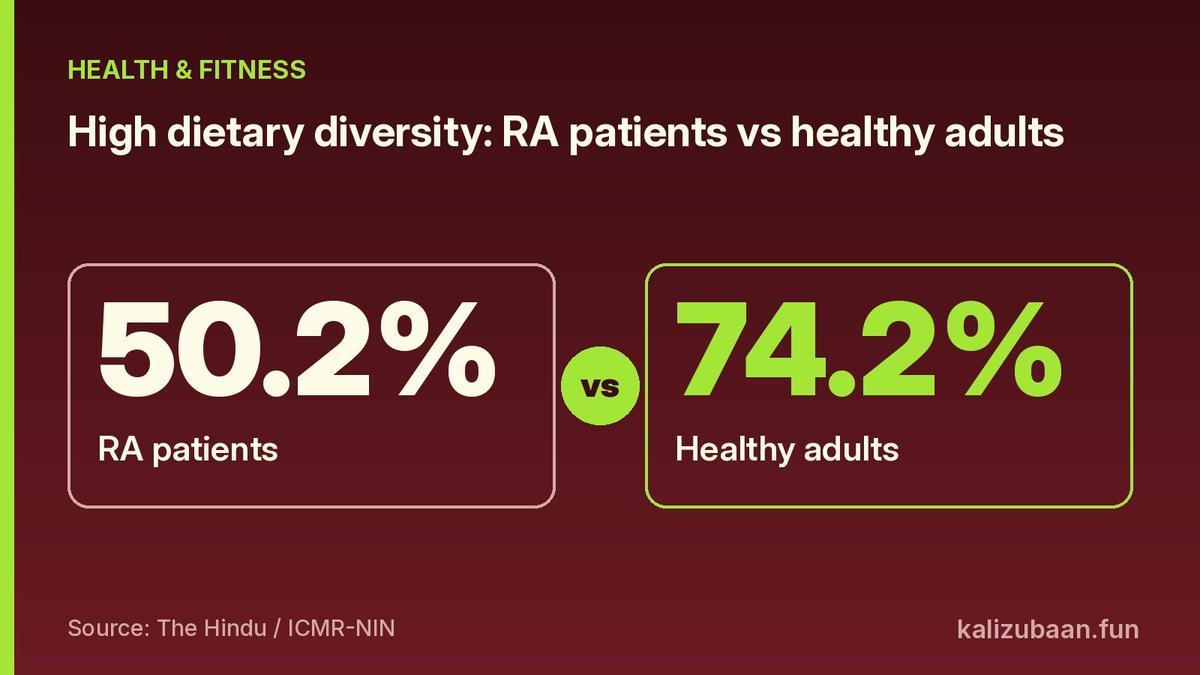
Source: The Hindu / ICMR-NIN
What the odds ratios say in plain words
After adjusting for age, sex and body mass index, The Hindu reports three associations.
Every one-unit increase in the Dietary Inflammatory Index was associated with a 17% increase in the odds of having RA. Each one-unit increase in dietary diversity was linked to a 27% reduction in the odds of the disease. Every 10% increase in micronutrient adequacy was associated with a 12% lower likelihood of RA.
Those are statistical associations inside this Hyderabad sample. They are not a promise that raising your diversity score by one point will cut personal risk by 27%. They do push the conversation away from miracle powders and toward variety and micronutrient density on ordinary plates.
What “diet quality” looks like on an Indian plate
The study instruments are research scores, not a meal plan. Still, the practical direction the researchers emphasise is overall quality: more diverse foods and better micronutrient coverage, less of a pattern that scores as pro-inflammatory.
On an Indian desk or hostel thali, diversity usually means not living on the same three items every day. Pulses that rotate through the week, vegetables beyond one seasonal sabzi, curd or buttermilk when you tolerate dairy, eggs or fish where the household eats them, fruit, nuts or seeds in small amounts, and whole-grain or millet sides instead of only refined cereal. None of that is medical treatment for rheumatoid arthritis. It is the kind of plate pattern the diversity and MPA scores reward.
Wikipedia's healthy-diet background lines up with the same idea at a global level: plenty of fruit and vegetables, limited free sugars and salt, and a balanced macronutrient mix. Use that as context, not as a RA protocol.
Who should be careful
Rheumatoid arthritis is an autoimmune disease that needs medical diagnosis and disease-modifying care. Do not stop prescribed medicines because a diet score looked better on paper.
People with kidney disease, pregnancy, diabetes on medication, or a history of disordered eating should not treat research odds ratios as a DIY diet prescription. Newly diagnosed joint pain still belongs with a clinician, not a food swap experiment alone.
FAQs
Does a poor diet cause rheumatoid arthritis? The Hindu quotes the researchers saying the study does not prove that poor diet causes RA. It highlights a significant association that merits further research.
How big was the study? 615 adults in Hyderabad aged 18 to 55, including 301 newly diagnosed RA patients and 314 healthy individuals, assessed with a 131-item food frequency questionnaire.
What is the 50.2% versus 74.2% gap? Only 50.2% of RA patients had a high dietary diversity score, compared with 74.2% of healthy participants, per The Hindu's report of the ICMR-NIN findings.
Should I change medicines based on DII or MPA? No. Those scores describe diet patterns in a research setting. Treatment decisions for RA stay with your doctor.
This article is for information only and is not medical advice. Talk to a doctor before changing your diet or training.
Sources
Tagged Topics
Keep reading
Thanks for reading Kali Zubaan
Explore more articles in Health & Fitness or return to the main publication feed.