3 g of Sugar per 100 g: FSSAI's Draft Junk Food Line, Explained
FSSAI's draft calls a solid food high in sugar above 3 g per 100 g. Keralam now wants the rule finalised so it can curb junk food near schools. Here is what the numbers mean for your family's snacks.
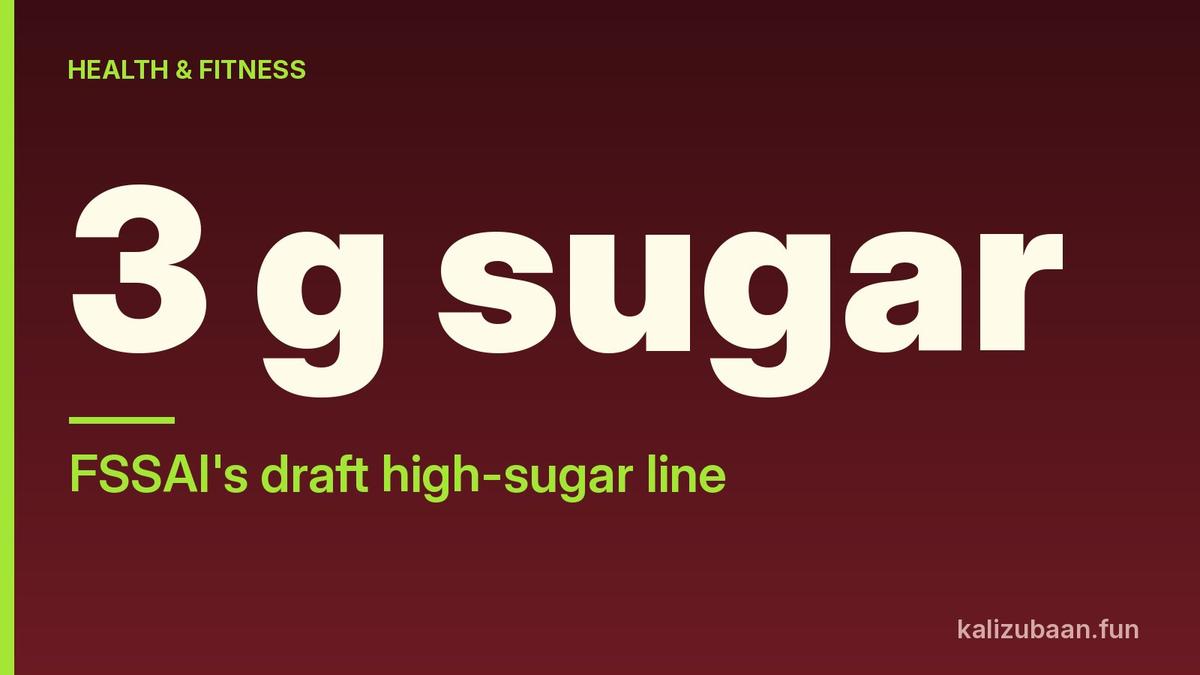
Pick up a packet of biscuits and flip it over. If it has more than 3 g of sugar in every 100 g, India's food regulator may soon call it a high-sugar food.
That line comes from a draft FSSAI regulation. This week Keralam asked the regulator to finally make it official, so the state can act against junk food sold near schools.
Quick answer
- FSSAI's draft says a solid food is high in fat, sugar or salt if it has more than 4.2 g of fat, 3 g of sugar or 0.625 g of salt per 100 g.
- For drinks and other liquids, the draft lines are 1.5 g of fat, 2 g of sugar and 0.175 g of salt per 100 ml.
- Keralam says states can't list or restrict HFSS food near schools until the draft becomes a statutory rule.
- You can use these numbers today: read the label per 100 g and compare.
What Keralam asked FSSAI for
Keralam's Health Minister K. Muraleedharan said the state will approach the Food Safety and Standards Authority of India (FSSAI) for clarity on what counts as HFSS food. HFSS stands for High Fat, Sugar and Salt.
His point, as reported by The Hindu, is simple. Junk food has no precise scientific definition. So there is no clear list of which items fall into the category, or how their sale should be regulated.
That gap is what is stopping the state from drawing up a list of HFSS foods and controlling their sale near schools. The minister said Keralam will write to FSSAI asking for the criteria to be finalised without delay.
The numbers in FSSAI's draft
On August 7, 2026, FSSAI published a draft regulation that puts numbers on "high". It sets separate limits for solid foods and for liquids.
For solid food, the draft treats more than 4.2 g of fat, 3 g of sugar or 0.625 g of salt per 100 g as high levels. Crossing any one of them is enough.
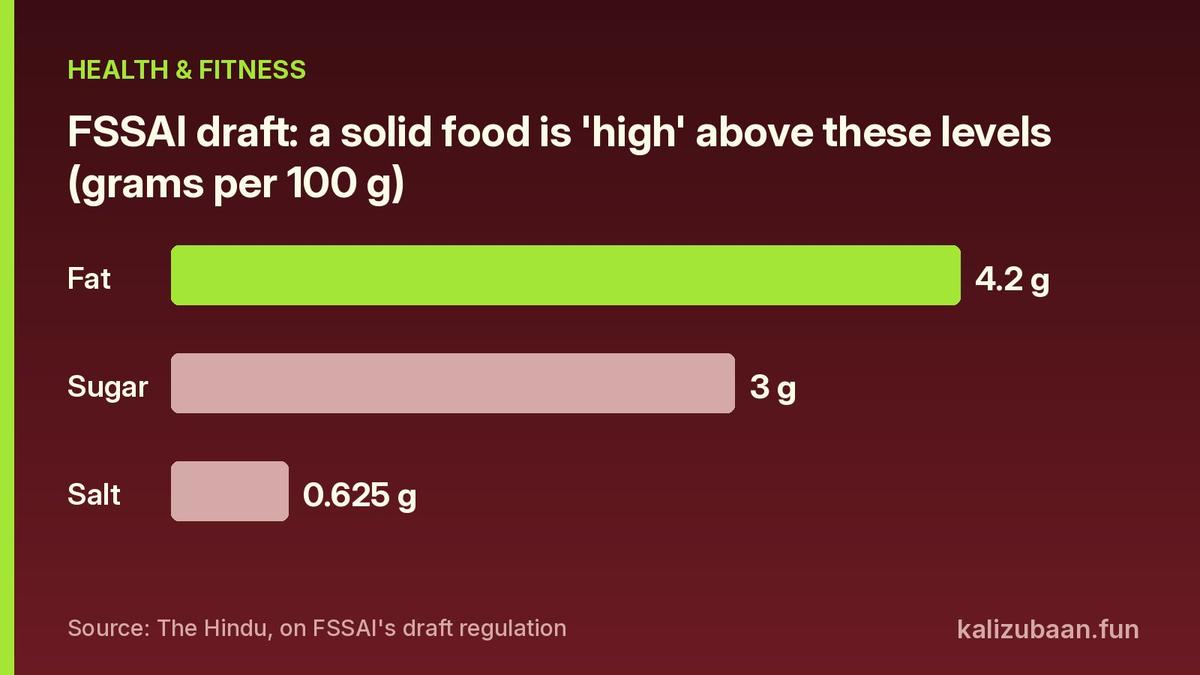
Source: The Hindu, on FSSAI's draft regulation
For liquid food, the thresholds are 1.5 g of fat, 2 g of sugar and 0.175 g of salt per 100 ml. That covers things like packaged juices and flavoured drinks.
These are low lines on purpose. A lot of everyday packaged snacks, sweet drinks and namkeen would likely cross at least one of them, which is exactly why a final rule matters to manufacturers and schools alike.
Why sugar, salt and fat are the three targets
The World Health Organization says people are now eating more highly processed foods that are high in unhealthy fats, free sugars and salt. At the same time, many people don't eat enough fruit, vegetables or fibre.
On sugar, the WHO advises keeping free sugars below 10% of total daily energy. For someone eating about 2000 calories a day, that is about 50 g, or roughly 12 level teaspoons. Going down to 5% or less may bring extra benefits.
On salt, the WHO recommends adults keep sodium under 2000 mg a day, which is less than 5 g of salt, or just under a teaspoon. For children aged 2–15 years, it says the adult amount should be adjusted downward based on their energy needs.
Most of us eat far more. The WHO puts the global average adult intake at 4278 mg of sodium a day in 2021, equal to 11 g of salt, more than double its recommendation.
On fat, the WHO says no more than 10% of total energy should come from saturated fat and no more than 1% from trans fat. It lists ghee, butter, palm and coconut oil among the sources of saturated fat, and baked and fried foods and pre-packaged snacks among the sources of trans fat.
Why schools are the focus
Eating habits formed in childhood and adolescence often carry into adulthood, the WHO notes. That is why many governments start with what children can buy.
Wikipedia's summary of junk food policy shows the pattern. In 2016, Chile brought in front-of-package warning labels, limits on marketing to children and a ban on in-school sales of food and drink with excessive sugar, salt or saturated fat.
The WHO also recommends that governments limit children's exposure to food marketing, saying advertising shapes children's food preferences and buying behaviour.
Keralam is already running related programmes. The minister said the Eat Right School programme has been implemented in 169 schools in the state. FSSAI's SNF@School programme, short for Safe and Nutritious Food at School, has reached 2,500 schools. Under Eat Right Campus, 456 institutions have been certified.
How to use the draft numbers at home
You don't need to wait for the final rule. The draft gives every parent a quick yardstick for the supermarket aisle.
- Read per 100 g, not per serving. Indian labels usually show both. The FSSAI draft lines are per 100 g for solids and per 100 ml for liquids.
- Check sugar first. For a solid snack, more than 3 g of sugar per 100 g crosses the draft line. For a drink, it is 2 g per 100 ml.
- Then check fat and salt. Above 4.2 g of fat or 0.625 g of salt per 100 g in a solid food counts as high.
- Make high items occasional. Keep fruit, nuts and home-cooked snacks as the everyday choice.
- Watch the tiffin and the school canteen. Ask what is sold near your child's school, since that is exactly what states want to regulate.
Who should be extra careful
People with high blood pressure should watch salt closely. The WHO links high sodium intake mainly to raised blood pressure, which increases the risk of heart disease and kidney disease.
People with diabetes, and parents of children who are gaining weight fast, should pay special attention to sugar. If you have a medical condition, ask your doctor what limits make sense for you.
FAQs
Is the FSSAI HFSS definition final? No. It is a draft published in August 2026. Keralam says states only get clear legal standing once it is finalised and made part of statutory rules.
What counts as high sugar in a drink under the draft? More than 2 g of sugar per 100 ml. For solid food, the line is 3 g per 100 g.
Does this mean junk food will be banned near schools? Not yet. Keralam wants the final criteria so it can prepare a list of HFSS food and ban or restrict its sale near schools.
How much salt should an adult eat in a day? The WHO recommends less than 5 g of salt a day, just under a teaspoon.
This article is for information only and is not medical advice. Talk to a doctor before changing your diet or training.
Sources
Tagged Topics
Keep reading

Thanks for reading Kali Zubaan
Explore more articles in Health & Fitness or return to the main publication feed.