62% Calories From Carbs: ICMR Plate Fix for India
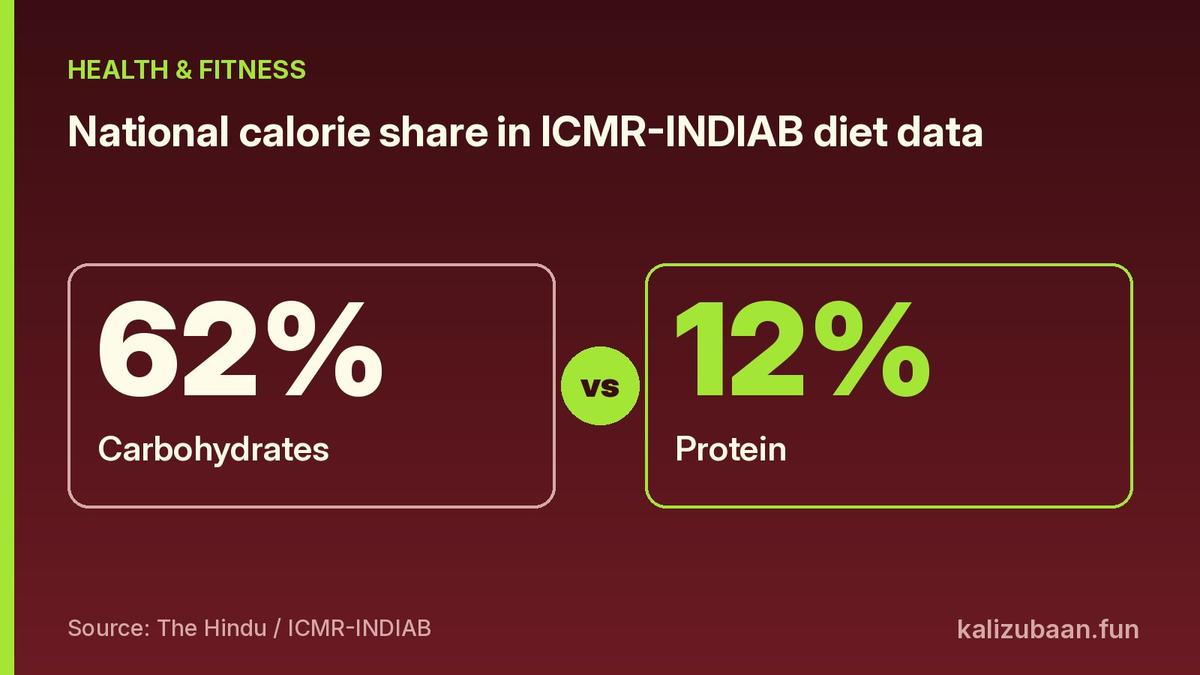
ICMR-INDIAB data show most Indians get about 62% of calories from carbohydrates and only about 12% from protein. Replacing 5% of carb calories with plant or dairy protein is the practical shift the researchers flag.
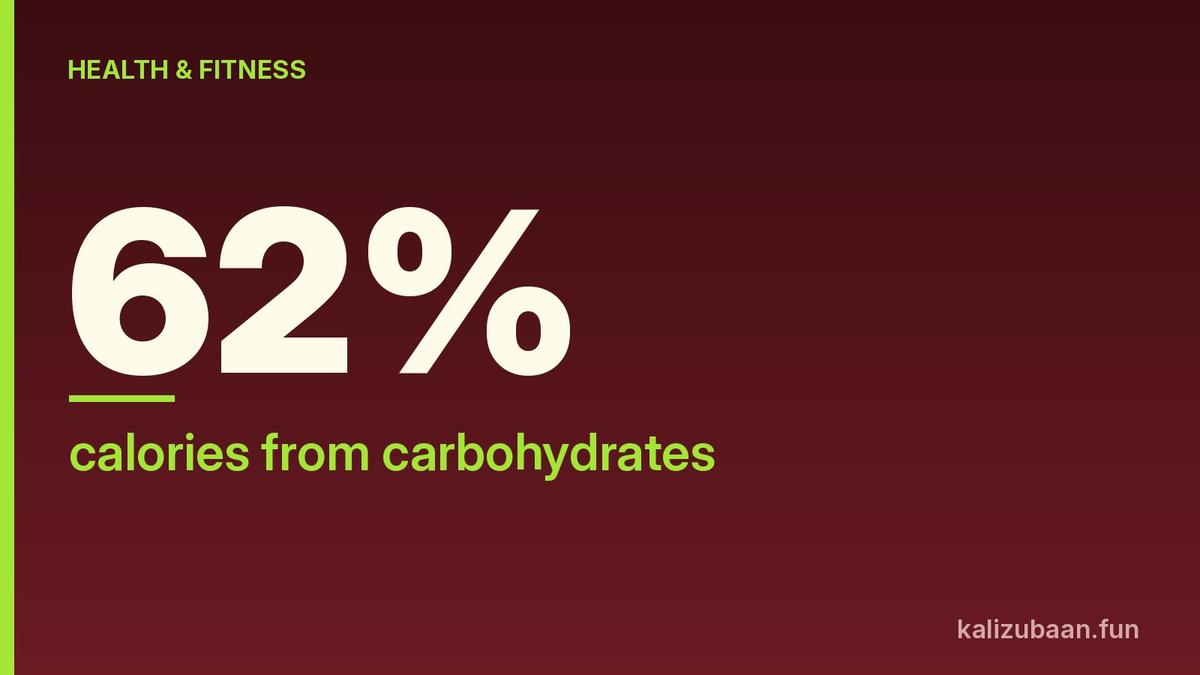
Most Indians derive about 62% of their calories from carbohydrates, The Hindu reports from the ICMR-INDIAB dietary analysis. Protein averages only about 12% of daily calories. That split is not a gym slogan. It is the national plate pattern researchers link to diabetes, prediabetes and obesity risk.
The practical lever the study team keeps repeating is small and specific: replace 5% of daily calories from carbohydrates with protein, especially from plants, pulses, legumes or dairy.
Quick answer
- Most Indians get about 62% of calories from carbohydrates; protein averages about 12% of daily calories, per The Hindu and The Indian Express coverage of ICMR-INDIAB.
- The survey covered 1,21,077 adults across 36 States and Union Territories; every fifth participant had a detailed diet assessment.
- Simply swapping white rice for wheat or millets without cutting total carbohydrate load is not the fix researchers describe.
- Replacing 5% of daily calories from carbohydrates with plant or dairy protein was linked to lower likelihood of newly diagnosed type 2 diabetes and prediabetes.
What the ICMR-INDIAB diet numbers actually show
The Indian Express headline numbers are blunt: 62% of calories come from carbs, and overall protein intake was suboptimal at about 12% of daily calories. At least 21 states and UTs exceeded the national recommendation of less than 5%E for added sugar.
The Hindu's Chennai report adds the scale of the parent survey. As part of ICMR-INDIAB, researchers worked with the Madras Diabetes Research Foundation on a cross-sectional sample of 1,21,077 adults from urban and rural areas across 36 States and Union Territories. Every fifth participant underwent dietary assessment. Those diet records were then mapped against metabolic risk.
Lead author R.M. Anjana put the finding in one sentence that should kill a common kitchen myth: this is not about rice or wheat, but how much of these you eat. Substituting one for the other does not reduce the risk. The team recommends replacing 5% of daily calories from carbohydrates with protein.
Where the carbs come from on Indian plates
Carbohydrate sources still differ by region, even when the national average sits near 62%.
The Hindu notes that refined cereal, meaning white rice, was the primary choice in the northeast (99%), south (87%) and east (78%). Whole wheat milled as flour dominated in the north (90%) and central (70%) regions. Millets as a main staple showed up in only three States: Karnataka, Gujarat and Maharashtra.
That regional map matters for policy and for your lunch box. A Mumbai bajra roti habit and a Chennai white-rice thali can both be high-carb plates. The study's warning is about total carbohydrate share, not only the grain on the plate.
Sugar is a second red flag. Anjana told The Hindu that 21 States exceeded the recommended intake of no more than 5% of total daily intake from sugar. The Indian Express matches that with at least 21 states and UTs above the less than 5%E added-sugar line.
Source: The Hindu / ICMR-INDIAB
The 5% protein swap that the paper models
The headline action is not a crash diet. It is a modelled isocaloric substitution: keep calories similar, move 5% of them from carbohydrates to protein.
The Hindu reports that replacing carbohydrate calories with protein from plants, pulses and legumes, or from dairy (fermented and non-fermented), was associated with a lower likelihood of newly diagnosed type 2 diabetes and prediabetes. Replacement with animal protein did not show the same association, except when the animal source was fish or egg.
A second Hindu explainer on the same Nature Medicine paper repeats the same lever: reducing carbohydrate intake by 5% and replacing it with protein could help with non-communicable diseases such as obesity, hypertension and diabetes. It also notes that rice and wheat showed the same impact on diabetes and obesity when the overall carbohydrate load stays high.
So the millet-or-wheat debate is secondary. The primary dial is how large a share of the day's energy still comes from starch and sugar.
Protein is low, and the Northeast stands out
National protein intake is low at about 12% of daily calories. The Hindu puts the northeast highest at 13.6%. Anjana noted that 9% of protein intake came from plant protein, followed by dairy and animal protein.
That regional contrast is useful. The same Hindu report says the northeastern region had the highest carbohydrate intake but low diabetes prevalence, because people there were also substituting with higher protein intake. More carbohydrates, Anjana said, mean significantly more diabetes, pre-diabetes, obesity and abdominal obesity when the rest of the plate does not compensate.
The second Hindu piece puts Northeast protein at 14% at the high end of the range it cites. Either way, the national average near 12% is the number most Indian desks and hostels should worry about first.
Fat quality is part of the same plate story
Carbs and protein get the headlines. Saturated fat still shows up in the same briefings.
The Hindu reports that saturated fat intake surpassed the recommended threshold for metabolic health of less than 7% of energy in all but four States: Jharkhand, Chhattisgarh, Arunachal Pradesh and Manipur. Senior author V. Mohan argued that nationwide findings should push policy on food subsidies and public messaging toward diets richer in plant-based and dairy proteins and lower in carbohydrates and saturated fats.
For a home cook, that pairs with the 5% swap: more dal, curd, paneer, sprouts, fish or egg where culture allows, and less deep-fried add-ons that quietly raise saturated fat while the rice mound stays large.
What to change this week without inventing a new diet
Use the study's own numbers as a checklist, not as a challenge diet.
- Estimate whether most of your energy still comes from rice, roti, suji, maida snacks and sugar. The national pattern is about 62% from carbohydrates.
- Raise protein share toward the better regional examples without chasing powders first. The researchers highlight plants, pulses, legumes and dairy; fish or egg when animal protein is the substitute.
- Treat a rice-to-wheat or rice-to-millet swap as incomplete unless total carbohydrate calories also fall. Anjana's line is explicit on that point.
- Watch added sugar against the 5% of total daily intake line that 21 States already miss.
- Keep saturated fat in mind against the less than 7% of energy threshold cited for metabolic health.
None of that requires a celebrity meal plan. It requires smaller cereal mounds and more dal, curd, paneer, sprouts, eggs or fish on plates you already recognise.
Who should be careful
People with kidney disease, those on prescribed diabetes medication, pregnancy, and anyone with a history of disordered eating should not treat a research substitution model as a personal prescription.
If you already eat high animal protein or use medical nutrition formulas, shifting another 5% of calories is a clinician conversation. Prediabetes and type 2 diabetes management still centres on medical care; diet pattern is one tool beside that care.
FAQs
Is 62% of calories from carbs normal for India? The Hindu and The Indian Express both report that most Indians derive about 62% of calories from carbohydrates in the ICMR-INDIAB dietary analysis. That is the measured national pattern, not a recommended target.
Is 12% protein enough? Coverage of the study calls overall protein intake suboptimal at about 12% of daily calories, with the northeast higher at about 13.6% in The Hindu's main report.
Will switching from rice to millets fix diabetes risk? Anjana's answer in The Hindu is no, not by itself. Substituting one cereal for another without cutting total carbohydrate load does not reduce the risk the team describes.
What is the 5% change in plain words? Move about 5% of daily calories from rice, wheat or other carbohydrates into protein from pulses, legumes, dairy, or fish or egg where appropriate, while keeping overall calories similar.
This article is for information only and is not medical advice. Talk to a doctor before changing your diet or training.
Sources
Tagged Topics
Keep reading
Thanks for reading Kali Zubaan
Explore more articles in Health & Fitness or return to the main publication feed.


