₹2500 to ₹3500: Why Your Daily Whey Scoop Costs More
A kilogram of popular whey concentrate jumped about ₹1,000 in a year, The Hindu reports. Mint says raw whey costs climbed almost 70% to as much as ₹3,000 per kg.
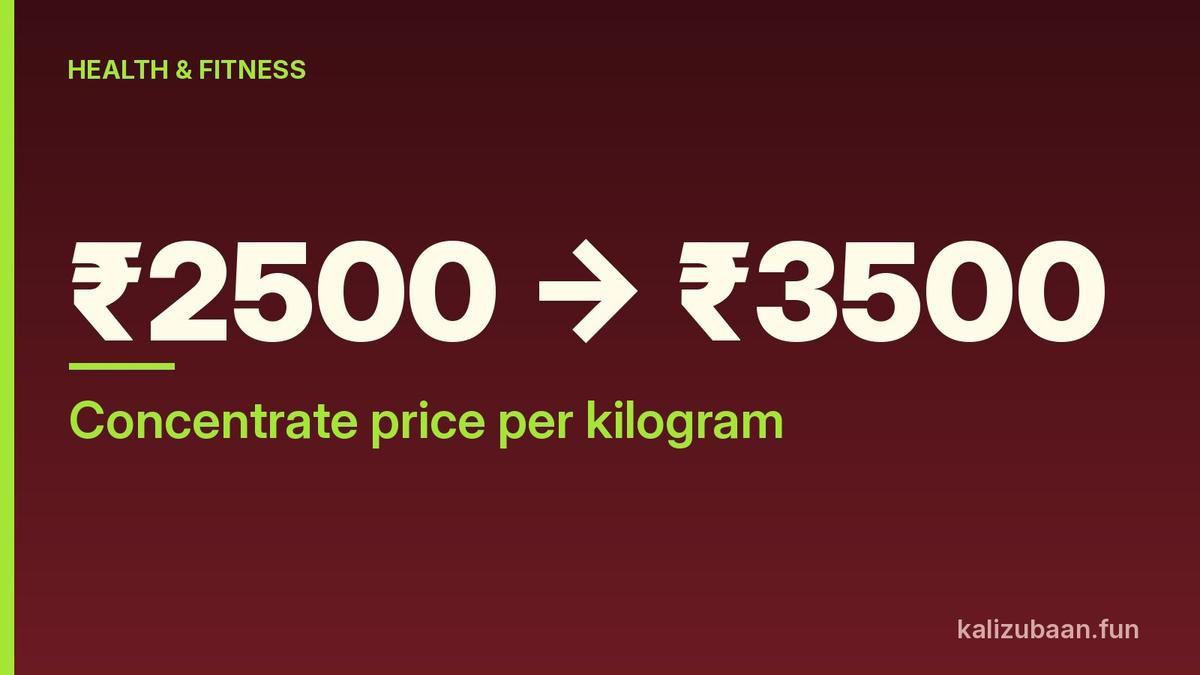
A kilogram of True Basics and Whole Truth whey concentrate that once cost around ₹2500 last year has gone up to around ₹3500. That is a clear leap of nearly ₹1000 on a tub many gym-goers treat as weekly shopping, The Hindu reports.
This is not a mild sticker shock. Mint's suppliers put raw whey costs up almost 70% over the past year, to as much as ₹3,000 per kg. The story today is the bill, not another debate about whether Indians need more protein.
Quick answer
- Popular 1 kg whey concentrates cited in The Hindu moved from around ₹2500 to around ₹3500; BusinessLine quotes a gym-goer whose 1 kg box rose from around ₹2,000 to over ₹3,200.
- Mint says raw whey climbed almost 70% to as much as ₹3,000 per kg; retail powder now often runs about ₹2,000 per kg for budget lines to ₹4,000-5,000 or more for premium offerings.
- Optimum Nutrition's 4 kg Gold Standard is listed at ₹17,649 and MuscleBlaze Biozyme Performance at ₹13,999, an over 20% jump from about ₹15,000 and a little over ₹10,000 last year, per The Hindu.
- India still imports much of its whey; dairy processing focuses more on milk, curd, paneer and ghee than large-scale cheese, so global shortages hit shelves fast.
The price tags people are actually seeing
Entrepreneur Akhila Vijayaraghavan told The Hindu she uses whey to help hit 100–120 grams of protein a day when she trains. The jump she flags is concrete: True Basics and Whole Truth concentrate going from around ₹2500 a kilogram to around ₹3500.
Brand shelves tell the same story at bigger pack sizes. Optimum Nutrition's Gold Standard 100% Whey is priced at ₹17,649 for 4 kg. MuscleBlaze Biozyme Performance Whey is ₹13,999 for the same amount. The Hindu calls that an over 20% jump from last year, when those packs were about ₹15,000 and a little over ₹10,000.
On the ingredient side, whey isolate that cost ₹2,200 per kilogram exclusive of GST in December last year now costs around ₹3,400, according to Vijay P of Chennai-based OMG Labs, quoted in The Hindu. Finished product costs, he says, have been pushed to ₹4,200-5,000 from ₹3,000-3,600 once flavours, packaging, labour and manufacturing are counted.
BusinessLine's Ashni, a 43-year-old marketing professional and gym-goer, puts the household version simply: a 1 kg box that used to cost around ₹2,000 now costs over ₹3,200. She has started leaning more on curd, paneer and ready-to-drink shakes.
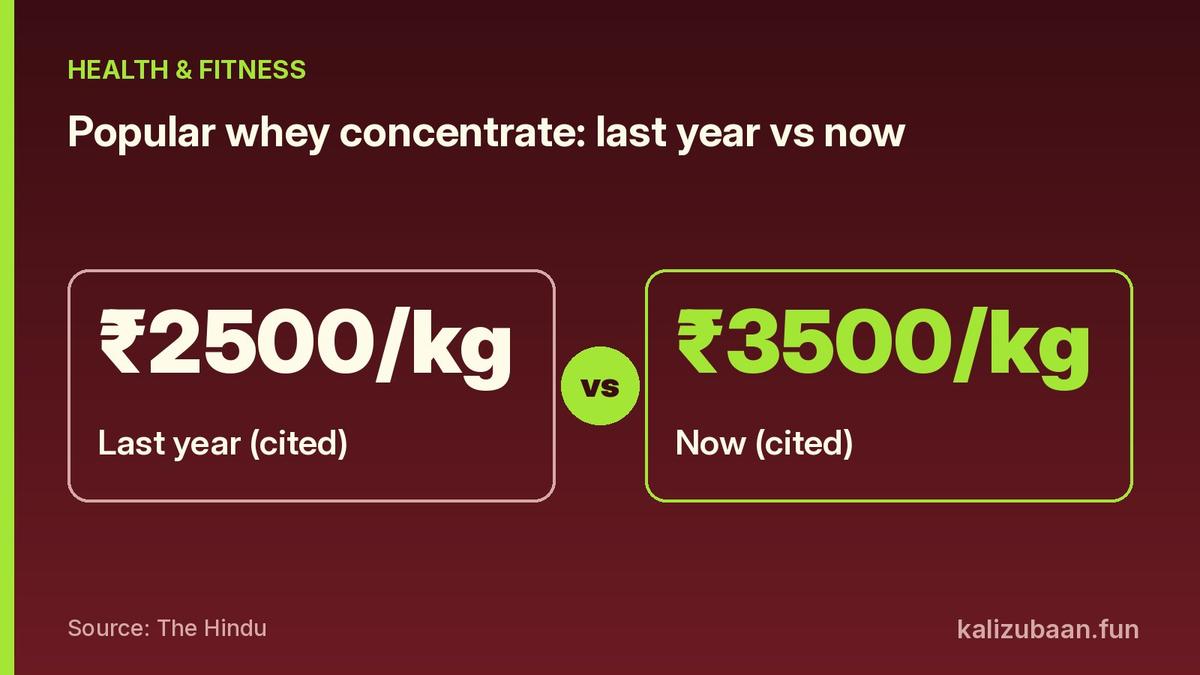
Source: The Hindu
Why India feels every global whey spike
India has a huge dairy industry, but not enough whey for the supplement boom. Whey is mainly a cheese by-product. Much domestic processing still focuses on milk, curd, paneer and ghee, Vijay told The Hindu, so the protein industry depends heavily on imports.
When international supply tightens, freight rises, or the rupee moves, landed costs jump. Mint adds that India imports a large share of whey from the US, Europe and New Zealand and is exposed to currency volatility. Suppliers told Mint raw whey costs climbed almost 70% over the past year, to as much as ₹3,000 per kg.
Retail powder, Mint reports, typically ranges from about ₹2,000 per kg for budget products to ₹4,000-5,000 or more for premium offerings, with 2 kg packs costing ₹4,000 to ₹7,000. Lower-priced blends and private-label options below ₹2,000 per kg are pulling in first-time and value-driven buyers, Protiviti's Nitin Jain told Mint.
Demand is rising while scoops get dearer
Coach Raj Ganpath told The Hindu India is in a "protein bubble" where more people are looking for protein even as supply lags. He cites a target of about 1.25 to 1.75 grams of protein per kilo of body weight per day, and notes that many Indian plates are still heavy on carbohydrates, fat and some vegetables.
NFHS data cited in The Hindu says 70-80% of Indians consume meat, fish, poultry and eggs, yet for many that does not happen often enough to cover daily needs. Gram for gram, Raj argues that even after the hike, whey concentrate or blend still costs around 6-7 rupees per gram of protein, similar to some functional dairy options; isolate costs a little more.
Mint frames the market size behind that buzz. IMARC put India's protein supplement market at ₹7,461 crore in 2024, with a path toward ₹13,186 crore by 2033. Jain said the mass category made up about 73% of India's whey protein market in 2025. Mint also notes that as much as 70% of India's protein market is currently dominated by whey.
What shoppers and brands are doing instead
Santosh Raghavan told The Hindu he used to stay loyal to a couple of brands; now he reads labels and picks what is affordable. Akhila said she cycles whey with fish, meat, eggs and low-fat paneer because daily use is harder to justify at current prices.
BusinessLine shows the food-industry mirror image. Akshayakalpa was selling "₹5-6 crore worth of high-protein milk every month" before the whey hike; today that number has reached around ₹10 crore, BusinessLine quotes, with daily volumes from about 6,000 litres to nearly 9,000. Sid's Farm cites a lactose-free high-protein milk with 25 grams of protein in a 250-ml can. Mint notes plant-protein bets too: Fast&Up says plant protein already accounts for half of its protein-powder revenue, and Marico took a 60% stake in Cosmix Wellness at an equity valuation of ₹375 crore.
None of that erases whey. It does mean the "automatic daily scoop" habit is getting a price audit.
How to read a tub without guessing
Compare ₹ per gram of protein across pack sizes, not only the sticker. The Hindu's brand examples and Mint's ₹2,000 to ₹4,000-5,000 retail band show how wide the shelf is. Watch whether you are buying concentrate, blend or isolate; isolate input costs moved from ₹2,200 to around ₹3,400 per kg in the OMG Labs example.
If you train hard and food access is tight, whey can still be efficient. If you mainly need a cheaper protein habit, curd, paneer, eggs, dals and the newer high-protein milks are the substitutes people in these stories are already testing. Talk to a doctor before high intakes if you have kidney disease or other medical limits.
FAQs
Did whey really jump by about ₹1,000 a kilogram? The Hindu cites True Basics and Whole Truth concentrate moving from around ₹2500 to around ₹3500 per kg. BusinessLine's shopper example is around ₹2,000 to over ₹3,200 for a 1 kg box.
How bad is the raw material spike? Mint's suppliers say raw whey costs climbed almost 70% over the past year, to as much as ₹3,000 per kg.
Why can't India just make more whey at home? The Hindu's industry sources say domestic dairy still prioritises milk, curd, paneer and ghee over large-scale cheese, so whey for supplements stays import-heavy.
Are plant proteins taking share only because of price? Price is a push. The Hindu and Mint both quote brands saying taste and mixability of plant proteins have improved, and some firms already earn a large share of powder revenue from plants.
This article is for information only and is not medical advice. Talk to a doctor before changing your diet or training.
Sources
Tagged Topics
Keep reading

Thanks for reading Kali Zubaan
Explore more articles in Health & Fitness or return to the main publication feed.