3% of PF Inflows in Startups? How EPFO Invests Your PF Money
EPFO may put up to 3% of fresh PF inflows into startup and private equity funds. Here is how EPFO invests your PF money today, what an AIF is, and what the plan means for your EPF balance.
Nearly 30 crore Indians have money in EPFO, and most of it sits in government bonds and other safe debt. That could soon change, a little.
EPFO is drafting rules to put up to 3% of its fresh annual inflows into alternative investment funds, including funds that back startups. If you have ever wondered how EPFO invests your PF money, this proposal is a good moment to look under the hood.
Quick answer
- EPFO is considering investing up to 3% of its fresh annual accretions in Sebi-regulated Category I and Category II AIFs. It is a proposal, not a final decision.
- The money would come from new inflows each year, not from the existing corpus of around ₹30 lakh crore.
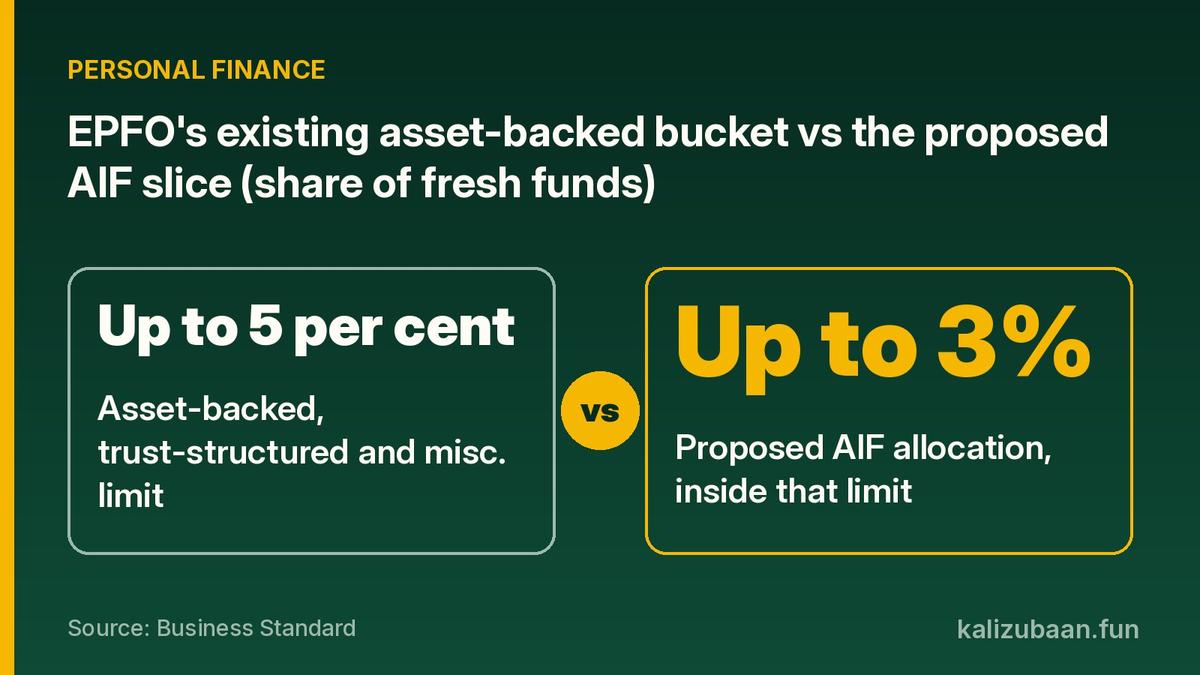
- The 3% would sit inside the existing 5 per cent limit for asset-backed and trust-structured investments, so it is not an extra slice on top.
- Your EPF interest rate is not directly linked to how these funds perform.
This is general education, not investment advice. Your EPF rules and interest rate are set by EPFO and the government, so check official notices before making any decision.
How does EPFO invest your PF money today?
EPFO invests your PF money mostly in government securities and debt, following an investment pattern notified by the finance ministry, with only a small part in equities.
Under that pattern, fresh funds go 45-65 per cent into government securities, 20-45 per cent into debt instruments, up to 5 per cent into short-term debt, 5-15 per cent into equities and up to 5 per cent into asset-backed, trust-structured and miscellaneous investments (Business Standard).
EPFO does not pick individual stocks. According to the government, it appoints professional portfolio managers to run the corpus within these limits (Mint).
The reason is simple. This is retirement money for nearly 30 crore members, so the priority is protecting the corpus first and earning returns second.
What exactly is EPFO planning with AIFs?
EPFO is drafting guidelines to invest up to 3% of its fresh annual accretions in Category I and Category II AIFs, and the proposal goes to its Central Board of Trustees in November.
The idea was discussed at an investment committee meeting, and the board that must approve it is headed by Labour Minister Mansukh Mandaviya (The Economic Times).
It is not new permission. The government allowed EPFO into these asset classes five years ago, but EPFO has not yet invested in Category I or Category II AIFs.
The trigger was a September letter from DPIIT asking EPFO to take part in the Startup India Fund of Funds 2.0. The government notified that ₹10,000 crore fund in April 2026 to channel venture and growth capital to startups, with SIDBI as the first implementing agency (Mint).
Source: Business Standard
What most guides miss: because the AIF slice would fit inside the existing 5 per cent bucket and comes only from fresh accretions, the plan does not raise EPFO's overall risk ceiling at all. It changes what goes into a bucket that already exists, which is why the headline "PF money in startups" sounds bigger than it is.
What are Category I and Category II AIFs?
AIFs are privately pooled funds that can invest in unlisted companies and less liquid assets, unlike regular mutual funds.
Category I AIFs back startups, SMEs, infrastructure and social ventures. Category II AIFs include private equity, real estate and private debt funds, and they do not borrow except for temporary needs (Business Standard).
Money in these funds can stay locked in for several years. Returns are not assured, and valuations are harder to check than for listed shares.
At first, EPFO is expected to route money through big institutions such as the National Investment and Infrastructure Fund and SIDBI's Startup India Fund of Funds 2.0, rather than investing in individual startups directly.
What safeguards are being proposed?
The draft framework includes a minimum AIF size of ₹100 crore, caps on exposure to any single fund, a bar on foreign-incorporated entities and a rule that fund managers stay independent of promoters.
These safeguards come from the Times of India report, as summarised by The Economic Times.
They matter because startups fail often. A business failure or poor performance can mean large losses, including losing the entire investment in that company.
Will this change your EPF interest rate?
No direct change is expected, because the EPF interest rate is set on EPFO's total income and obligations, not on any single investment.
Better AIF returns could strengthen EPFO's earnings and create some room for a higher payout, but there is no direct link between AIF performance and the yearly rate (Moneycontrol).
For a salaried employee, nothing changes in what you contribute or how you withdraw. The real test, as Moneycontrol puts it, is whether diversification lifts long-term earnings while keeping savings stable.
FAQs
How does EPFO invest PF money?
EPFO invests fresh funds mostly in government securities and debt, with 5-15 per cent in equities and up to 5 per cent in asset-backed and other investments, as per the finance ministry's pattern. Professional portfolio managers handle the money.
Will EPFO invest my PF money in startups?
Not directly, and not yet. The proposal is to put up to 3% of fresh annual inflows into Sebi-regulated AIFs, some of which fund startups. It still needs approval from the Central Board of Trustees.
Is my PF money safe if EPFO invests in AIFs?
The proposed share is small and sits inside an existing 5 per cent limit, with safeguards such as a ₹100 crore minimum fund size. AIFs do carry higher risk than government bonds.
When will EPFO decide on AIF investments?
The proposal is expected to go before the Central Board of Trustees in November 2026.
Expert review: pending.
This article is for education only and is not investment, tax or legal advice.
Related reading
- ₹10 Lakh in NPS at 35? You Can Take Out Only ₹2 Lakh
- ₹250 SIP, 35% Each Rule: Choice Mutual Fund Launch Explained
- 10-Year SIP Ended at -0.13%: Small-Caps Can Still Lose Money
Sources
Tagged Topics
Keep reading



Thanks for reading Kali Zubaan
Explore more articles in Personal Finance or return to the main publication feed.