₹250 SIP, 35% Each Rule: Choice Mutual Fund Launch Explained
The Choice Mutual Fund launch of its Large & Mid Cap Fund NFO runs till November 3, with ₹10 units and SIPs from ₹250. Here is what the fund does and who it may suit.

Lots of investors hold a large-cap fund and a mid-cap fund side by side, then keep wondering when to move money between them. Choice Mutual Fund is betting that many of them would rather have one fund and one SIP do that job.
The Choice Mutual Fund launch of the Choice Large & Mid Cap Fund is now open as a New Fund Offer (NFO). Units cost ₹10 each, SIPs start at ₹250, and the offer closes on November 3. Before you put money in because it is new and trending, here is what it actually is.
Quick answer
- The Choice Large & Mid Cap Fund is Choice Mutual Fund's first actively managed equity fund. Its earlier equity schemes were index funds.
- It must put at least 35% each in large-cap and mid-cap stocks, with up to 30% in small caps or other permitted instruments.
- The NFO opened on October 20 and closes on November 3. Units are priced at ₹10.
- Minimum lump sum is ₹1,000. Daily and weekly SIPs start at ₹250. Exit load is 1% if you redeem within 365 days.
- It carries a Very High risk rating. A new fund has no track record yet.
Why this NFO is in the news
According to The Economic Times and BusinessLine, this is Choice Mutual Fund's entry into actively managed equity. Until now, its equity schemes were index funds that simply track a benchmark.
"Our equity schemes so far have been index funds, and with the Choice Large & Mid Cap Fund we now offer an actively managed equity scheme," CEO Ajay Kejriwal said, as quoted by BusinessLine. He described the mandate as "at least 35 per cent each in large and mid cap companies, with the fund manager selecting stocks within it."
Choice Mutual Fund is sponsored by Choice International Ltd, a financial services group headquartered in Mumbai, BusinessLine reported.
What the fund will actually hold
Large & mid cap is a defined category. The rule is simple: a minimum share in large caps, a minimum share in mid caps, and some freedom for the rest.
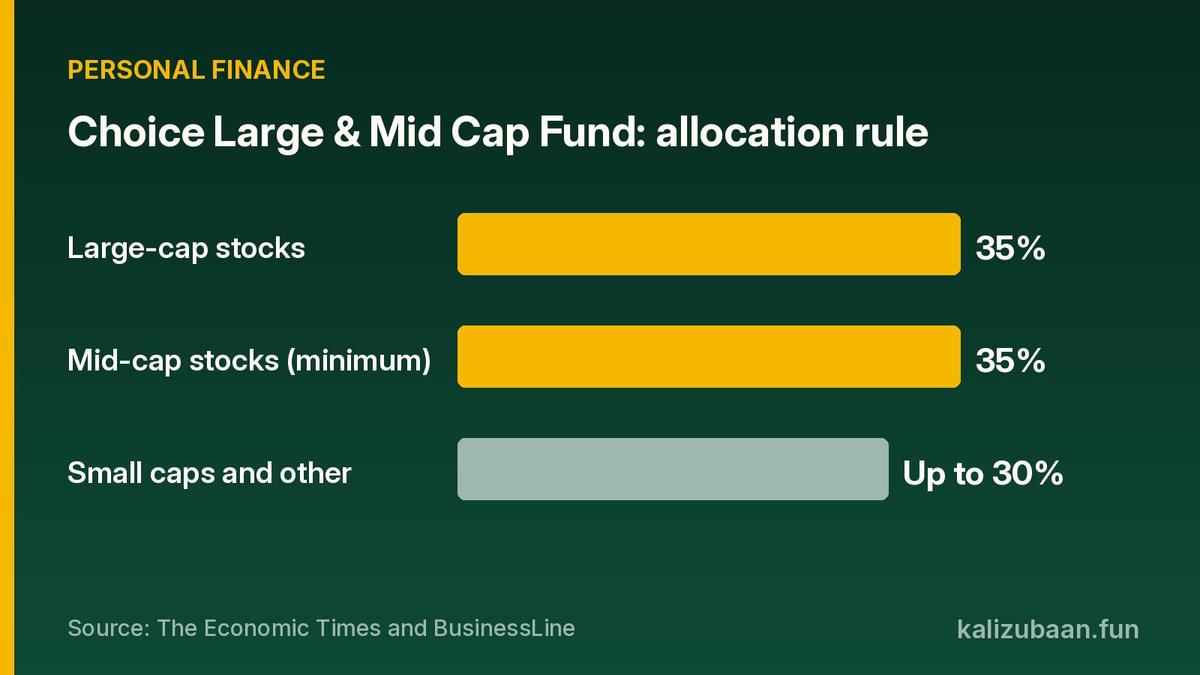
Source: The Economic Times and BusinessLine
Within those limits, the fund manager picks the stocks. ET reports the fund will be managed by Rochan Pattnayak.
ET also reports that stocks will be selected using GVOTE, Choice AMC's internal framework. It scores each company on Growth, Value, Operating earnings, Trajectory and Excellence against its sector peers. Those scores are then checked through research and an Investment Committee review.
The benchmark is the NIFTY Large Midcap 250 Total Return Index. That is the yardstick to judge the fund against once it has a few years of returns.
Key NFO details at a glance
Here are the facts reported by ET and BusinessLine:
- NFO period: opened October 20, closes November 3
- Unit price during NFO: ₹10
- Minimum lump sum: ₹1,000, and the same for additional purchases
- SIP: daily and weekly SIPs from ₹250, plus a ₹250 monthly Chhoti SIP for first-time mutual fund investors
- Plans: direct and regular, growth option only
- Exit load: 1% if redeemed or switched out within 365 days of allotment, nil after that
- Risk rating: Very High, the same as its benchmark
A note on the ₹10 price: a new fund's units are priced at ₹10 by default. A low NAV does not make a fund cheap or more likely to give higher returns. What matters is what the fund holds and how it is managed.
Who it may suit, and who should skip it
Per ET, the scheme is meant for investors seeking long-term capital appreciation through stocks that are mostly large and mid caps.
It may make sense to look at if:
- You want large-cap and mid-cap exposure in one fund instead of juggling two.
- You are investing for the long term and can sit through sharp falls.
- You like the idea of starting small, with a ₹250 SIP.
You may want to skip or wait if:
- You need the money within a year. The 1% exit load and equity volatility both work against you.
- You already hold a large & mid cap fund or a flexi-cap fund. Adding another can mean owning the same stocks twice.
- You prefer funds with a track record you can check. This one has none yet.
Mistakes to avoid with any NFO
Buying because it is new. An NFO is not a discount sale. You can compare it with existing large & mid cap funds that already have years of returns.
Ignoring the active vs index choice. Wikipedia's overview of mutual funds notes that index funds track a benchmark, while actively managed funds rely on a manager's picks and usually charge more. Decide which approach you want first.
Expecting an SIP to remove risk. An SIP buys more units when prices are low and fewer when they are high. It smooths your entry, but it does not protect you from a long market fall.
Skipping the documents. Read the scheme information document on the AMC or AMFI site for costs and risks before you invest.
FAQs
What is the Choice Mutual Fund launch everyone is searching for? It is the NFO of the Choice Large & Mid Cap Fund, Choice Mutual Fund's first actively managed equity scheme. It opened on October 20 and closes on November 3.
What is the minimum investment? ₹1,000 for a lump sum. SIPs start at ₹250 on a daily or weekly basis, and there is a ₹250 monthly Chhoti SIP for first-time investors.
Is there an exit load? Yes. 1% if you redeem or switch out within 365 days of allotment, and nil after that.
Is it safe? It carries a Very High risk rating. Equity funds can lose value, so invest only money you can leave for the long term.
This article is for education only and is not investment, tax or legal advice.
Sources
Tagged Topics
Keep reading



Thanks for reading Kali Zubaan
Explore more articles in Personal Finance or return to the main publication feed.