12–18 Months of Lag: When to Exit an Equity Mutual Fund
A fund with strong 3- and 5-year returns can still be slipping today. Experts explain when to exit a mutual fund, when to just pause new money, and the warning signs to check first.
Your equity fund shows great 3- and 5-year returns. But over the last year it has trailed. Do you hold, pause or sell?
Experts told Mint the answer is not in the long-term number alone. As one put it, long-term returns tell you whether a fund has been good, while the one-year return tells you whether it still is.
Quick answer
- Don't exit on one bad year. Panic selling after a single weak year can be costly.
- Pause fresh lumpsum money if the fund lags both its benchmark and category for 2–4 quarters.
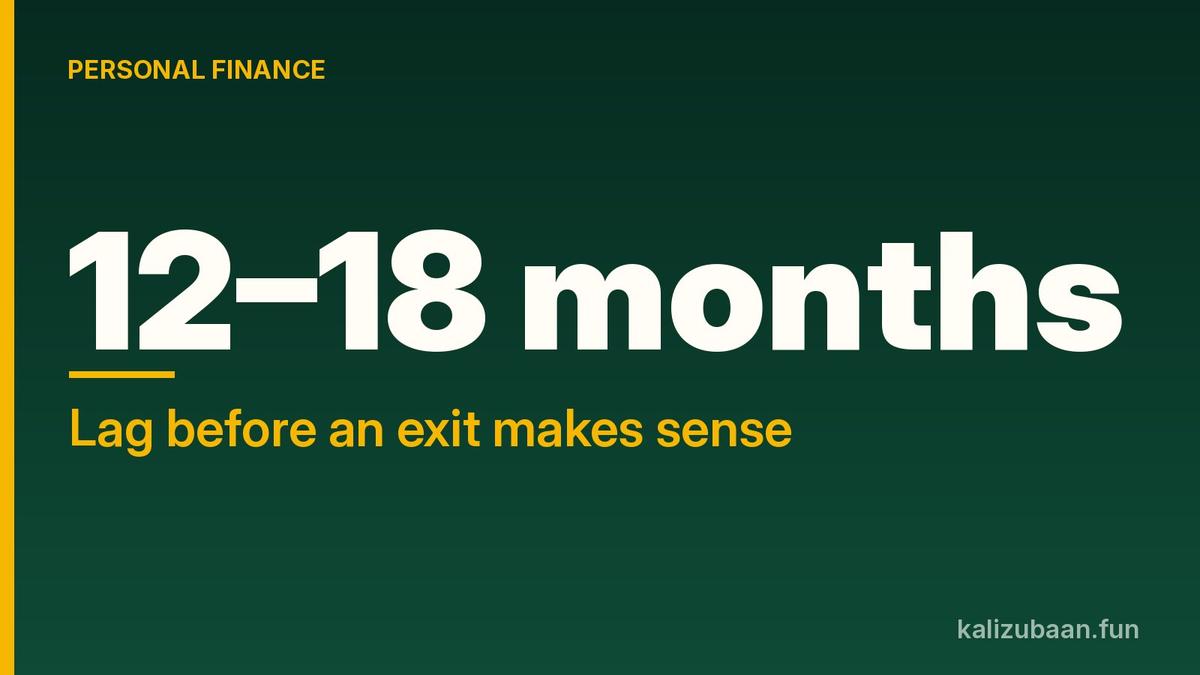
- Consider an exit if it lags both for 12–18 months in normal markets, along with manager, strategy or governance worries.
- Existing SIPs can usually continue while you watch.
This is general education, not a recommendation to buy, hold or sell any fund; check with a SEBI-registered adviser before you act.
Why can 3- and 5-year returns hide a weak fund?
Because they are averages, and an average can hide a bad recent year behind one or two exceptional ones.
That is the point made by Gaurav Garg, Head of Research at Lemonn (Mint). A fund that had one huge year can still show a healthy 5-year number while it struggles today.
Vedant Gupte, co-founder and CEO of Trackk, added a useful test. A weak one-year return in a falling market that still beats peers is a good sign. The one-year view also separates funds that beat peers steadily from those whose record rests on one or two great years.
"Investors need both, and most only check the first," Gupte said.
What should you compare your fund against?
Compare it with its own benchmark and its own category, never with a different kind of fund.
Harsh Vardhan Dawar of Wealth Cafe told Mint that a large-cap fund should be judged against a large-cap index, not against small- or mid-cap funds (Mint).
This matters because SEBI rules force each category to hold different stocks. A large cap fund must keep at least 80% of its assets in large cap companies, while mid cap and small cap funds must keep at least 65% in their own segments (TaxGuru, SEBI circular).
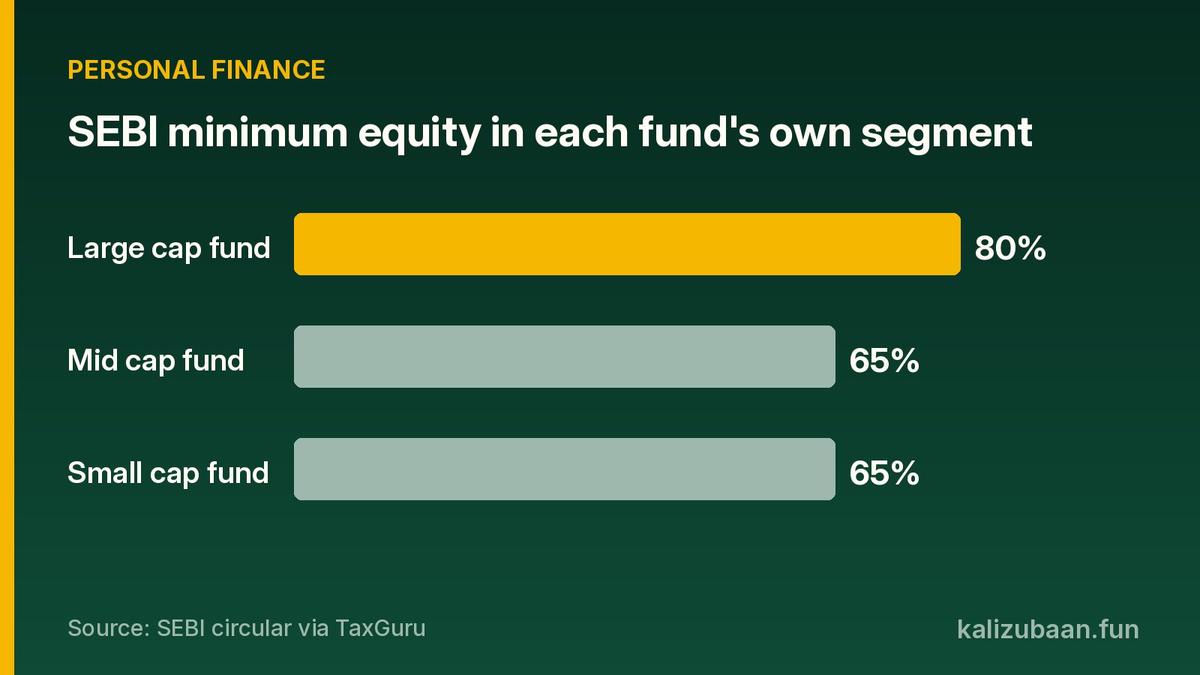
Source: SEBI circular via TaxGuru
SEBI also defines the segments. Large cap means the 1st to 100th company by full market capitalisation. Small cap starts from the 251st company. So a mid cap fund and a large cap fund are fishing in different ponds.
Which warning signs should you check?
Check six things: benchmark gap, rolling returns, downside capture, risk-adjusted returns, concentration and manager or strategy changes.
Garg shared these thresholds with Mint (Mint):
- Benchmark and peers: a 5-percentage-point lag, or trailing both for 12–18 months in normal markets.
- Rolling returns: look at 3-year rolling returns over 7–10 years. Beating the benchmark in fewer than 50% of periods is a red flag. Around 75% is a useful sign of consistency.
- Downside protection: a downside capture ratio above 100 means the fund falls more than its index.
- Risk-adjusted returns: a Sharpe ratio less than 1, beta above 1.1 or a negative information ratio needs a closer look.
- Concentration: top 10 holdings above 55–60% of the portfolio. SEBI caps exposure to a single stock at 10%.
- Turnover: above 75–100% in a fund that claims to buy and hold.
What most guides miss: two of these checks give opposite comfort levels. A fund can beat its benchmark in 75% of rolling periods and still fall more than its index in bad markets, so read the rolling-return number and the downside capture ratio together, never one alone.
When should you pause, review or exit?
Pause new lumpsum money first, review if the gap widens, and exit only when weak returns meet a deeper problem.
Garg laid out three steps (Mint):
- Pause new lumpsum money if the fund has lagged both its benchmark and category for 2–4 quarters, or has a new manager whose approach is still unclear. Existing SIPs can usually continue.
- Do a formal review if the gap is 5+ percentage points, rolling returns weaken, downside capture goes above 100, or turnover and concentration rise.
- Exit if it lags both the benchmark and category for 12–18 months in normal markets, along with structural, managerial or governance concerns.
Gupte's view is similar. Consider exiting when steady underperformance comes with weaker downside protection or a change in management or strategy.
Why does a fund manager change matter so much?
A new fund manager is the biggest risk to a track record built by one person, according to Gupte.
He told Mint that a strategy change, a merger or a sharp rise in assets under management also matters, especially in small- and mid-cap funds where size hurts (Mint).
If your fund's manager has changed, review the portfolio over the next 2–4 quarters. Look for drift away from the fund's stated mandate.
Common mistakes investors make
The most common mistake is waiting for long-term numbers to show trouble. "Don't wait for long-term numbers to catch up, because they follow trouble rather than predict it," Gupte said (Mint).
The opposite mistake is just as costly. A single bad year alone is not a reason to exit.
Other slips:
- Comparing a large-cap fund with a small-cap fund's returns.
- Checking only point-to-point returns and skipping rolling returns.
- Stopping a SIP in panic when pausing only fresh lumpsum money would do.
FAQs
When should I exit an equity mutual fund?
Experts suggest considering an exit when the fund lags both its benchmark and category for 12–18 months in normal markets, along with manager, strategy or governance concerns.
Should I stop my SIP if the fund had one bad year?
Not on one bad year alone. Existing SIPs can usually continue while you watch, and you can pause fresh lumpsum money instead.
What is a good rolling return consistency?
Beating the benchmark in around 75% of 3-year rolling periods is a useful consistency sign. Fewer than 50% is a warning sign.
What does a downside capture ratio above 100 mean?
It means the fund falls more than its benchmark index when markets drop.
Expert review: pending.
This article is for education only and is not investment, tax or legal advice.
Related reading
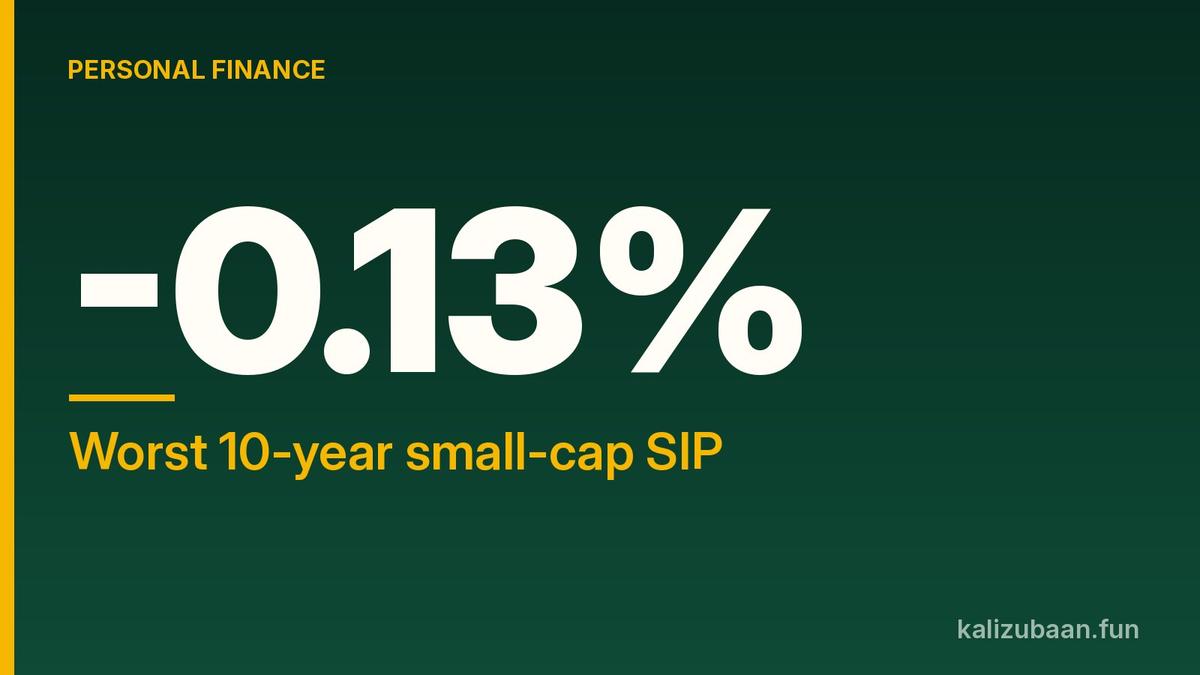
- 10-Year SIP Ended at -0.13%: Small-Caps Can Still Lose Money
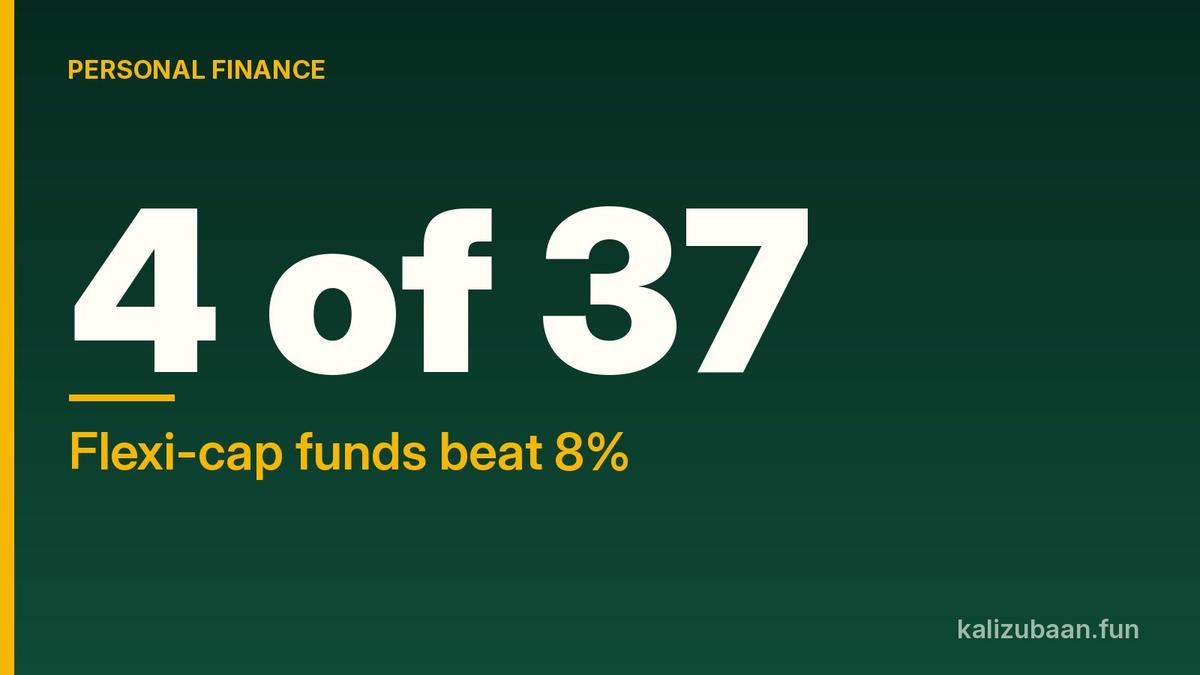
- Only 4 of 37 Flexi-Cap Funds Gave 8%+ SIP Returns in 3 Years
- ₹1,000 SIP for 20 Years Became ₹11 Lakh, But a 10% Step-Up Made It ₹21.6 Lakh
Sources
Tagged Topics
Keep reading

Thanks for reading Kali Zubaan
Explore more articles in Personal Finance or return to the main publication feed.


