₹28,946 Gap in 10 Years: SIP Calculator for Direct vs Regular
A ₹1,000 monthly SIP in the same fund ended ₹28,946 apart in 10 years, only because of the plan type. Here is what the SIP calculator numbers show and what changes from November 1.
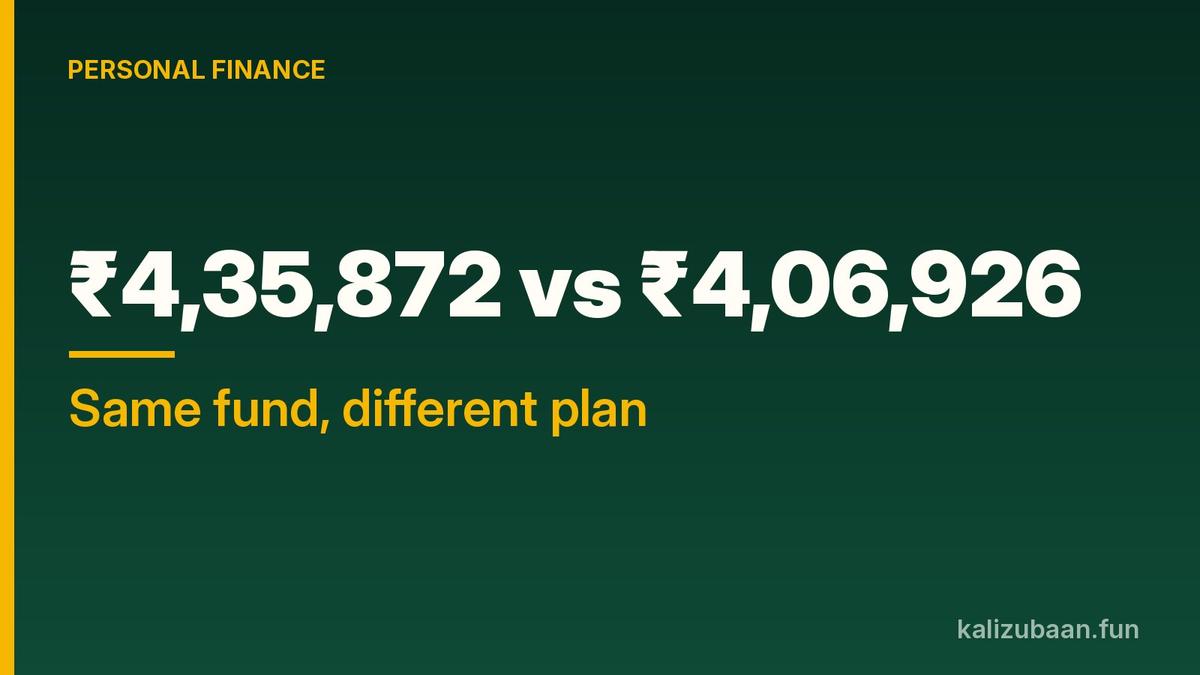
Two investors put ₹1,000 a month into the same Quant Small Cap Fund for 10 years. Same fund manager, same portfolio, same ₹1.2 lakh invested. One ended with ₹4,35,872, the other with ₹4,06,926.
The only difference was the plan they picked. Run any SIP calculator for direct vs regular plans and you will see the same quiet leak.
Quick answer
- Direct and regular plans hold the same portfolio, but regular plans charge a higher expense ratio to pay distributors.
- On a ₹1,000 monthly SIP in Quant Small Cap Fund, the gap after 10 years was ₹28,946.
- At ₹10,000 a month, the same gap grows to roughly ₹2.89 lakh.
- From November 1, direct plans become the default option on AMC digital platforms, says SEBI.
This is general education, not a recommendation to buy or sell any fund; check with a SEBI-registered adviser before you invest.
What is the difference between a direct and a regular plan?
A direct plan is bought straight from the fund house, while a regular plan is bought through a broker or distributor, who is paid out of your returns.
Both versions invest in the same stocks and are run by the same fund manager (Mint). You can often find both on the same apps.
The money that pays the distributor sits inside the total expense ratio, or TER. It is shown as a percentage of the fund's average NAV and is taken out before the daily NAV is published.
So you never see a separate bill. You just see a slightly lower NAV, every single day, for as long as you stay invested.
How much does a regular plan cost you over 10 years?
On a ₹1,000 monthly SIP, every one of the top five equity funds left regular-plan investors with less, and in Quant Small Cap Fund the gap was ₹28,946.
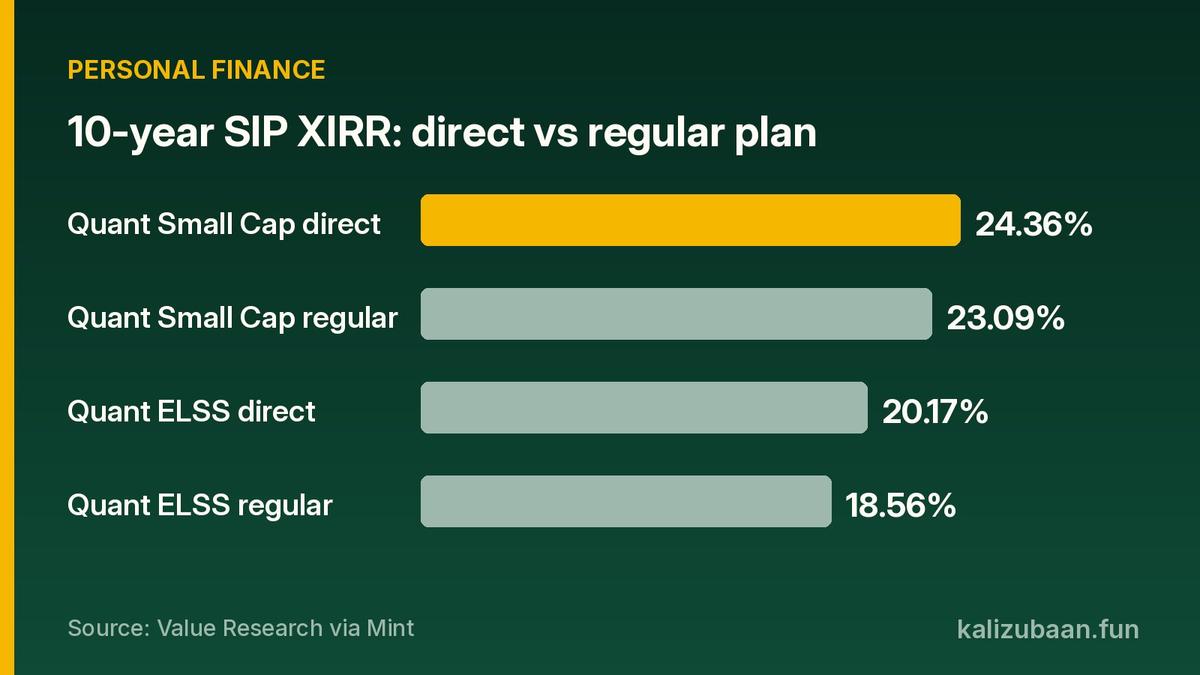
Value Research data quoted by Mint shows the Quant Small Cap Fund direct plan returned 24.36% XIRR over 10 years, against 23.09% for its regular plan, with returns as on 28 October.
Here is how the corpus looks for each fund on a ₹1,000 monthly SIP:
| Fund | Direct plan corpus | Regular plan corpus |
|---|---|---|
| Quant Small Cap Fund | ₹4,35,872 | ₹4,06,926 |
| Quant Infrastructure Fund | ₹3,70,975 | ₹3,42,456 |
| Bank of India Manufacturing & Infra Fund | ₹3,58,165 | ₹3,27,800 |
| Nippon India Small Cap Fund | ₹3,54,314 | ₹3,35,137 |
| Quant ELSS Tax Saver Fund | ₹3,47,488 | ₹3,18,557 |
Source: Value Research via Mint
Look at the table again: every regular plan finished below its direct twin, without a single exception.
What most guides miss: the plan gap can be bigger than the gap between funds. The Quant ELSS Tax Saver regular plan finished at ₹3,18,557, below the Bank of India Manufacturing & Infra direct plan at ₹3,58,165 and even below that same fund's regular plan at ₹3,27,800, so picking the plan type deserves as much thought as picking the fund.
Why does a small expense ratio gap grow so big?
The gap grows because the higher fee is charged every year on your whole balance, so it compounds against you just like returns compound for you.
According to AMFI data cited by Mint, Quant Small Cap Fund charges 0.90% for its direct plan and 1.73% for its regular plan, as of 15 October.
That difference looks tiny on a fact sheet. But it is taken from your money each day, and the money it takes can no longer earn returns.
In the early years, your SIP balance is small, so the fee costs little. In the later years, the balance is large, and the same percentage removes much more.
That is why the gap scales with your SIP size. A ₹10,000 monthly SIP in the same fund over the same period would have left a difference of about ₹2.89 lakh.
What changes for SIP investors from November 1?
From November 1, direct plans will be the default choice on fund houses' own digital platforms, and investors who pick regular plans must be told about the higher expense ratio.
SEBI Chairman Tuhin Kanta Pandey announced this at NDTV Profit IGNITE (Mint). The aim is to make the cost visible at the moment you choose.
This does not ban regular plans. It simply means you will have to choose them knowingly on AMC websites and apps.
If you already hold regular plans, nothing happens to them automatically. Your existing SIPs keep running in the plan you picked.
Should you switch from a regular plan to a direct plan?
Switch only if you are comfortable choosing and reviewing funds yourself, because the extra cost of a regular plan pays for a distributor's help.
Mint notes that investors should weigh the value of professional guidance and other services before choosing (Mint). For some people, a good adviser stops panic selling, and that alone can be worth more than the fee.
Before you move money, keep these points in mind:
- Switching from regular to direct is treated as a redemption and a fresh purchase, so check the tax and any exit load first.
- New SIP instalments can go into the direct plan even if you leave old units where they are.
- If you want advice and a direct plan, a fee-only SEBI-registered investment adviser is another route.
Use a SIP calculator with both expense ratios side by side. The number it shows for your own SIP is the clearest way to decide.
FAQs
Do direct and regular plans of a fund hold different stocks?
No. Both hold the same portfolio and are run by the same fund manager. Only the expense ratio, and so the NAV and returns, differ.
How much more does a regular plan cost?
It depends on the fund. For Quant Small Cap Fund, AMFI data shows 0.90% for direct and 1.73% for regular, as cited by Mint.
Will my existing regular plan SIP change from November 1?
No. The change makes direct plans the default on AMC digital platforms for new choices. Existing SIPs continue in the plan you picked.
Can a SIP one time calculator show this gap?
Yes. Enter the same amount and period twice, once with each plan's return, and compare the final corpus.
Expert review: pending.
Mutual fund investments are subject to market risks. Past returns do not guarantee future results. This post is for education only and is not investment advice; consult a SEBI-registered adviser before making investment decisions.
Related reading
- ₹17,000 Crore Adviser Wins First MF Lite Nod: What It Means
- ₹1,000 SIP for 20 Years Became ₹11 Lakh, But a 10% Step-Up Made It ₹21.6 Lakh
- 12–18 Months of Lag: When to Exit an Equity Mutual Fund
Sources
Tagged Topics
Keep reading



Thanks for reading Kali Zubaan
Explore more articles in Personal Finance or return to the main publication feed.


