"Your 6.40% FD Really Pays 4.64%: Post-Tax FD Rates at SBI, HDFC, ICICI, PNB (October 2026)"
"A ₹5 lakh, five-year FD at 6.40% earns ₹1,86,822 before tax, but only about ₹1,29,718 after tax at the 30% slab. Here is how pre-tax and post-tax FD returns compare across four big banks."
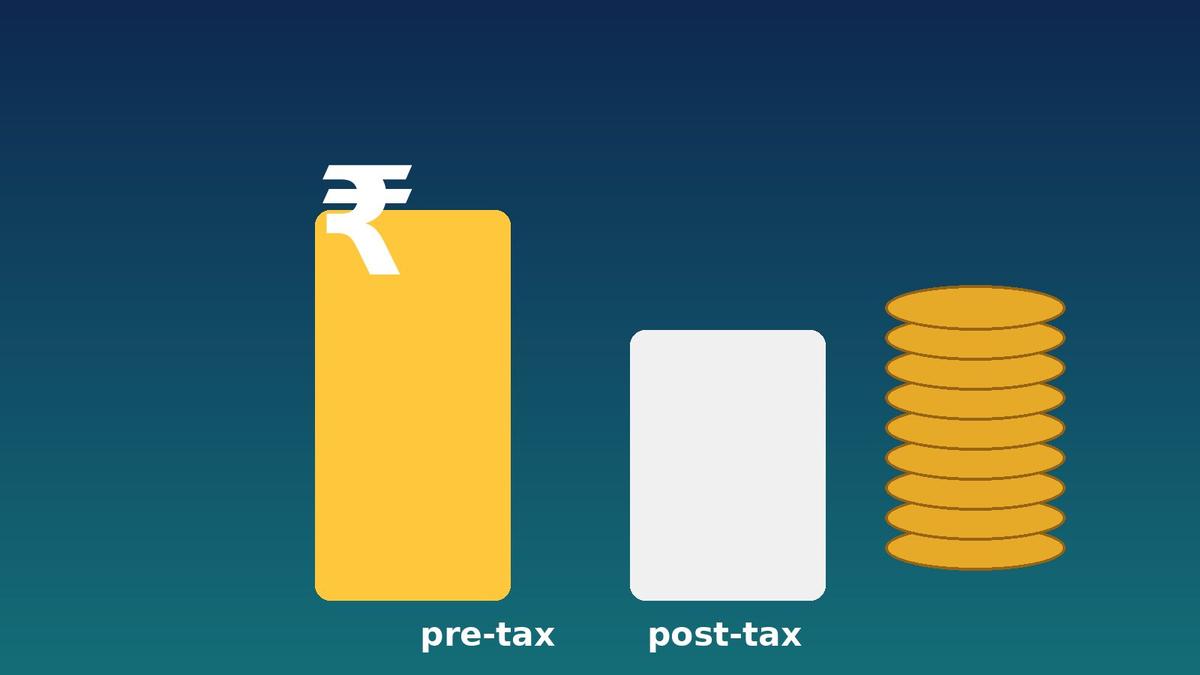
Every Indian family has that one relative who says, "Just put it in an FD, it's safe." And they are not wrong about safety. But here is the conversation that usually happens a few years later, at maturity time: "The bank said 6.40%, so why does my money feel like it grew so much less?"
The answer is tax. The interest rate printed on the bank's website is the pre-tax rate. What you actually keep depends on your income tax slab. According to a FundsIndia October 2026 report, covered by Mint, a five-year HDFC Bank FD at 6.40% works out to roughly 4.64% after tax for someone in the 30% slab. That gap is the difference between a good decision and a disappointing one.
Quick answer
- FD interest is fully taxable as "Income from Other Sources" and is added to your income at your slab rate.
- At the 30% slab, a 6.25 per cent one-year FD at any of HDFC Bank, ICICI Bank, SBI or PNB works out to about 4.38 per cent post-tax.
- On ₹5 lakh for five years at 6.40%, the post-tax maturity is around ₹57,104 lower than the pre-tax figure.
Why this matters now
FD rates across large banks now differ by tenure, and those small differences decide how much you keep after tax. FundsIndia's October report compared pre-tax and post-tax rates for deposits below ₹3 crore, as of 7 October 2026. If you are renewing an FD this month or parking a bonus, comparing only the headline rate can mislead you. The post-tax number is the one that lands in your account.
What the numbers actually say
Here is the pre-tax vs post-tax comparison from the report. Post-tax figures assume a 30% tax rate.
| FD tenure | Bank | Pre-tax (%) | Post-tax (%) |
|---|---|---|---|
| 6 Months | HDFC Bank | 4.25 | 2.97 |
| 6 Months | ICICI Bank | 4.50 | 3.14 |
| 6 Months | SBI | 5.65 | 3.94 |
| 6 Months | PNB | 5.60 | 3.90 |
| 1 Year | All four banks | 6.25 | 4.38 |
| 2 Years | HDFC Bank | 6.45 | 4.45 |
| 2 Years | ICICI Bank | 6.30 | 4.52 |
| 2 Years | SBI | 6.40 | 4.45 |
| 2 Years | PNB | 6.30 | 4.49 |
| 3 Years | HDFC Bank / ICICI Bank | 6.45 | 4.60 |
| 3 Years | SBI / PNB | 6.30 | 4.49 |
| 5 Years | HDFC Bank | 6.40 | 4.64 |
| 5 Years | ICICI Bank | 6.50 | 4.72 |
| 5 Years | SBI | 6.05 | 4.38 |
| 5 Years | PNB | 6.10 | 4.42 |
A few things jump out:
- Short tenures are where the big gaps are. For the 6 Months bucket, SBI at 5.65 per cent and PNB at 5.60 per cent are well ahead of HDFC Bank at 4.25 per cent. After tax, that is 3.94 per cent vs 2.97 per cent.
- The one-year bucket is a tie. All four banks are at 6.25 per cent, or 4.38 per cent post-tax. Here, convenience and service matter more than the rate.
- For five years, private banks lead. ICICI Bank at 6.50 per cent (4.72 per cent post-tax) is the highest in the table, while SBI's 6.05 per cent drops to 4.38 per cent after tax.
The ₹5 lakh example: where your money goes
Mint worked through an illustration. Suppose you deposit ₹5 lakh in a five-year FD at 6.40%, with quarterly compounding:
- Maturity value before tax: about ₹6,86,822
- Interest earned before tax: about ₹1,86,822
Now, if you are in the 30% tax slab and your effective post-tax return is 4.64%, as in the table:
- Interest after tax: about ₹1,29,718
- Total value after tax: about ₹6,29,718
That is ₹57,104 lower than the pre-tax maturity value. Mint notes these figures are illustrative, and your actual post-tax return can vary with your tax liability and the calculation method. Still, the lesson is clear: in a high slab, close to a third of your FD interest can go to tax.
TDS is not your final tax
This is where many families get confused. Banks may deduct tax at source (TDS) when your FD interest crosses a threshold:
- ₹50,000 in a financial year for non-senior citizens
- ₹1 lakh for senior citizens
TDS is generally deducted at 10% when you have given your PAN to the bank.
But TDS is not the final tax. If you are in the 30% slab, the bank cuts 10%, and you may still owe the rest when you file your income tax return (ITR). If your actual tax liability is lower, you may get a refund. So the common belief, "the bank already cut tax, I'm done," can lead to a surprise demand later.
Who is affected
- Salaried people in higher slabs. Your FD interest is taxed at your top slab, so the post-tax gap is widest for you.
- Retirees. The higher TDS threshold of ₹1 lakh helps with cash flow, but interest is still taxable income. Check whether your total income actually leads to tax.
- Parents parking money for kids' goals. A five-year FD that "looks" like 6.40% may compound much more slowly after tax.
- Anyone renewing short FDs. In the 6 Months bucket, the difference between banks is large, so shopping around helps.
What to do now
- Know your slab first. Take the FD rate and adjust it for your tax rate before comparing it with anything else.
- Compare by tenure, not by bank name. SBI leads for 6 Months in this table; ICICI Bank leads for 5 Years.
- Make sure your PAN is updated with the bank so TDS is deducted at the standard 10% rate.
- Track interest across all your FDs, not just one bank, since all of it adds to your taxable income.
- Reconcile at ITR time. Pay any extra tax due or claim a refund if TDS exceeded your actual liability.
Mistakes and red flags
- Treating the headline rate as your return.
- Assuming TDS settles your tax.
- Forgetting interest on FDs at multiple banks when filing your return.
- Choosing a bank by brand loyalty when another bank pays more for the same tenure.
FAQs
Is FD interest taxed every year or only at maturity? Mint's report says FD interest is taxed as "Income from Other Sources" at your slab. Talk to a tax professional about how accrual applies to your specific deposits.
If my bank deducts TDS, do I still need to report the interest? Yes. TDS is not the final tax liability; you report the interest in your ITR and either pay the balance or claim a refund.
Which bank pays the most for a one-year FD? In this table, HDFC Bank, ICICI Bank, SBI and PNB all offer 6.25 per cent for 1 Year.
Does this apply to big deposits? The rates listed are for deposits below ₹3 crore.
What would you do: lock into ICICI Bank's 6.50 per cent for five years, or stay short with SBI and wait for better rates? Tell us in the comments.
This article is for education only and is not investment, tax or legal advice.
Sources
Tagged Topics
Keep reading

Thanks for reading Kali Zubaan
Explore more articles in Personal Finance or return to the main publication feed.


