7.50% FD Rate: Highest FD Interest Rates After Repo Rate Hike
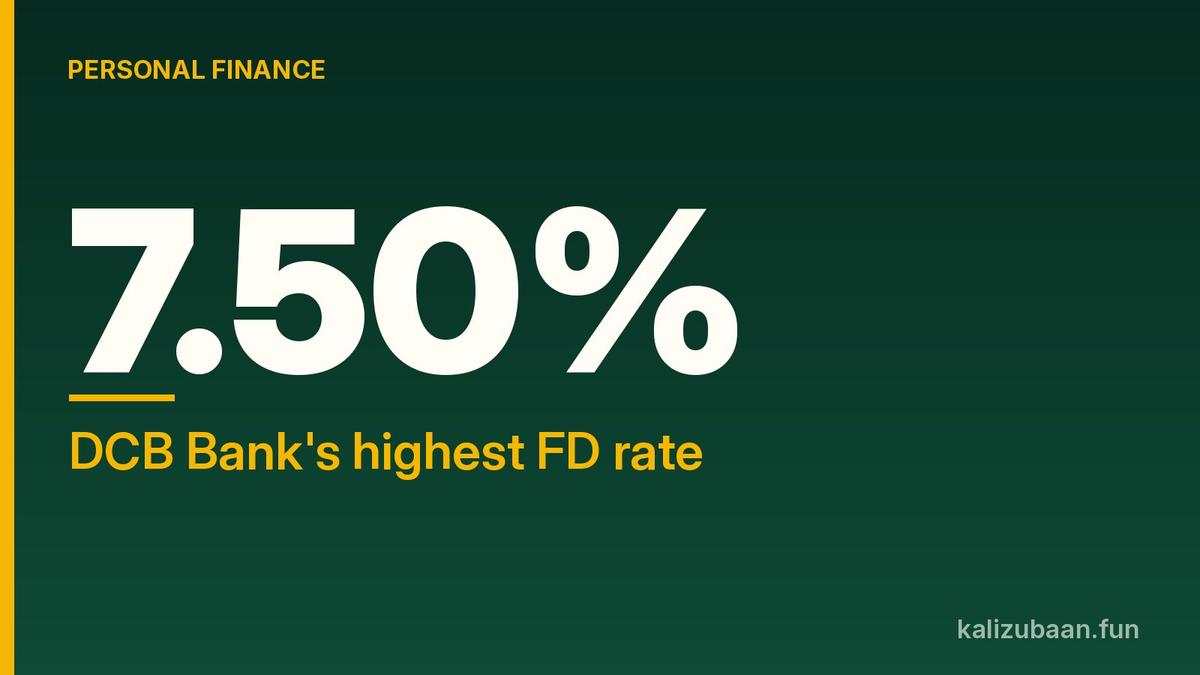
DCB Bank pays 7.50% and Bank of India 6.85%. Here are the highest FD interest rates after the repo rate hike, public vs private banks, and why the top slab may not match your tenure.
The RBI raised the repo rate on 7 October 2026, its first hike in 44 months. Many savers assumed their next FD would pay more almost by default.
It does not work that way. The highest FD interest rates after the repo rate hike now range from 6.45% at SBI to 7.50% at DCB Bank, and the best rate on a bank's board is often not the rate you will get for the tenure you want (Mint).
Quick answer
- DCB Bank offers the highest maximum FD rate at 7.50% a year, followed by Bandhan Bank at 7.45%.
- Among public sector banks, Bank of India and Punjab & Sind Bank lead at 6.85%.
- Big private names pay less: HDFC Bank and Axis Bank top out at 6.50%, and SBI at 6.45%.
- A bank's highest slab applies to one specific tenure, so check its 1-year, 3-year and 5-year rates before you book.
This post is general education about published deposit rates and is not investment advice or a recommendation to open an FD with any bank. Rates change often, so confirm on the bank's own website before you invest.
Why are FD rates moving after the repo rate hike?
FD rates are moving because the RBI raised the repo rate by 25 basis points to 5.50% on 7 October 2026, and some banks have raised deposit rates to attract money.
The repo rate is the rate at which commercial banks borrow short-term funds from the RBI. When it goes up, banks' lending and deposit rates can follow. The last increase before this one took the repo rate to 6.50% in February 2023, notes Mint.
But nothing is automatic. Each bank decides on its own whether to change FD rates, and by how much. That is why two banks with similar names and sizes can now be paying very different returns.
Which public sector bank gives the highest FD interest rate?
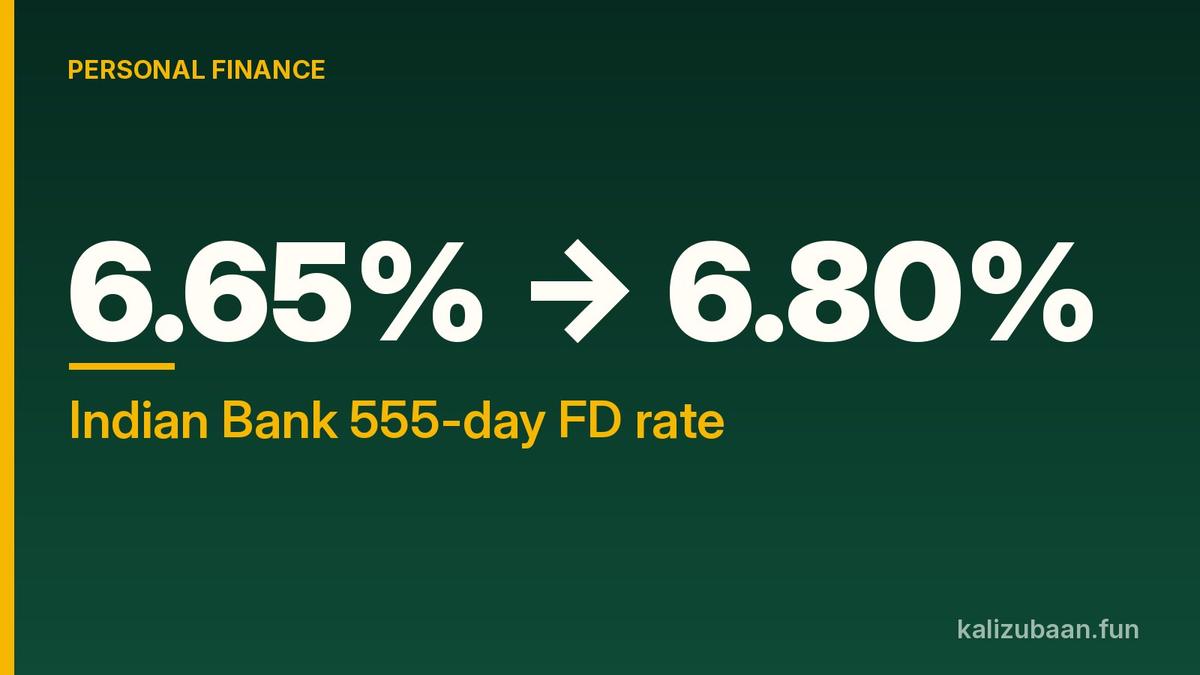
Bank of India and Punjab & Sind Bank give the highest FD rate among public sector banks, at 6.85% a year, followed by Indian Bank at 6.80%.
Here is how the main public sector banks compare on their highest slab, using rates as of 28 October 2026 compiled by Paisabazaar and published by Mint. Senior citizen rates are excluded.
- Bank of India: 6.85% highest; 6.50% for 1 year, 6.70% for 3 years, 6.00% for 5 years.
- Punjab & Sind Bank: 6.85% highest; 5.85% for 1 year and 3 years, 5.95% for 5 years.
- Indian Bank: 6.80% highest; 6.10% for 1 year, 6.05% for 3 years.
- Bank of Baroda: 6.75% highest; 6.30% for 5 years.
- Punjab National Bank: 6.60% highest; 6.35% for 3 years.
- State Bank of India: 6.45% highest; 6.25% for 1 year, 6.30% for 3 years, 6.05% for 5 years.
Notice Punjab & Sind Bank. It shares the top spot, yet its 1-year rate is among the lowest on the list. Its best rate sits on some other special tenure.
Which private bank gives the highest FD rate?
DCB Bank gives the highest FD rate among private banks at 7.50% a year, ahead of Bandhan Bank at 7.45% and SBM Bank and City Union Bank at 7.30% each.
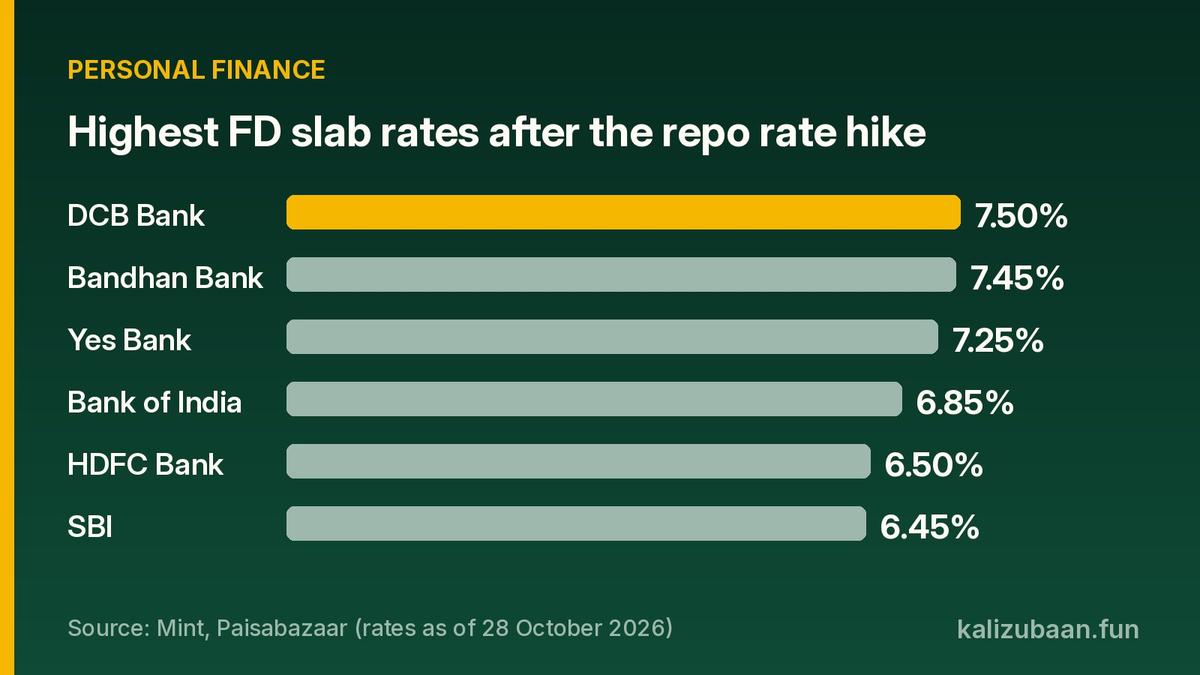
Source: Mint, Paisabazaar (rates as of 28 October 2026)
Smaller private banks lead the table. Yes Bank, Tamilnad Mercantile Bank and Dhanlaxmi Bank pay up to 7.25%, while IDFC FIRST Bank and CSB Bank offer 7.10%, per Mint.
The largest private lenders sit near the bottom. Kotak Mahindra Bank tops out at 6.75%, ICICI Bank at 6.60%, and HDFC Bank, Axis Bank and DBS Bank at 6.50%.
What most guides miss: the highest slab can hide a weak long-term rate. Bandhan Bank pays 7.25% for 3 years but only 5.85% for 5 years, and Bank of India pays 6.70% for 3 years but 6.00% for 5 years. In both cases, the longer lock-in earns less, so a 5-year saver should compare 5-year rates, not headline rates.
FD rates by tenure: which bank fits your plan?
The right bank depends on how long you can lock the money away, because the ranking changes completely between 1-year, 3-year and 5-year deposits.
Using the same Paisabazaar table in Mint:
- 1 year: SBM Bank pays 7.10% and Bandhan Bank 7.00%. DCB Bank and RBL Bank pay 6.90%.
- 3 years: City Union Bank pays 7.30%, Bandhan Bank 7.25%, and IDFC FIRST Bank 7.10%.
- 5 years: DCB Bank pays 7.50% and SBM Bank 7.00%. Jammu & Kashmir Bank and Yes Bank pay 6.75%.
So DCB Bank's top rate is genuinely on a 5-year deposit, while City Union Bank's 7.30% is a 3-year rate. If you might need the money sooner, a bank with a strong 1-year rate is the better match.
What should you check before booking an FD now?
Before booking, check the exact tenure rate, the bank's safety, and whether you might need the money early, not just the highest number on a comparison list.
A few practical steps:
- Pick your tenure first, then compare banks on that tenure only.
- Confirm the live rate on the bank's official website, as Mint itself advises. Rates in this table date from late October.
- Read the premature withdrawal rules. Breaking an FD early usually means a lower rate.
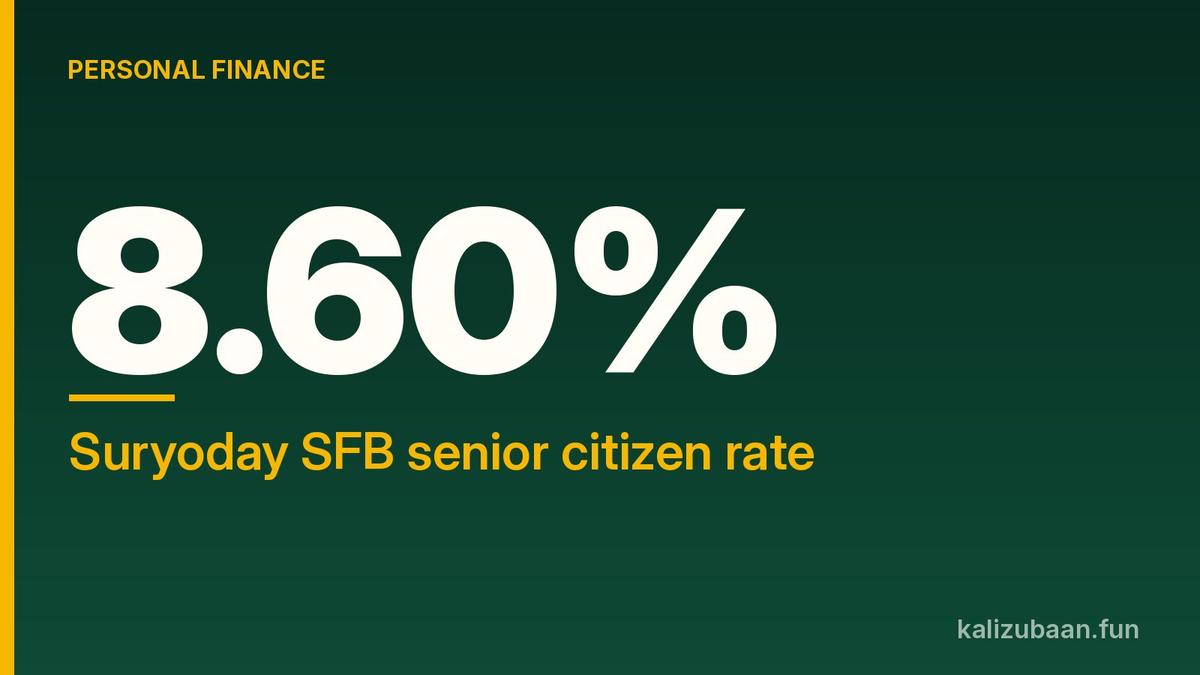
- If you are a senior citizen, ask for the senior rate. The figures above exclude it.
- Split large amounts across banks or tenures rather than chasing one top slab.
Smaller banks pay more partly to attract deposits. That is not a red flag by itself, but it is one more reason not to put all your savings in one place.
FAQs
Which bank gives the highest FD interest rate in November 2026?
DCB Bank offers the highest maximum FD rate at 7.50% a year among the public and private sector banks in Mint's comparison, followed by Bandhan Bank at 7.45%.
Which government bank has the highest FD rate now?
Bank of India and Punjab & Sind Bank both offer 6.85% on their highest slab. SBI's highest slab is 6.45%.
Did FD rates go up automatically after the repo rate hike?
No. The RBI raised the repo rate by 25 basis points to 5.50%, but each bank decides its own deposit rates. Only some banks have revised them.
What does highest slab mean for an FD?
It is the maximum rate a bank offers on any eligible tenure. It is not necessarily the rate for a 1-year, 3-year or 5-year deposit.
Expert review: pending.
This article is for education only and is not investment, tax or legal advice.
Related reading
- 6.80% FD for 555 Days: Indian Bank Hikes Rates After Repo Hike
- Your 6.40% FD Really Pays 4.64%: Post-Tax FD Rates at SBI, HDFC, ICICI, PNB (October 2026)
- Lost a Parent With FDs in Their Name? Who Pays Tax on the Interest, Explained
Sources
Tagged Topics
Keep reading
Thanks for reading Kali Zubaan
Explore more articles in Personal Finance or return to the main publication feed.


