Lost a Parent With FDs in Their Name? Who Pays Tax on the Interest, Explained
The FD you inherit is generally tax-free, but its interest is not. Here is who reports interest before and after a parent's death, and what legal heirs should do.
Aditya Sharma
Last updated

Quick answer
- The fixed deposit (FD) money you inherit from a parent is generally not taxed in India. The interest it earns can be.
- Interest earned up to the date of death is generally taxed as the parent's income. A legal heir reports it by filing the parent's final income tax return (ITR).
- Interest that accrues after the death is taxed in the hands of whoever becomes legally entitled to the deposit.
If you have recently lost a parent, tax is probably the last thing on your mind. But FDs are among the most common things Indian parents leave behind, and the interest on them quietly keeps building while the bank processes the claim. Get the reporting wrong, and the tax department's questions can arrive months later, addressed to you.
Why this matters now
Mint published a detailed explainer on this question on 11 October, quoting Nishant Shanker of Navraj Global Advisors, who works on tax controversy and dispute resolution. His summary is the clearest one-line rule you will find: "Tax liability on FD interest after a parent's death depends on when the interest accrues and who owns the deposit."
That one sentence settles most family arguments about this. It is not about who holds the passbook, who handled the paperwork, or who needs the money most. It is about two questions: when did the interest accrue, and who is legally entitled to the deposit?
What the rule actually says
Think of the FD's interest as split into two parts by the date of death.
Part 1: interest earned up to the date of death. This is generally the parent's own income. It goes into the parent's final ITR, which is filed by a legal representative (usually a legal heir). Mint's example: if a parent dies in August and the FD has earned interest until then, the interest for the period before death is generally reported as the parent's income.
Part 2: interest that accrues after the death. In Shanker's words, this is "taxable in the hands of the person legally entitled to it, depending on who owns the FD through inheritance." If there is a will, that points to the beneficiary. If there is no will, it depends on how the deposit is legally shared among the heirs.
The principal itself. As Mint puts it, "an inherited FD principal is generally tax-free; still, the interest is not automatically exempt." Inheritance is not the taxable event. The interest is.
Who this affects
- Children settling a parent's estate, especially when the FD stays in the parent's name for months while the bank processes the claim.
- Siblings sharing an FD with no will. The post-death interest has to be allocated according to how the deposit is legally divided, so each heir may report a share.
- The one sibling who "handles everything." If you act as the legal representative, you are the person who files the parent's final return.
What to do now: a step-by-step checklist
- Collect the paperwork early. Mint lists the essentials: the bank's interest certificate, the death certificate, and succession documents. Keep these together; you will need them for both the bank and the tax filing.
- Split the interest at the date of death. Use the interest certificate to separate interest earned before the death (the parent's income) from interest that accrued after it (the heirs' income).
- Register as the legal heir on the income tax e-filing portal. ClearTax notes that registration as a legal heir is mandatory for e-filing a return on behalf of a deceased person, and that the PAN of both the deceased and the legal heir should be registered on the portal. If the parent's PAN is not registered, the legal heir can register it on their behalf. You must also give a "Reason for Registration" as a representative assessee.
- Upload the documents. ClearTax says the documents are uploaded as a zip file, which must not exceed 5 MB.
- File the parent's final ITR. Once the legal heir request is approved, the return is filled in the normal way. ClearTax says it can be e-verified with methods such as Aadhaar OTP or net banking, or the legal heir can sign the ITR acknowledgement and send a copy to the Central Processing Centre in Bengaluru.
- Report your share of the later interest in your own return. Whatever interest accrued after the death and belongs to you goes into your own ITR, not your parent's.
- Keep records. Shanker's advice for FDs still in the parent's name: "the legal heir should maintain clear records and ensure the interest is reported correctly."
How much can the tax department ask a legal heir to pay?
This is the fear behind many family delays: "If Papa had tax dues, will I have to pay them from my salary?"
ClearTax explains that the legal heir is responsible for paying the taxes on the deceased person's return, but is not personally liable for them. The liability is limited to the value of the assets inherited.
Its example: if a person receives Rs 8 lakh as their share of a father's property and the father's tax liability is Rs 9.5 lakh, the heir cannot be made to pay more than Rs 8 lakh.
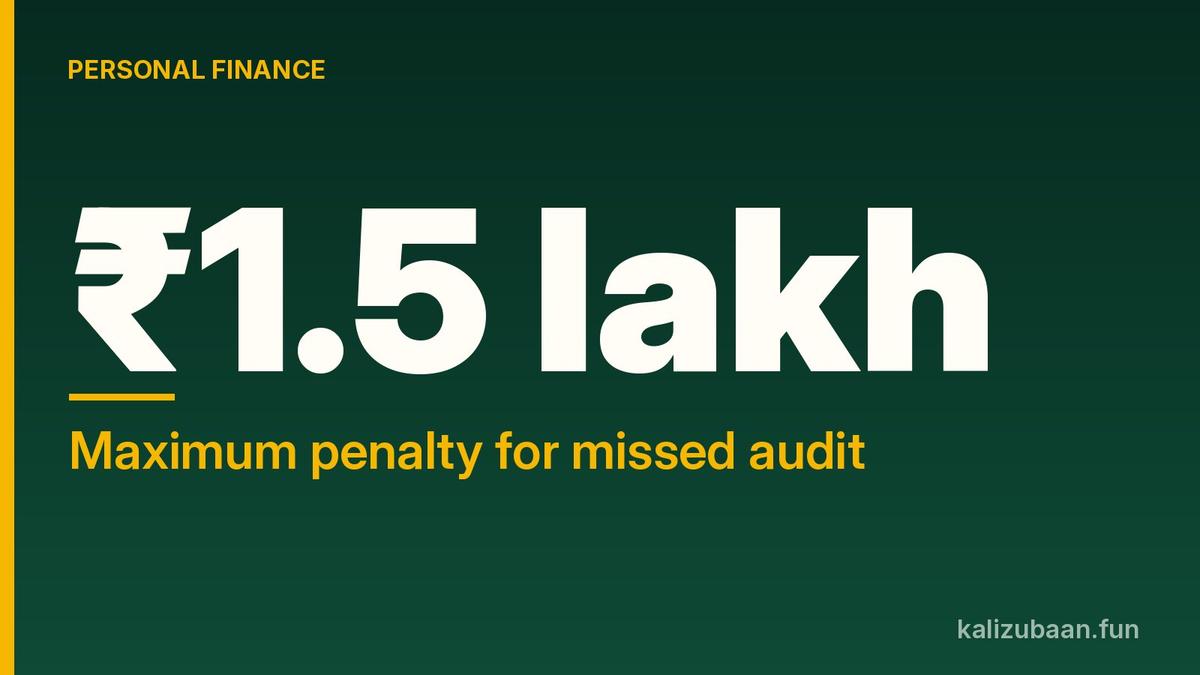
The same limit applies to penalties. ClearTax notes that the legal heir is also responsible for any penalty, fine or interest the deceased would have owed, and that penalty proceedings for a default by the deceased can be started against the legal heir. Again, the liability stops at the value of what was inherited.
Mistakes and red flags
- Treating the whole FD as tax-free. The principal generally is; the interest is not automatically exempt.
- Putting all the interest in one return. Pre-death interest belongs in the parent's final ITR; post-death interest belongs to the heirs who own the deposit.
- Waiting for the bank claim to finish before thinking about tax. Interest keeps accruing while the FD sits in the parent's name. Track it from day one.
- Skipping the legal heir registration. Without it, you cannot e-file on your parent's behalf.
- No paper trail among siblings. If the FD is split without a will, write down how it was allocated so each person's reported interest matches.
If the parent also had rental income
ClearTax's guide makes the same split for rent: rent up to the date of death goes in the deceased's return, and rent after that goes in the legal heir's return. It also notes that the standard deduction of 30% on rental income is available in both returns, and that property taxes can be claimed by whoever actually paid them.
FAQs
Is the FD amount I inherit taxable? Generally no. Mint and the expert it quotes both say inheritance itself is generally not taxable in India. The interest is what you need to report.
Who files my late parent's ITR? A legal representative, typically a legal heir who has registered as a representative assessee on the e-filing portal.
The FD is still in my parent's name. Whose income is the interest now? Interest after the date of death is taxable in the hands of the person legally entitled to the deposit, even if the bank hasn't transferred it yet.
Can I be forced to pay my parent's tax dues from my own savings? According to ClearTax, no. The heir's liability is limited to the value of the assets inherited.
Grief is hard enough without a tax notice months later. Collect the interest certificate, split the interest at the date of death, and file the final return. If your family's case is complicated, a chartered accountant can confirm the split.
Have you had to file a return for a parent? What tripped you up? Tell us in the comments.
This article is for education only and is not investment, tax or legal advice. Tax liability depends on the facts of each case and the tax laws in force. Consult a qualified tax professional.
Sources
- Mint: Bank FD interest after a parent's death: Who must pay tax on the income? Cases and scenarios explained, 11 October 2026
- ClearTax: How to File Income Tax Return for the Deceased by the Legal Heir, accessed 11 October 2026
Cover image: Hundred rupee note India by Nskjnv, CC BY-SA 4.0, via Openverse/wikimedia.
Tagged Topics
Keep reading

Thanks for reading Kali Zubaan
Explore more articles in Personal Finance or return to the main publication feed.


