₹1.5 Lakh Penalty Risk: Tax Audit Deadline Has Passed. Now What?
The extended tax audit deadline for AY 2026-27 closed on October 21. Here is who needed an audit, what the penalty can be, how to check your CA's upload and what to do before the November 21 ITR date.
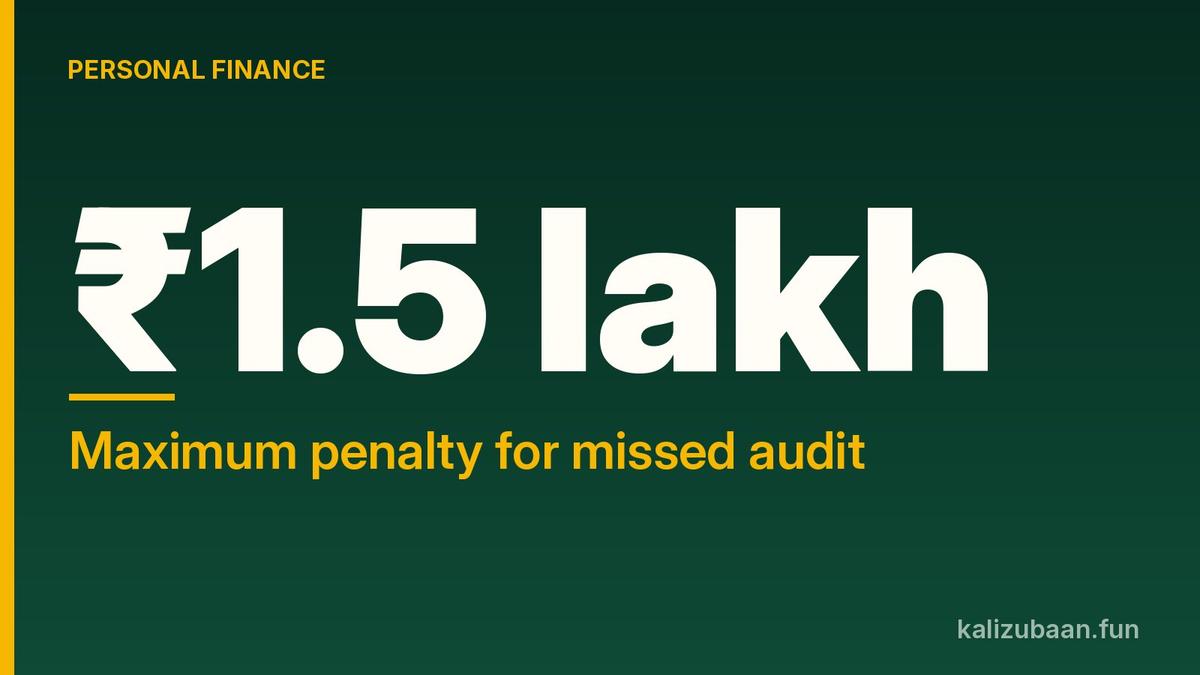
The extended deadline to file a tax audit report closed on October 21. If your report did not make it, the law lets the tax officer charge you 0.5% of your turnover or ₹1.5 lakh, whichever is lower.
That is real money for a small shop or a freelance consultant. And many people only find out their CA never finished the upload when they log in to file the return.
Quick answer
- The tax audit report deadline for AY 2026-27 was extended from September 30 to October 21, 2026, and it has now passed.
- Missing it can attract a penalty of 0.5% of turnover or gross receipts, or ₹1.5 lakh, whichever is lower.
- You can check in two minutes whether your CA uploaded the report: e-filing portal, Pending Actions, Worklist, Pending for Acceptance.
- The ITR deadline for audit cases is November 21, 2026, so the return itself is still open.
Why this deadline mattered
The government first set September 30 as the date for furnishing the tax audit report for Assessment Year 2026-27. It then extended this "specified date" to October 21, 2026.
The return deadline moved too. For taxpayers covered by the audit requirement, the ITR due date shifted from October 31 to November 21, 2026.
The idea is simple. The audit report comes first, and the return is filed after it, using the audited numbers.
One more thing confuses people this year. The new Income Tax Act, 2025 came into force on 1 April 2026. But ET notes that this audit report is being furnished under the provisions of the Income-tax Act, 1961 for Assessment Year 2026-27.
Who actually needed a tax audit
Not everyone who earns from business or a profession needs an audit. It depends on turnover or gross receipts and a few other conditions, according to Mint.
Source: Mint
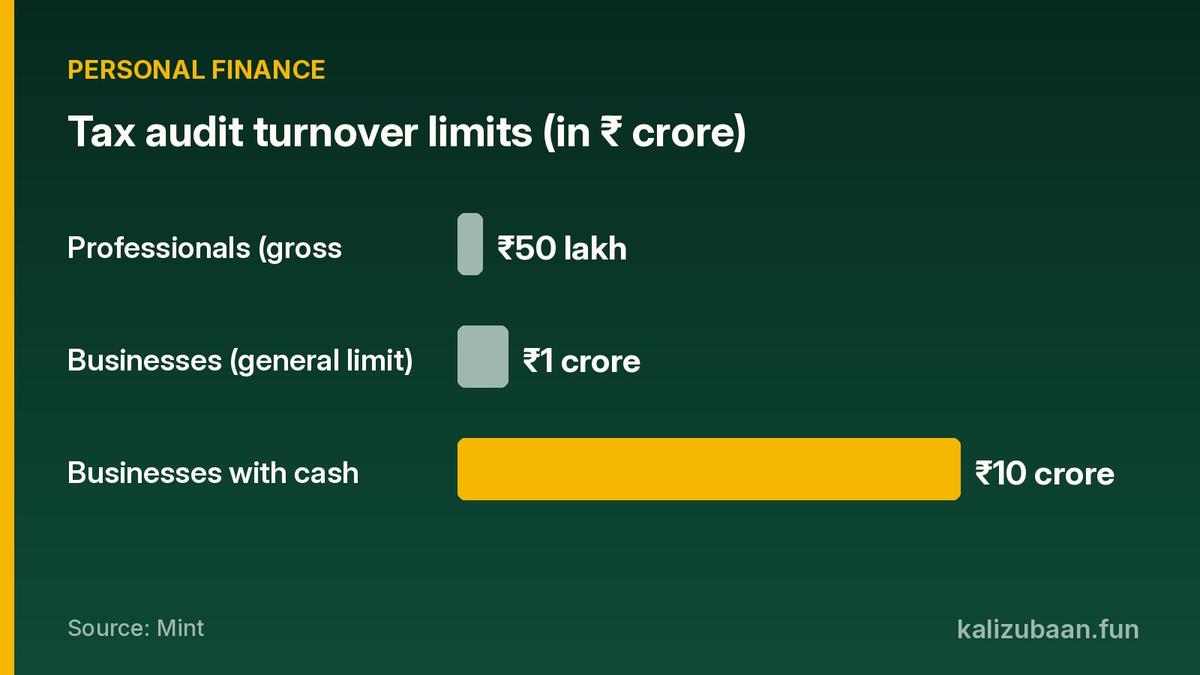
Here is how the limits work:
- Businesses: an audit is needed if total sales, turnover or gross receipts cross ₹1 crore in the financial year.
- Mostly digital businesses: the limit rises to ₹10 crore when cash receipts and cash payments are each less than 5% of the total.
- Professionals: doctors, consultants, designers and other professionals generally need an audit once gross receipts cross ₹50 lakh.
There is a catch for people on presumptive taxation. If you opted out of schemes like Sections 44AD, 44ADA, 44AE, 44BB or 44BBB, or declared lower income than these schemes prescribe, the audit rule can apply to you too, subject to conditions such as your income exceeding the basic exemption limit.
Companies whose accounts are audited under company law, along with firms, LLPs and other covered entities, also have to file audit reports.
What the penalty actually says
The penalty comes from Section 44AB of the Income-tax Act. If a taxpayer fails to get accounts audited, or fails to furnish the report on time, the assessing officer may impose a penalty.
According to information on the tax department's portal, cited by Mint, the penalty is 0.5% of total sales, turnover or gross receipts, or ₹1.5 lakh, whichever is lower.
Two words matter here. The officer "may" impose it, so it is not automatic. And the ₹1.5 lakh figure is a ceiling, not a fixed fine.
Still, do not plan around being forgiven. Treat the penalty as a real risk and fix what you can now.
Check right now: did your CA upload it?
A CA uploads the tax audit report on the Income Tax e-filing portal. But the job is not finished until you, the taxpayer, accept and e-verify it.
You do not have to rely on your CA's word. ET explains how to check it yourself:
- Log in to the income tax e-filing portal.
- Go to Pending Actions, then Worklist.
- Open Pending for Acceptance and look for Form 3CA-3CD or 3CB-3CD.
- If the report is sitting there, review it, accept it and complete e-verification.
Once you approve and verify the form, its status changes to Completed and an acknowledgement is generated.
If nothing shows up, call your CA today and ask for the upload status in writing.
How the filing works, step by step
Chartered accountant Abhishek Soni, co-founder of Tax2Win, laid out the process to ET:
- Assign the CA. You add the CA under Authorised Partners, then My Chartered Accountant, and assign Form 3CA-3CD or 3CB-3CD.
- CA accepts. The form appears in the CA's Worklist, and they accept the assignment.
- CA uploads. The CA fills the form in the offline utility, generates the JSON file, uploads it and verifies it with a Digital Signature Certificate.
- You accept. The report lands in your Worklist under Pending for Acceptance.
- You e-verify. You review it, accept it and e-verify. Filing is then complete.
Some basics must be in place first. Both you and the CA need to be registered on the portal, both PANs must be active, the form must be assigned to the CA, and both need a valid Digital Signature Certificate.
Do not pick the wrong ITR form next
With the audit done, the return is due by November 21, 2026. This is where many people make a second mistake.
There is no special "tax audit ITR". The form depends on who you are and how you earn:
- ITR-3: most individuals and HUFs whose business or professional accounts are audited.
- ITR-5: partnership firms and LLPs, generally.
- ITR-6: companies, generally.
- ITR-4: only for eligible presumptive taxation cases.
Mint warns against choosing ITR-4 just because you used it last year. If you keep regular books or fall under the audit rule, you may need a different form.
Selecting the wrong form can make your return defective. So confirm the form before you import data, fill schedules or pay self-assessment tax.
Mistakes to avoid this week
- Assuming the CA handled everything. The report is not filed until you accept and e-verify it.
- Waiting for a notice. Check the portal yourself today.
- Copying last year's ITR form. Your turnover or audit status may have changed.
- Leaving the return to the last day. November 21 is close, and the audited numbers have to flow into the return.
FAQs
Who needed a tax audit for AY 2026-27? Businesses with turnover above ₹1 crore (or ₹10 crore if cash receipts and payments are under 5%), professionals with gross receipts above ₹50 lakh, and some people who opted out of presumptive schemes, among others.
What is the penalty for missing the tax audit deadline? The assessing officer may impose 0.5% of turnover or gross receipts, or ₹1.5 lakh, whichever is lower, under Section 44AB.
How do I know if my CA filed the tax audit report? Log in to the e-filing portal and check Pending Actions, Worklist, Pending for Acceptance. Accept and e-verify the report if it is there.
What is the last date to file ITR for audit cases? November 21, 2026, extended from October 31.
This article is for education only and is not investment, tax or legal advice.
Sources
Tagged Topics
Keep reading



Thanks for reading Kali Zubaan
Explore more articles in Personal Finance or return to the main publication feed.