Rupee Up 93 Paise on RBI's 20% Rule: What It Means for US Stocks
The RBI's new curbs gave the rupee its biggest one-day gain since April. If you hold US stocks or international funds, here is how a stronger or weaker rupee changes your returns.
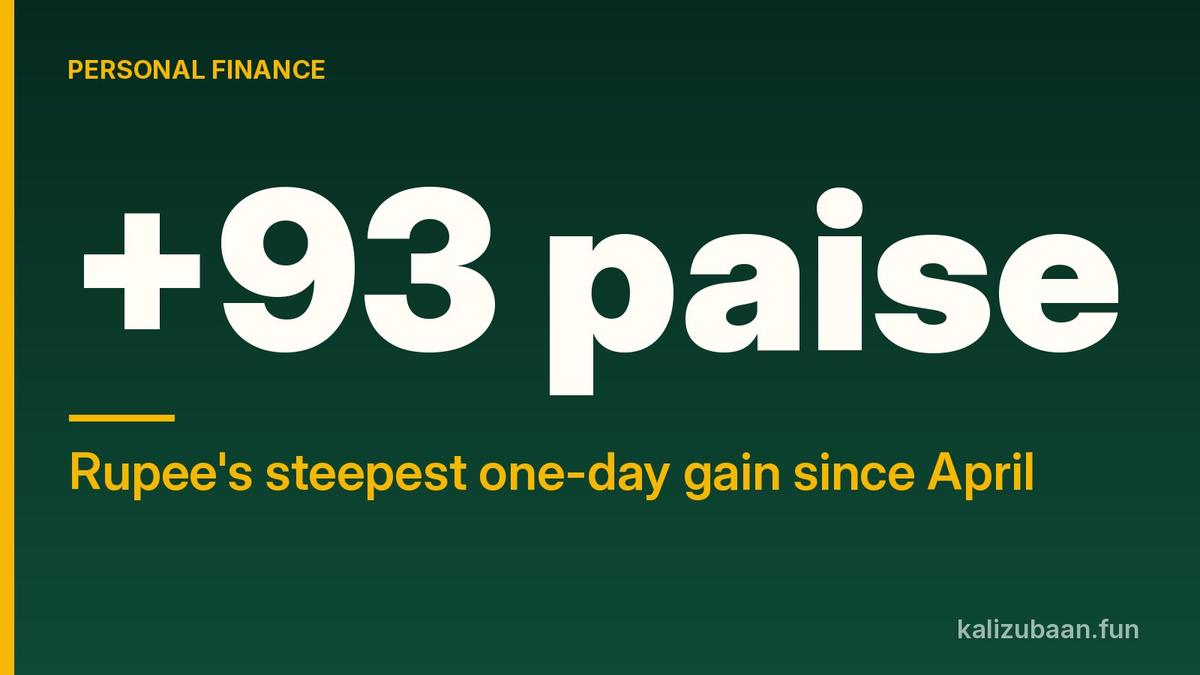
Last week the rupee was close to a record low of 97 per dollar. On Monday it jumped 93 paise, its steepest single-day gain in more than six months.
The trigger was a set of weekend measures from the Reserve Bank of India (RBI). If you own US stocks, an international mutual fund or an overseas ETF, this move touches your returns too, even if the stock itself didn't move at all.
Quick answer
- The RBI now requires banks to keep a 20% reserve against foreign exchange derivative deals above $2 million, and has banned rebooking of cancelled rupee derivative contracts.
- The rupee closed at 95.78 per dollar on Monday. It has still weakened 7% this year.
- A weaker rupee raises the rupee value of your existing US holdings. A stronger rupee cuts it.
- Experts say treat the currency as a separate, volatile layer, and judge a foreign fund by its returns in its own currency first.
What the RBI actually did
The RBI announced the measures on Saturday. Mint and Business Standard list the main steps:
- A new foreign-exchange risk reserve. For the first time, banks must hold with the RBI the rupee equivalent of 20% of the notional value of each derivative transaction above $2 million.
- No rebooking of cancelled contracts. Banks cannot let users rebook cancelled rupee derivative contracts, deliverable or non-deliverable.
- A special window for oil companies. Indian Oil, Hindustan Petroleum and Bharat Petroleum can meet their daily dollar needs through designated banks, away from the spot market.
Business Standard calls these some of the strongest steps to support the currency since the 2013 taper tantrum. The RBI had also raised interest rates on Wednesday and signalled it was open to more tightening.
The aim is simple. As Aditya Agarwala of InvestValue Capital told Mint, "RBI wants dollar demand to come from genuine trade and hedging needs, not leveraged bets against the rupee."
Why the rupee needed help
The rupee has been one of the worst performers in Asia this year. Experts quoted by Mint point to three pressures: high crude oil prices, rising global bond yields and continued foreign portfolio outflows.
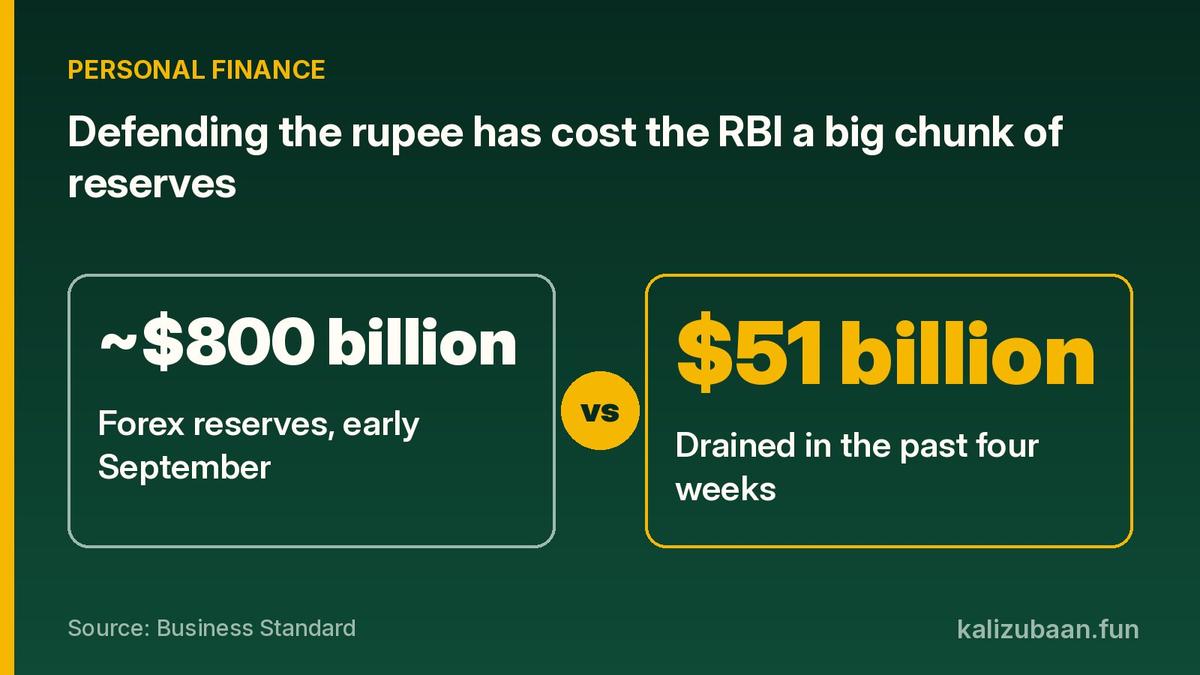
Defending it has been expensive. The RBI's diaspora deposit programme raised a record $133 billion, pushing forex reserves to nearly $800 billion in early September. But Business Standard reports that the defence has since drained $51 billion from reserves in just four weeks.
Source: Business Standard
That is why the RBI moved to cut demand for dollars instead of only selling more of them. Agarwala's read: the RBI "is not defending a particular level of the rupee. It is managing the pace of the fall."
How Monday played out
The rupee opened at 95.61, touched a high of 95.57 and a low of 95.96, and closed at 95.78 against the dollar, according to Mint. Business Standard put the gain at 1%, the biggest jump since April.
Bonds didn't like it. The benchmark 10-year yield rose to 7.35%, its highest level since November 2023.
Not everyone thinks the fix will last. "These are tactical fixes, not structural solutions," said Madhavi Arora of Emkay Global. Banks have also asked the RBI to replace the 20% deposit with a flat charge and to drop the $2 million threshold, Business Standard reports. Citi economists estimate the rule could absorb liquidity worth $6.27 billion to $7.31 billion. Banks say they will pass the cost on to clients.
What this means if you own US stocks or international funds
Your overseas investment earns from two things: the asset's price in dollars, and the dollar-rupee exchange rate.
Mint gives a clean example. Suppose a US stock doesn't move at all in dollar terms.
- If the rupee falls 5%, your holding is worth about 5% more in rupees, before costs and taxes.
- If the rupee rises 5%, your holding is worth about 5% less in rupees.
This year's weak rupee has quietly flattered many Indian investors' overseas returns. If the RBI's steps work and the rupee recovers, part of that currency gain can reverse.
Agarwala warned it can happen fast, as it did in April after the first set of curbs. "Investors should not mistake rupee depreciation for fund performance," he said.
Who is affected, and how
- People already holding US stocks or international funds. A stronger rupee lowers the rupee value of what you own, even if the fund does well in dollars.
- People about to invest abroad. A weaker rupee makes fresh overseas investments more expensive, because each dollar costs more rupees.
- Parents paying overseas fees or saving for them. Your real cost depends on the rate on the day you convert, so a big one-day swing matters.
- Importers and businesses that hedge. Banks say they will pass on the cost of the 20% reserve, so hedging may get costlier.
What to do now
- Look at fund returns in the base currency first. Agarwala's advice: judge the fund in dollars, then treat the rupee as a separate, volatile layer.
- Stagger fresh overseas money. Experts suggest spreading investments over time instead of converting a large sum at a single exchange rate.
- Check whether your fund hedges currency. Hedging can reduce currency risk, but it costs money and can cut gains if the rate moves in your favour.
- Keep your domestic allocation. Ankur Choudhary of Belong says to judge international investments within your overall portfolio, horizon and future currency needs.
- Don't trade the rupee through your portfolio. Experts call foreign exposure a diversification choice, not a short-term currency bet.
Mistakes and red flags
- Selling US holdings in a panic after one strong rupee day. One day's move says little about the year.
- Crediting a fund manager for currency gains. Part of your rupee return may simply be the weaker rupee.
- Converting everything at once. You lock in one rate, good or bad.
- Assuming the RBI will hold the rupee at a level. Experts say it is managing the pace of the fall, not fixing a rate.
FAQs
Does the RBI's 20% reserve rule apply to me as a retail investor? The rule is on banks, for derivative transactions above $2 million. It mainly hits companies and banks that hedge. Retail investors feel it indirectly, through the exchange rate.
Will a stronger rupee hurt my international mutual fund? In rupee terms, yes, all else being equal. A 5% rise in the rupee cuts the rupee value of an unchanged dollar holding by about 5%.
Is now a good time to start investing abroad? Nobody can time the rupee. A weaker rupee makes new investments costlier, so experts suggest staggering your money rather than investing it all at one rate.
Should I hedge my overseas currency exposure? It can make sense for some investors, but hedging has costs and limits your gains if the rupee moves in your favour. Decide based on when you will need the money and in which currency.
Do you hold US stocks or an international fund? Has the rupee helped or hurt you this year? Tell us in the comments.
This article is for education only and is not investment, tax or legal advice.
Sources
Tagged Topics
Keep reading



Thanks for reading Kali Zubaan
Explore more articles in Personal Finance or return to the main publication feed.