$70 to $78 a Share: Anthropic IPO for Indian Investors, Explained
The Anthropic IPO is priced at $70 to $78 a share, with Nasdaq trading set for Nov 19. Here is how Indian investors can buy after listing, and what LRS, 20% TCS and tax mean for you.

Anthropic wants to sell 825 million shares at $70 to $78 each. It is also aiming to give about 20% of the offering to retail investors, far more than the usual 5% to 10%.
That sounds like an open door. For most people searching "anthropic ipo for indian investors", it is not.
The retail slice is handed out through US brokers. An Indian resident's realistic entry point is the day the stock starts trading, and the rules on sending money abroad decide how much that trade really costs.
Quick answer
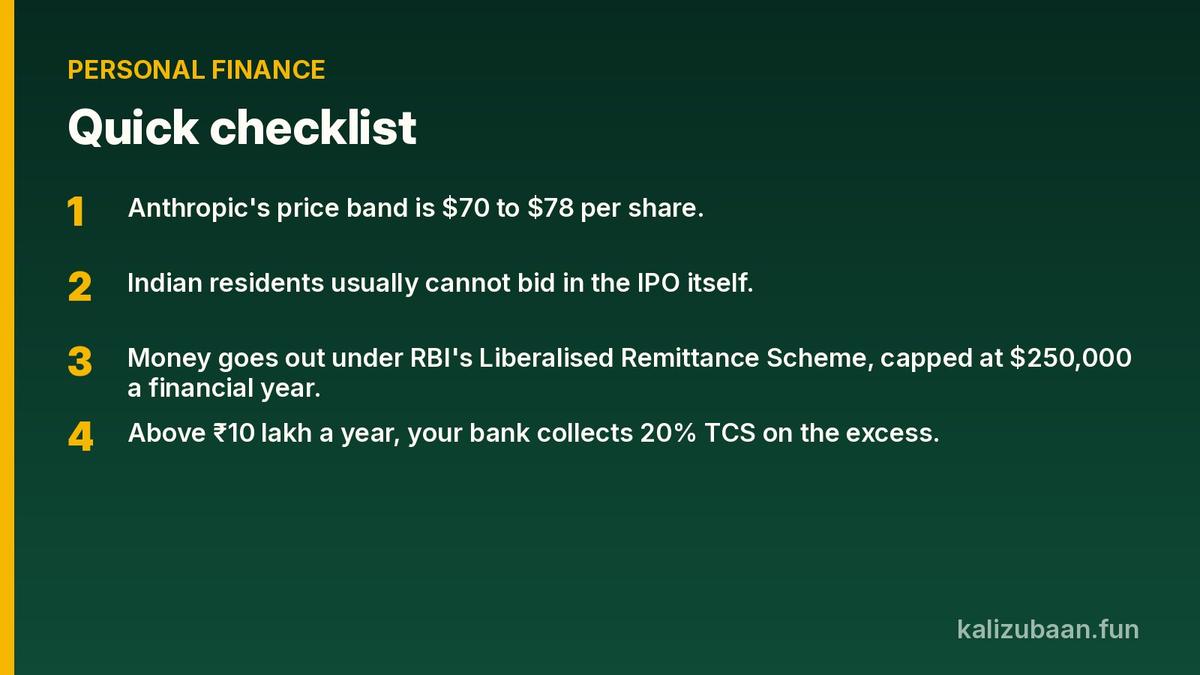
- Anthropic's price band is $70 to $78 per share. It plans to price on November 18 and start trading on Nasdaq under the ticker ANT on November 19.
- Indian residents usually cannot bid in the IPO itself. Most will buy, if they want to, after listing through an international broker.
- Money goes out under RBI's Liberalised Remittance Scheme, capped at $250,000 a financial year.
- Above ₹10 lakh a year, your bank collects 20% TCS on the excess. It is a credit against tax, not a fee, but it locks up cash.
This is general education, not a recommendation to buy or sell any stock; check with a SEBI-registered adviser before you invest.
What are the Anthropic IPO dates and price band?
Anthropic will offer 825 million Class A shares at $70 to $78 each, price them on November 18 and begin trading on Nasdaq on November 19.
The company confirmed the size and band when it launched its roadshow, and applied to list on the Nasdaq Global Select Market under the symbol ANT (Anthropic).
The pricing and trading dates come from people familiar with the deal, as reported by CNBC. At the top of the band, Anthropic would net up to $64.35 billion (CNBC).
Underwriters also get an option to buy up to 123.75 million more shares. Banks often use that when demand is strong.
And demand looks strong. Bloomberg reports, via StockAnalysis, that the book is multiple times oversubscribed, driven by large anchor-size orders (StockAnalysis).
How much is Anthropic worth at this price?
At the top of the band, Anthropic could be worth up to $1.405 trillion on a fully diluted basis, up from $965 billion in its May funding round.
That is still below the $2 trillion the company was reportedly targeting a couple of months ago (TechCrunch).
Alongside the IPO, Anthropic is privately selling $26 billion of stock at the IPO price to AMD, Broadcom, Google, Micron, Microsoft, Nvidia and TSMC. Google and Nvidia are putting in $10 billion apiece.
The numbers behind the price are big in both directions:
- Run-rate revenue was about $81 billion at the end of October.
- Nine-month revenue was $33.24 billion.
- The nine-month net loss was $104 billion, mostly from changes in the fair value of convertible notes and derivative liabilities, not day-to-day operations.
A high valuation and a newly listed, heavily traded stock can mean sharp swings on the first day, in either direction.
Can Indian residents apply in the Anthropic IPO?
Mostly no: shares in a US IPO are allotted by the underwriting banks, so most Indian investors will only be able to buy once the stock starts trading.
Forbes India notes that platforms giving Indian residents access to US stocks, such as Vested, support purchases after an IPO but do not offer direct IPO subscriptions (Forbes India).
That gap matters. If the stock opens well above the IPO price, a buyer on listing day pays the market price, not the $70 to $78 band.
Experts quoted by Mint point to two indirect routes as well (Mint):
- Shares of Amazon and Alphabet, which are strategic investors in Anthropic.
- US-listed ETFs that may hold an Anthropic stake. Check each fund's holdings first, because the exposure varies.
Indirect exposure is not the same as owning ANT shares.
Source: CA Akhilesh Kumar, Forbes India
How do LRS limits and TCS work for US shares?
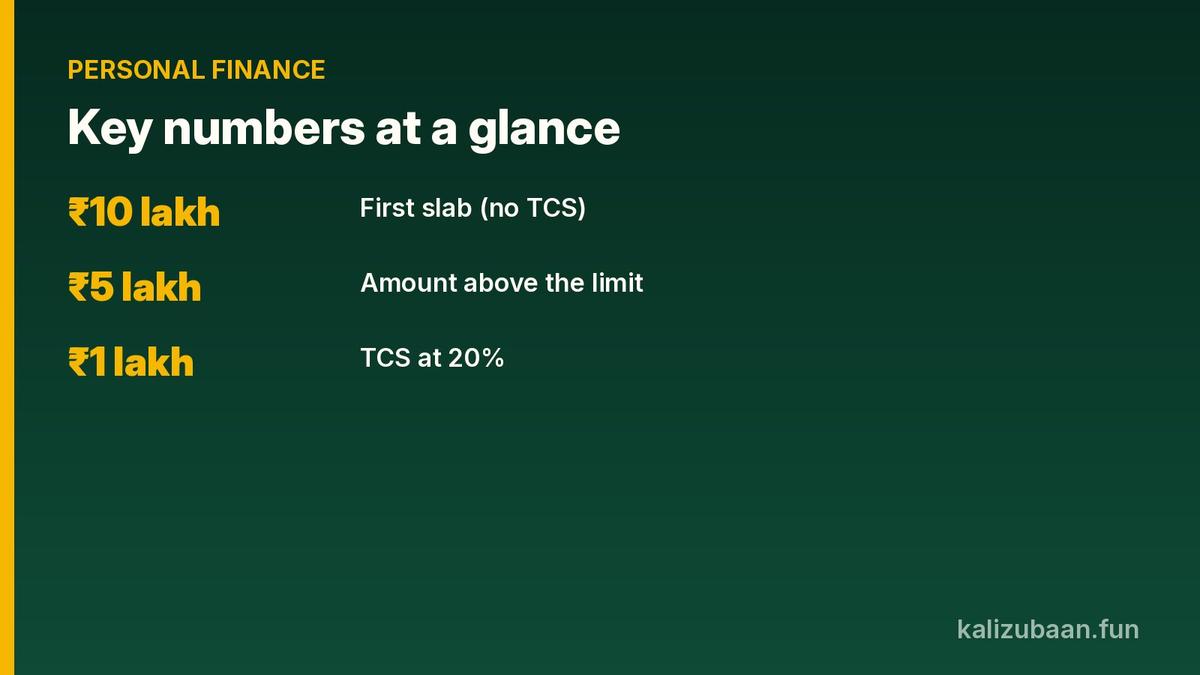
You can send up to $250,000 (about ₹2.37 crore) abroad each April-to-March year under LRS, and banks collect 20% TCS on investment remittances above ₹10 lakh.
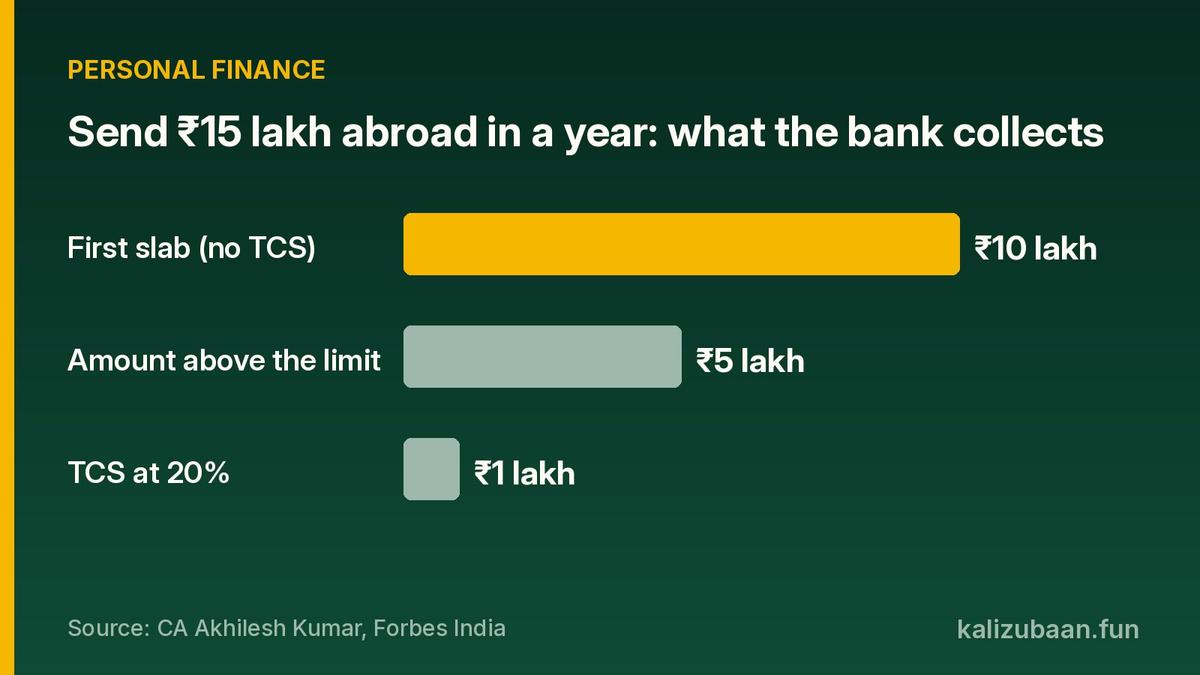
The TCS rule sits in Section 394 of the Income-tax Act, 2025. Here is the worked example from chartered accountant Akhilesh Kumar (CA Akhilesh Kumar):
- You send ₹15 lakh in the year to buy US shares.
- The first ₹10 lakh carries no TCS.
- On the remaining ₹5 lakh, the bank collects 20%, or ₹1 lakh.
- So ₹16 lakh leaves your account.
You can claim the TCS back as a credit when you file your return. Until then, that money is stuck.
Two traps catch people. The ₹10 lakh limit covers all your LRS spending together, including travel and education, not just investing. And sale proceeds you don't reinvest must come back to an Indian bank within 180 days.
What most guides miss: for a typical Indian buyer, the $250,000 LRS cap is rarely the limit that bites. The ₹10 lakh TCS threshold is far lower, and a foreign holiday booked earlier in the year counts towards it.
How are Anthropic shares taxed in India?
Gains on foreign shares held for 24 months or less are taxed at your slab rate, and gains on shares held longer are taxed at 12.5%, plus surcharge and cess.
Forbes India sets out these rates for Indian residents buying US stocks (Forbes India).
A few more points from Kumar's guide (CA Akhilesh Kumar):
- There is no ₹1.25 lakh exemption on long-term gains from foreign-listed shares.
- A non-US holder normally pays nil US tax on a gain from selling shares.
- You file Form W-8BEN with your broker to certify you are not a US person.
- US estate tax can apply on death above $60,000, about ₹57 lakh, of US shares.
- Foreign shares must be reported in Schedule FA of your income tax return.
Keep every record: the rupee amount sent, dollars received, and the dates and prices of each buy and sell. Indian tax is worked out in rupees.
What should you do before November 19?
Decide first whether you want the stock at all, then sort out your broker account, KYC and LRS headroom before listing day, not on it.
A practical checklist, drawn from the steps in Kumar's guide and Forbes India (Forbes India):
- Open an account with a broker that offers US stocks, and finish KYC with your PAN and address proof.
- Check how much of your ₹10 lakh TCS-free limit you have already used this year.
- Remit through your bank under LRS, declaring the purpose as overseas portfolio investment.
- Buy only after ANT is actually trading and your dollars have landed.
- Use a limit order. A market order on a hot new listing can fill far from the price on your screen.
If you mainly want exposure to Indian IPOs instead, our guide on Indian IPO allotment and GMP covers how that process differs.
Expert review: pending.
FAQs
Can I apply for the Anthropic IPO from India?
In most cases, no. US IPO shares are allotted by underwriting banks, and platforms serving Indian residents mostly support purchases only after listing.
When will Anthropic shares start trading?
Anthropic plans to price its shares on November 18 and start trading on Nasdaq on November 19, under the ticker ANT, according to people familiar with the deal.
How much can I invest in US stocks from India?
Under LRS, up to $250,000 per financial year, shared with travel, education and other remittances. TCS of 20% applies to the part above ₹10 lakh.
Is the TCS an extra tax?
No. TCS is collected in advance and can be claimed as a credit against your income tax, but the cash is locked up until you file.
This article is for education only and is not investment, tax or legal advice.
Related reading
- How to Invest in IPO in India: Allotment, GMP and Tax
- 40x, Yet 1 in 10 Odds: How to Check IPO Subscription Status
- ₹5 Lakh UPI Cap: IPO Full Form in Share Market
Sources
- Anthropic: Anthropic launches roadshow for proposed initial public offering
- CNBC: Anthropic sets IPO price range of $70 to $78, looks to start trading Nov. 19
- TechCrunch: Anthropic sets IPO price range of $70 to $78 per share
- StockAnalysis: Anthropic's IPO is said to be multiple times oversubscribed
- Forbes India: How Indian investors can buy into Anthropic
- Mint: Anthropic IPO, can Indian investors get a slice of the AI boom?
- CA Akhilesh Kumar: Anthropic IPO From India, LRS, TCS, Tax and Schedule FA
Tagged Topics
Keep reading



Thanks for reading Kali Zubaan
Explore more articles in Personal Finance or return to the main publication feed.


