Jan 1, 2027: New Cheque Book Rules Are Fake, Says RBI
Viral new cheque book rules said your CTS cheque book stops working after December 31, 2026. RBI called it fake on November 7. Here is what is true, what to keep doing and how to spot the next rumour.
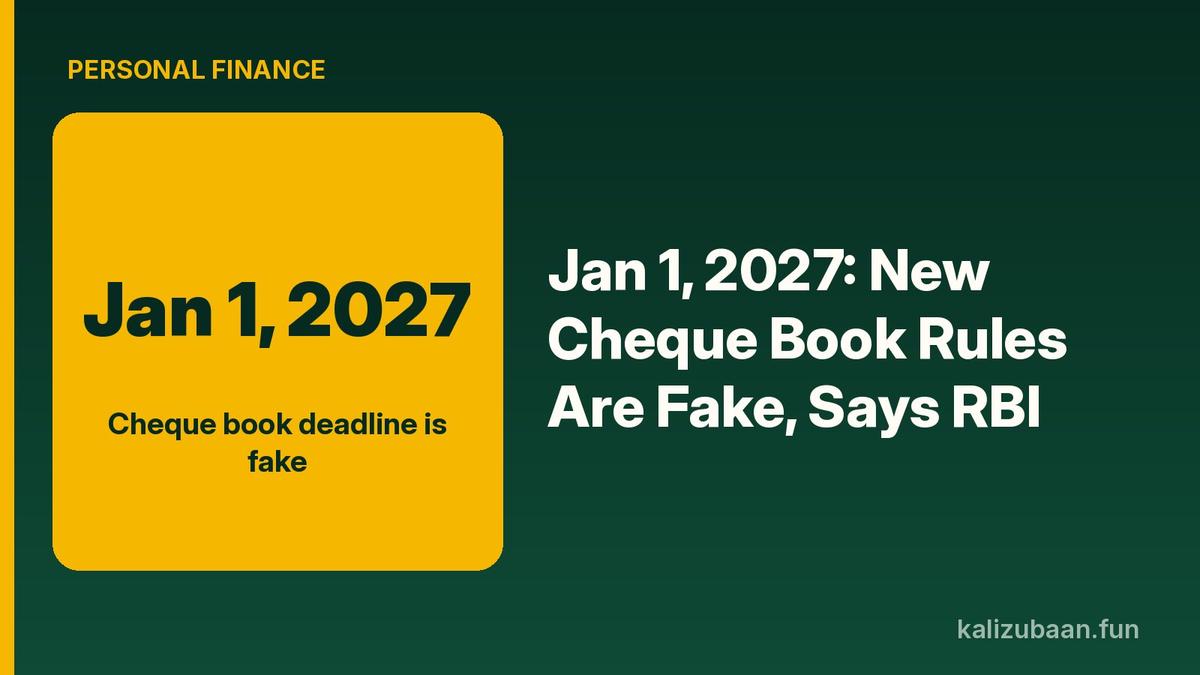
A forwarded message told bank customers that the cheque book in their drawer would stop working after December 31, 2026, and that new cheque books with upgraded security would be compulsory from January 1, 2027.
On November 7, the Reserve Bank of India stamped it "FAKE". If you were about to queue at your branch for a fresh cheque book because of these new cheque book rules 2027 claims, you can stay home.
Quick answer
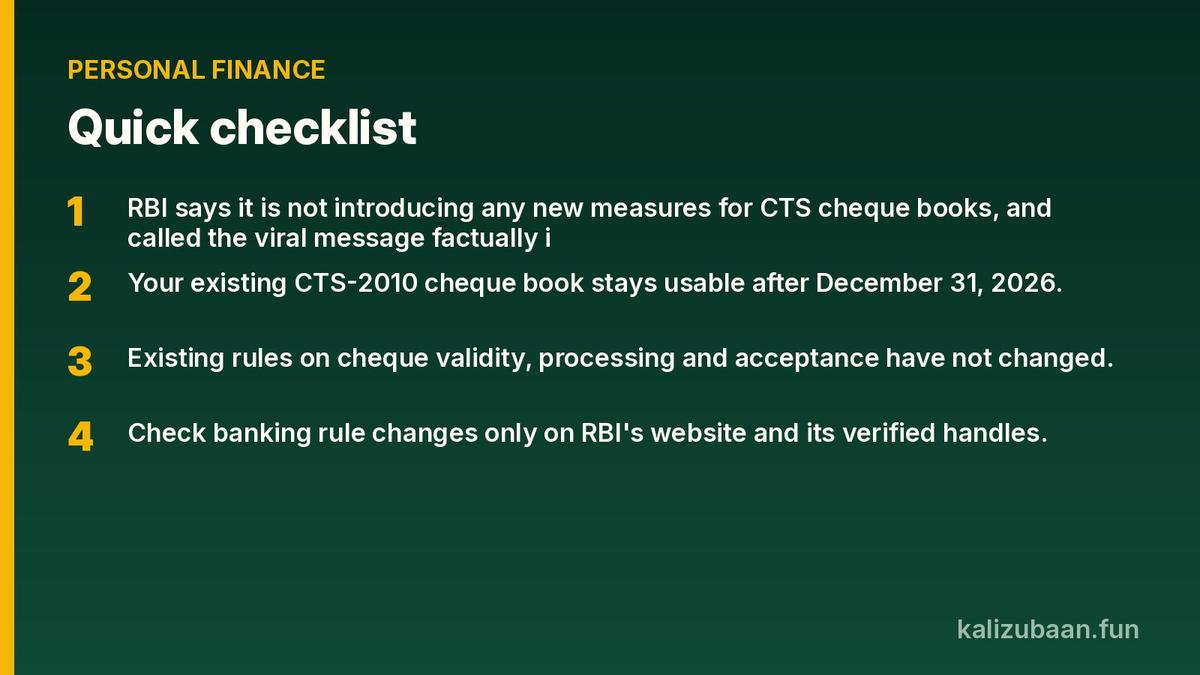
- RBI says it is not introducing any new measures for CTS cheque books, and called the viral message factually incorrect and misleading.
- Your existing CTS-2010 cheque book stays usable after December 31, 2026. No replacement is needed because of this rumour.
- Existing rules on cheque validity, processing and acceptance have not changed.
- Check banking rule changes only on RBI's website and its verified handles.
This post explains a published RBI clarification for education only. It is not financial or legal advice; ask your bank about your own account.
What did RBI actually say about new cheque book rules?
RBI said it is "not introducing any such measures with regard to the CTS cheque books" and described the viral message as factually incorrect and misleading.
The clarification came in a post on X on November 7, after messages claimed that existing Cheque Truncation System (CTS) cheque books would become invalid after December 31, 2026 (CNBC TV18).
Mint reports that the message pushed people to get fresh cheque books to meet revised security requirements from January 1, 2027, and that RBI asked customers to verify banking information through its official channels instead of social media (Mint).
ET Now adds that the central bank told people to rely only on its own communications for cheque-related rules and other banking matters (ET Now).
The short version: there is no new cheque book deadline.
Why did the fake cheque book message sound believable?
It sounded real because India has already had one genuine cheque book switch, from older cheques to the CTS-2010 standard, so a second switch felt plausible.
RBI's own FAQ on cheque clearing says banks were told to issue only CTS-2010 standard cheques from September 30, 2012, and the separate clearing sessions for non-CTS cheques were discontinued with effect from December 31, 2018 (RBI).
Banks ran their own campaigns back then. ICICI Bank, for example, asked customers to surrender non-CTS-2010 cheques at a branch on or before 31 December 2013 and request new CTS-2010 cheque books (ICICI Bank).
That history is exactly what a rumour can borrow. A real past deadline, a year-end date and the words "security features" make a fake notice look official.
How can you tell your cheque book is CTS-2010 compliant?
Look near the perforation on the left side of a cheque leaf: a CTS-2010 cheque has the letters "CTS-2010" printed vertically there.
ICICI Bank describes this marking on the CTS-2010 cheque books it issues (ICICI Bank).
RBI explains that the CTS-2010 standard sets minimum security features such as quality of paper, a watermark, the bank's logo in invisible ink and a void pantograph, plus fixed positions for each field on the cheque (RBI).
Only CTS-2010 compliant instruments can be presented for clearing through CTS. RBI also notes that a non-CTS cheque continues to be valid as a negotiable instrument, but it cannot be presented in CTS, and banks were told to withdraw such cheques from customers.
If your cheque book was issued in the last several years, it is almost certainly CTS-2010. If you find a very old non-CTS book at home, ask your bank to replace it. That is an old rule, not a new 2027 one.
What real cheque rules still apply to you?
The real rules that matter today are Positive Pay for large cheques, no alterations on a cheque, and fast continuous clearing, and none of these changed on November 7.
RBI's FAQ says banks have been advised to enable the Positive Pay System for all account holders issuing cheques of ₹50,000 and above, and banks may consider making it mandatory for cheques of ₹5,00,000 and above (RBI).
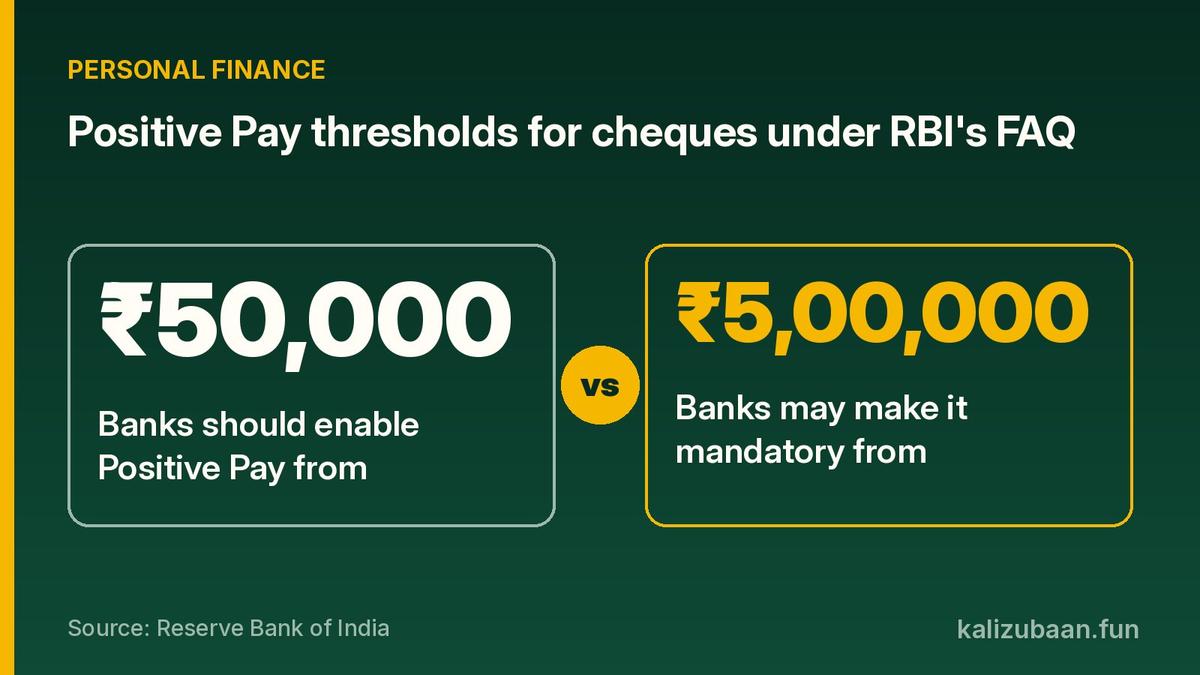
Source: Reserve Bank of India
Under Positive Pay, you send your bank the cheque's date, payee name and amount through SMS, mobile app, internet banking or ATM. CTS then cross-checks those details with the cheque that is presented.
Other rules from the same FAQ:
- Cheques with alterations are not accepted under CTS. To change the payee name or amount, use a fresh cheque leaf.
- CTS captures three images of each cheque, so write with permanent, image-friendly ink.
- For cheques up to and including ₹1,00,000, there is no collection charge for savings account customers.
- Under continuous clearing, banks release the payment to you within one hour of successful settlement, subject to usual safeguards.
What most guides miss: the jump from ₹50,000 to ₹5,00,000 is a tenfold gap. A cheque anywhere inside that band can get Positive Pay protection only if you register it yourself, so registering large cheques is a stronger safety step than replacing a perfectly valid cheque book.
What should you do if you get a message like this again?
Do not act on it or forward it; check RBI's website or its verified handles first, then call your bank if you still have doubts.
Mint notes that customers can confirm regulatory announcements on RBI's official website and verified channels (Mint).
A simple routine works for most banking rumours:
- Look for a dated RBI press release or circular. A real rule change has one.
- Check whether your own bank has emailed or messaged you from its official ID.
- Never share account details, OTPs or cheque leaf photos with anyone offering to "upgrade" your cheque book.
- If your bank does not answer a cheque complaint within 30 days, RBI says you can complain under the Integrated Ombudsman Scheme, online or via the toll-free number 14448 (RBI).
FAQs
Will my old cheque book stop working from January 1, 2027?
No. RBI said on November 7 that it is not introducing any new measures for CTS cheque books, so your existing CTS-2010 cheque book remains usable.
Do I need to apply for a new cheque book in 2027?
Not because of this rumour. You only need a new book when your current one runs out or if you still hold a very old non-CTS book.
Is a non-CTS cheque still valid?
RBI says a non-CTS cheque remains a valid negotiable instrument, but it cannot be presented in CTS clearing, so banks were asked to withdraw such cheques.
How long does a bank keep my physical cheque?
RBI's FAQ says presenting banks must preserve the physical cheques they truncate for 10 years to meet legal requirements.
Expert review: pending.
This article is for education only and is not investment, tax or legal advice.
Related reading
- ₹100 a Day: What Your Bank Owes You When a UPI Payment Fails
- 31 October Bank Holiday: Are Banks Open Today, Saturday?
- ₹50 Lakh LRS Sub-Limit: What RBI's Proposal Means for You
Sources
- Mint: RBI cheque book rules: Will existing CTS cheque books become invalid from January 1, 2027? Here's what RBI said
- CNBC TV18: RBI cheque book rules: No new CTS cheque book norms from Jan 1, 2027, central bank clarifies
- ET Now: Will there be new cheque book rules from January 1, 2027? Here's what RBI said
- Reserve Bank of India: FAQs on Cheque Clearing
- ICICI Bank: Cheque Security Features and Cheque Book Validity
Tagged Topics
Keep reading


Thanks for reading Kali Zubaan
Explore more articles in Personal Finance or return to the main publication feed.


