₹9.04 Lakh Leave Encashment: How a Retiree Beat a Tax Notice
A retired LIC employee was told only ₹3 lakh of her leave encashment was tax-free. ITAT Jaipur exempted the full amount. Here is the rule, the limits, and what retirees should check.
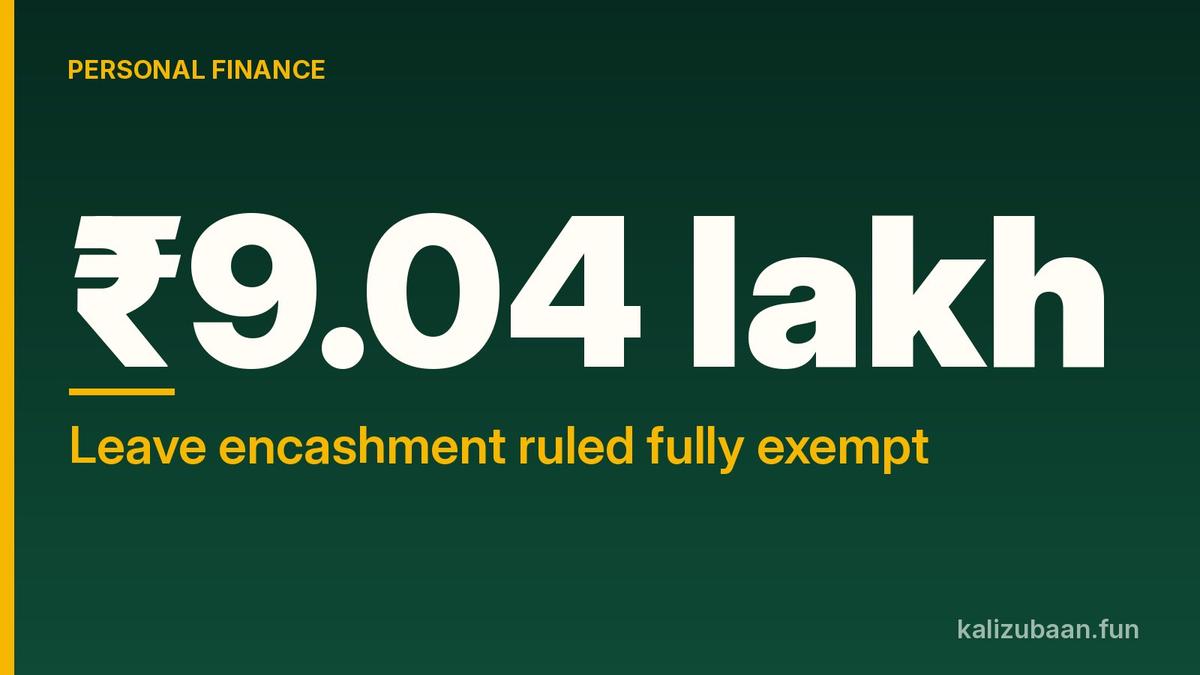
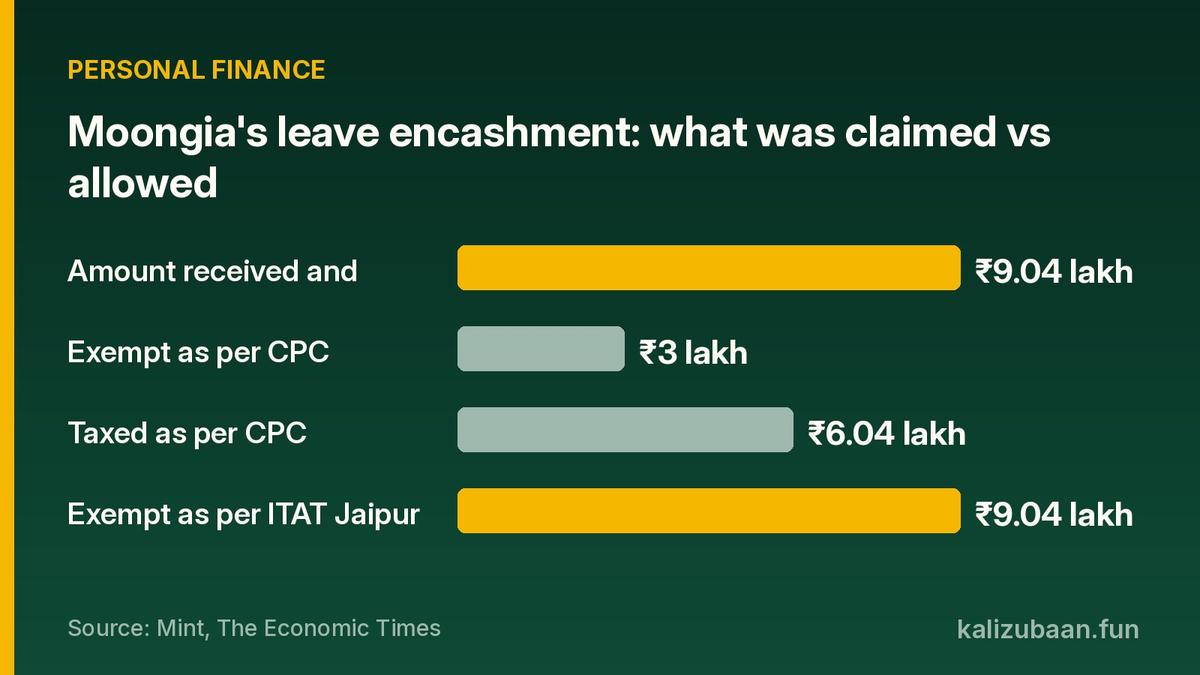
A woman retires from LIC after more than 30 years of service. She receives ₹9,04,669 for her unused earned leave and claims all of it as tax-free. The tax department disagrees, allows only ₹3 lakh, and sends a notice on the remaining ₹6,04,669.
She did not even hear about that notice from her own tax consultant. By the time she appealed, she was 1,277 days late. She still won.
Quick answer
- ITAT Jaipur ruled that Renu Moongia's full ₹9.04 lakh leave encashment is exempt under Section 10(10AA), even though she retired in June 2020, before the higher limit came in.
- The exemption ceiling for non-government employees went up from ₹3 lakh to ₹25 lakh through CBDT Notification No. 31/2023, effective 1 April 2023.
- The ₹25 lakh figure is a ceiling, not an automatic exemption. Your tax-free amount is the lowest of four limits.
- Retirees whose exemption was cut to ₹3 lakh should review their case, but should not assume the ruling automatically applies to them.
Why this case matters now
The tribunal's order was pronounced on 28 September 2026, and both Mint and The Economic Times reported it this week. The case is Renu Moongia vs ITO, for assessment year 2021-22.
It matters because thousands of salaried people retire with a large unused leave balance. Leave encashment is the cash an employee gets for earned leave they never took. On retirement, it can be a big cheque, and a big tax question.
Moongia retired on 30 June 2020. While processing her return for AY 2021-22, the Centralised Processing Centre (CPC) allowed only ₹3 lakh as exempt and treated the rest as taxable. The first appellate authority upheld that.
What the tribunal actually decided
The question was simple. Could someone who retired before the higher ceiling was announced still benefit from it?
ITAT Jaipur said yes in her case. It relied on an earlier ruling by ITAT Agra in Vijay Kumar Jain vs ITO, dated 18.06.2025, which decided the same issue. It directed the assessing officer to allow exemption on the entire ₹9,04,669.
Source: Mint, The Economic Times
The tribunal also forgave the 1,277-day delay in filing her appeal. Her earlier consultant had not told her about the notice. ITAT Jaipur called it a settled principle that a tax consultant's mistake or negligence should not be held against the taxpayer.
That second point is worth remembering on its own. A missed deadline is not always the end of the road if you can show the delay was not your fault.
The leave encashment rule in plain words
Government employees get it easy. Leave encashment received by central or state government employees at retirement is fully exempt under Section 10(10AA)(i).
Non-government employees, which includes the private sector and PSUs, get a limited exemption under Section 10(10AA)(ii). The tax-free part is the lowest of these four amounts:
- The leave encashment actually received.
- The cash value of earned leave to your credit, counting at most 30 days for each year of actual service.
- Ten months' average salary, based on the 10 months just before retirement.
- The ceiling of ₹25 lakh, notified in 2023.
For this formula, salary means basic pay, dearness allowance, and commission based on a fixed percentage of turnover.
The Economic Times gives a clean example. If you receive ₹30 lakh but the other limits work out to ₹20 lakh, only ₹20 lakh is exempt. The balance ₹10 lakh is taxed.
Who should pay attention
- Retirees whose exemption was capped at ₹3 lakh. Mint says they should review the exemption claimed, especially where the department restricted it despite the higher ceiling.
- People who retired before April 2023. The Jaipur ruling is helpful, but Mint warns that such employees should not assume the ₹25 lakh limit automatically applies. Outcomes depend on facts, law and precedent.
- Anyone who changed jobs. The ₹25 lakh ceiling applies on an aggregate basis. Exemption already claimed from a previous employer reduces what is left.
- Employees who took leave in advance. If you took more leave than you earned, there is no earned balance to encash, and the whole amount is taxed as salary.
What to do now
- Pull out your Form 16 and old returns. Check how much leave encashment was shown and how much was claimed as exempt.
- Report it correctly. Show leave encashment under Schedule Salary in your ITR, and disclose the exempt portion separately as an allowance exempt under Section 10.
- Match the numbers. The Economic Times notes that ITR details should be consistent with Form 16.
- Read any CPC adjustment closely. If the exempt portion was cut to ₹3 lakh, ask a tax professional whether this ruling and similar decisions support your claim.
- Watch the deadlines. Check rectification and appeal time limits before deciding what to do.
Mistakes and red flags
The biggest mistake is treating ₹25 lakh as a free pass. It is only the top of the range. Your real exemption could be far lower if your leave balance or average salary is small.
The second mistake is ignoring a notice, or trusting that someone else is handling it. Moongia won despite her consultant's silence, but she spent years in the process.
Any amount above your eligible exemption is taxed under the head salaries at your normal slab rate. There is no special lower rate for excess leave encashment.
FAQs
Is leave encashment fully tax-free for private sector employees? No. It is exempt only up to the lowest of four limits, with ₹25 lakh as the maximum.
I retired in 2020. Can I claim the ₹25 lakh limit? ITAT Jaipur allowed it for Moongia, following ITAT Agra. Mint cautions that this is not automatic, and your outcome depends on your facts.
Is leave encashment while still in service taxable? Yes. Encashment received while working is generally taxed as salary for both government and non-government employees.
Where do I show it in my ITR? Under Schedule Salary, with the exempt portion disclosed separately under exempt allowances.
This article is for education only and is not investment, tax or legal advice.
Sources
- The Economic Times: Retired employee received income tax notice for Rs 9.04 lakh leave encashment; she wins case in ITAT Jaipur
- Mint: Retired before April 2023? ITAT allows LIC employee to claim tax exemption on ₹9.04 lakh leave encashment
- The Economic Times: Leave encashment tax rules for AY 2026-27
Tagged Topics
Keep reading
Thanks for reading Kali Zubaan
Explore more articles in Personal Finance or return to the main publication feed.


