2,000 mg DHA, No Gain: Do Fish Oil Supplements Help Memory?
A two-year USC trial gave 2,000 mg of DHA a day to 365 older adults. The omega-3 reached the brain, but memory did not improve. Here is what it means for your fish oil capsule.

Do fish oil supplements help memory? A new two-year trial says not in the way most people hope. Researchers gave 365 older adults 2,000 mg of DHA every day, and the omega-3 really did reach their brains.
Their memory scores still did no better than those of people swallowing a dummy pill.
Quick answer
- A Keck Medicine of USC trial found daily high-dose DHA did not improve memory, thinking or brain shrinkage over two years.
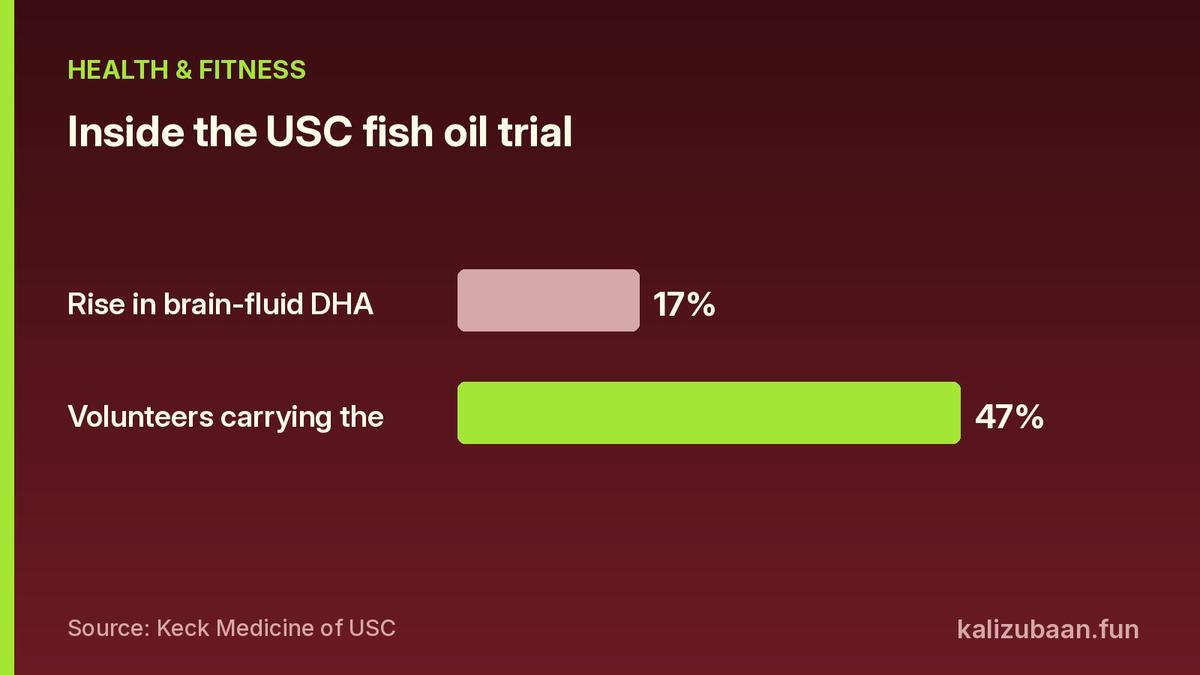
- The DHA did reach the brain: levels in the fluid around it rose by an average of 17% after six months.
- The study does not say omega-3 from food is useless. Fish, walnuts, flaxseeds and chia seeds still count as part of a balanced diet.
- Exercise, sleep, a good diet and control of blood pressure, sugar and cholesterol remain the advice doctors give for brain health.
This is health information only, not medical advice. Talk to your doctor before you start or stop a supplement.
What did the fish oil study actually find?
The trial found that fish oil supplements did not protect memory or brain structure in older adults at risk of Alzheimer's, even though the omega-3 reached the brain.
The study enrolled 365 adults aged 55 to 80 who rarely ate fish and were considered at higher risk of Alzheimer's, according to Keck Medicine of USC. Half of them got a daily supplement with 2,000 mg of DHA, the main omega-3 in brain cells. The rest got a placebo.
It was double-blind. Neither the volunteers nor the researchers knew who was taking the real capsule.
At the start and again two years later, everyone sat memory and thinking tests. The DHA group did no better than the placebo group. Brain scans also showed the capsules did not stop shrinkage of the hippocampus, the part of the brain that forms memories.
"We all wish there was a silver bullet for preventing Alzheimer's, but our findings showed that fish oil supplements do not appear to protect brain health," said Hussein Naji Yassine, MD, the study's lead investigator.
Did the omega-3 even reach the brain?
Yes, and that is what makes the result surprising: the DHA got where it was meant to go and still made no measurable difference.
After six months, DHA in the cerebrospinal fluid, the clear liquid around the brain and spinal cord, rose by an average of 17% in people taking the supplement (ScienceDaily). So the result is not about a capsule that failed to absorb.
Source: Keck Medicine of USC
Nearly half the volunteers, 47%, carried APOE4, the strongest known genetic risk factor for late-onset Alzheimer's. The supplement did not help them either.
What most guides miss: this trial picked people who rarely ate fish, the group you would expect to gain the most from a capsule. If they saw no memory benefit, someone who already eats fish has even less reason to expect one.
Why would a supplement reach the brain but not help it?
The researchers do not have a full answer yet, but they suspect omega-3s work better inside a whole diet than as a single pill.
Based on their earlier work, the USC team thinks omega-3s may do more as part of a Mediterranean-style diet, which is naturally rich in them and linked with lower Alzheimer's risk (Keck Medicine of USC). They are now studying whether poor health, diet pattern, genes and age change how the brain uses omega-3s.
In plain words, getting more DHA into the brain was not enough on its own. Something about how the brain processes it seems to matter more.
Should you stop eating omega-3 foods?
No. The study tested a high-dose capsule, not food, and Indian doctors say whole foods still carry nutritional value.
Dr. Kaustubh Mahajan, a neurology consultant at P.D. Hinduja Hospital in Mumbai, told the Hindustan Times that the research does not prove omega-3 is unimportant when it comes from fish, walnuts, flaxseeds and chia seeds.
That matters on an Indian plate. A vegetarian who skips fish can still get omega-3 from flaxseed (alsi) or walnuts as part of normal meals.
Omega-3 supplements may still help people with specific health or dietary needs. What they have not been proven to do is prevent Alzheimer's or memory loss.
What actually protects memory as you age?
The advice from both the study team and Indian neurologists is the same: everyday habits, not one pill.
"Staying healthy throughout life remains the most powerful tool we have for reducing Alzheimer's risk, including regular exercise, quality sleep and a balanced diet," Yassine said (Keck Medicine of USC).
Dr. Mahajan's list in the Hindustan Times is practical:
- Exercise regularly.
- Eat a balanced diet.
- Sleep well.
- Keep your mind active.
- Control hypertension, diabetes and high cholesterol.
That last point is easy to forget. Blood pressure and sugar checks are cheap, and doctors list them right next to diet and sleep.
Who should be careful before changing supplements?
Anyone taking fish oil on a doctor's advice for a specific condition should not stop on the strength of one news story.
This trial looked at older adults without dementia who were at risk of Alzheimer's. It did not test people with heart conditions, pregnancy, or other reasons a doctor might prescribe omega-3. Americans alone spend more than $1 billion a year on fish oil supplements (ScienceDaily), and many take them for reasons beyond memory.
If you take a capsule only because you heard it sharpens memory, that is a good question to bring to your next check-up.
FAQs
Do fish oil supplements help memory?
In this two-year trial of 365 older adults, a daily 2,000 mg DHA supplement did not improve memory or thinking compared with a placebo.
Is omega-3 from food still good for the brain?
The study did not test food. A neurologist quoted by the Hindustan Times said it does not prove omega-3 from fish, walnuts, flaxseeds or chia seeds lacks value in a balanced diet.
Can fish oil prevent Alzheimer's?
The researchers said their results do not support fish oil supplements as a way to prevent Alzheimer's.
Should I stop my fish oil capsules?
Not without talking to your doctor, especially if one prescribed them for a specific reason.
Expert review: pending.
This article is for information only and is not medical advice. Talk to a doctor before changing your diet or training.
Related reading
- 2 Tiny Proteins: Why the Mediterranean Diet Helps Your Heart
- 100% RDA Claim: FSSAI Flags Celevida GLP+ Ads
- 24% Less Gut Diversity: Why Sugar and Antibiotics Don't Mix
Sources
Tagged Topics
Keep reading


Thanks for reading Kali Zubaan
Explore more articles in Health & Fitness or return to the main publication feed.