Semaglutide Cuts Heart Events 20%, Even Without Big Weight Loss
Semaglutide's heart benefit held even when weight loss was modest. A BMJ network of 262 trials and the SELECT study of 17,604 adults put the story on risk, not only kilos.

Most people still judge a GLP-1 drug by one number: how much weight comes off. A BMJ network covering 262 trials and nearly 100,000 patients complicates that habit.
Semaglutide did not top the weight-loss table. It was the drug with the clearest signal on death and heart attack. In the SELECT trial of 17,604 adults, major cardiovascular events fell by 20 percent whether people lost a lot of weight or not.
Quick answer
- Subcutaneous semaglutide cut major cardiovascular events by 20% in SELECT, and that benefit did not depend on how much weight was lost.
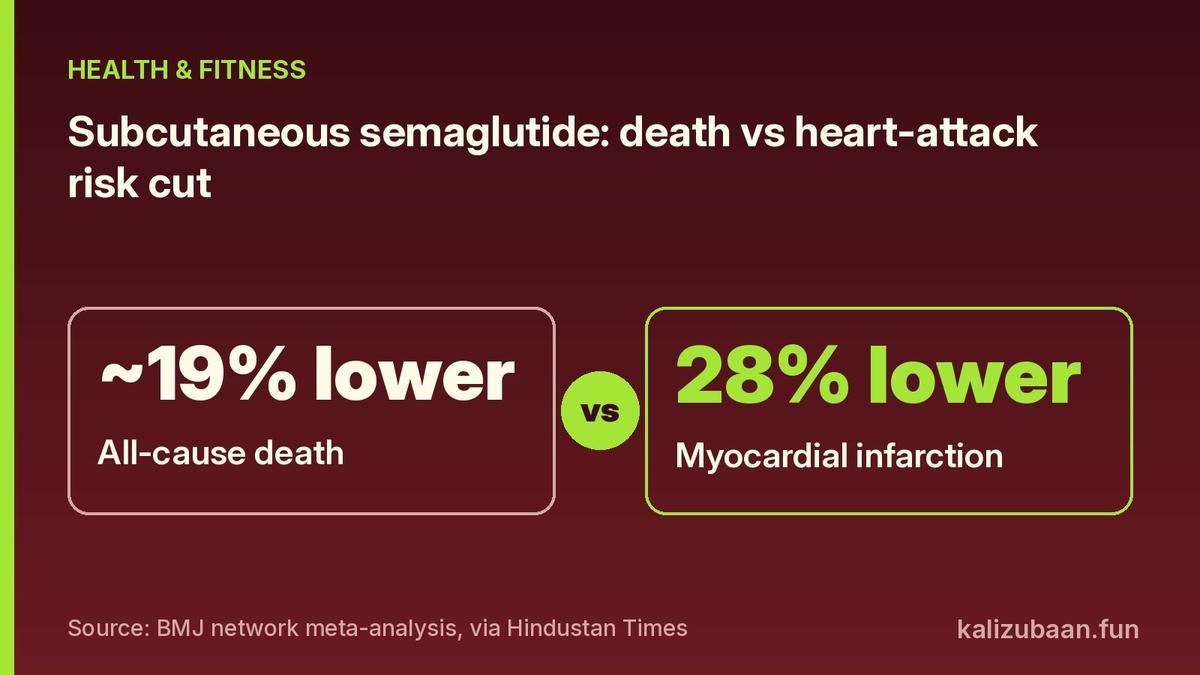
- In the BMJ comparison, it was the only drug with high-certainty evidence of lowering all-cause death by roughly 19% and myocardial infarction by 28%.
- Tirzepatide led weight loss at just under 15% of body weight in one year, with CagriSema at 14.8%, while oral and injectable semaglutide clustered between 9.8% and 10.9%.
- In India, prescribing still often follows BMI over 30, or BMI above 27 with comorbidities, even as doctors warn that South Asian risk can show up at lower BMI and higher waist fat.
The heart story is bigger than the scale
Hindustan Times’ Scientifically Speaking column put it plainly: the heart benefits of semaglutide do not depend on how much weight a person loses.
SELECT, led in part by Professor John Deanfield at University College London and also reported via The Hindu as the Lincoff NEJM trial, enrolled 17,604 adults aged 45 and older who were overweight or obese and already had cardiovascular disease, without diabetes in the SELECT design. Outcomes were tracked for just over three years in the HT write-up, and nearly 40 months in The Hindu’s account.
People who lost more than 5 percent of body weight on semaglutide and those who lost less had nearly identical reductions in cardiovascular risk. Benefits were already visible by around 20 weeks, long before maximum weight loss.
That matters for Indians who carry more abdominal fat at a given BMI. Belly fat is a louder metabolic signal than the weighing scale alone, and the SELECT analysis suggested waist change explained only part of the heart benefit.
What the BMJ ranking actually shows
When patients ask which GLP-1 to start, the conversation usually turns on kilos. The BMJ analysis ranked 19 drugs on weight, muscle, heart, kidney outcomes and quality of life.
Source: BMJ network meta-analysis, via Hindustan Times
On weight, tirzepatide led at just under 15% of body weight lost in one year. CagriSema followed at 14.8%. Oral semaglutide, orforglipron and subcutaneous semaglutide clustered between 9.8% and 10.9%. Phentermine-topiramate, not sold in India, reached 8.1%.
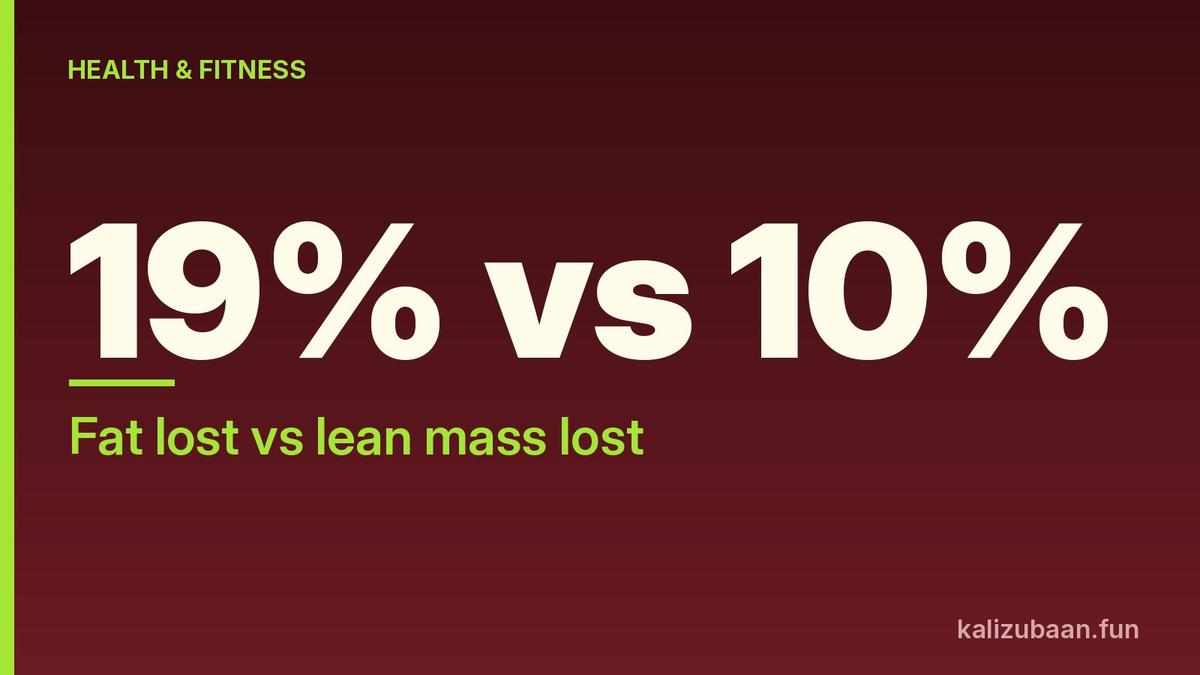
Waistlines shrank by up to 11 centimetres on tirzepatide and CagriSema. The catch: tirzepatide also produced the biggest lean-mass reduction, 8.3% in one year, more than one-and-a-half times semaglutide’s. Some of the weight removed is not fat.
Dr Ambrish Mithal of Max Healthcare told Hindustan Times the field will get more stratified by a patient’s state of health over time. For now, he said Indian practice still largely follows a BMI cut-off rather than a head-to-head drug comparison.
India: BMI rules, waist reality, and oral data
Mithal summarised the usual Indian criteria: BMI over 30 after other methods, or BMI above 27 with comorbidities.
The Hindu’s reporting on SELECT thresholds warns that a BMI of 27 or higher, drawn from a mostly Western trial population, may miss South Asians who develop cardiometabolic risk at lower BMI because of higher visceral fat — the thin-fat phenotype. Indian cardiology consensus around semaglutide already points clinicians toward waist circumference, waist-to-hip ratio or body composition alongside BMI.
There is also oral evidence closer to home. The SOUL trial enrolled 9,650 people with type 2 diabetes; India had 32 centres and 788 people. Oral semaglutide cut the risk of heart attacks, strokes and cardiovascular death by 14%, The Hindu reported. V. Mohan of Dr. Mohan’s Diabetes Specialities Centre called out the MACE reduction in adults with diabetes and established cardiovascular or kidney disease.
The backdrop is large. An ICMR study cited for 2021 put India at over 100 million people living with diabetes. NFHS 2019-21 found nearly 23% of women and 22.1% of men overweight by BMI, with abdominal obesity in 40% of women and 12% of men.
What this means if you are comparing drugs
Weight loss still matters. It is just not the whole scorecard.
If heart protection is the priority and the patient already has cardiovascular disease, subcutaneous semaglutide currently has the strongest hard-outcome evidence in the BMJ network. Tirzepatide leads on kilos and waist change, but with more lean-mass loss and less mature mortality data. Oral options are expanding; a high-dose oral semaglutide pill has produced about 15 per cent weight loss in trials, per the SELECT follow-up column, while SOUL supports a cardiovascular signal for the approved oral form in diabetes.
Cost and access still steer many Indian prescriptions toward generic semaglutide, Hindustan Times noted. That is not the same as a clinical ranking — it just happens to point, for now, at the drug with the clearer survival signal.
Who should be careful
These drugs are not a DIY weight plan. Gastrointestinal side effects are common, and real-world data cited in the BMJ piece suggest roughly half of patients discontinue within a year.
They do not replace statins or blood-pressure medicines. Eligibility, dose, monitoring and whether BMI or waist should drive the decision belong with a doctor, especially for older adults, people at risk of frailty, or anyone with complex heart or kidney disease.
FAQs
Does semaglutide’s heart benefit require big weight loss? No. In SELECT, the 20% drop in major cardiovascular events was similar in people who lost more than 5 percent of body weight and those who lost less.
Which GLP-1 lost the most weight in the BMJ comparison? Tirzepatide, at just under 15% of body weight in one year, ahead of CagriSema at 14.8%. Semaglutide forms clustered between 9.8% and 10.9%.
What heart numbers stand out for subcutaneous semaglutide? High-certainty evidence of roughly 19% lower all-cause death and 28% lower myocardial infarction risk in the BMJ network, plus the SELECT 20% MACE reduction.
How are these drugs usually prescribed in India? Dr Ambrish Mithal said practice still largely follows BMI over 30, or BMI above 27 with comorbidities. Indian commentators also flag waist and visceral fat because South Asian risk can appear at lower BMI.
This article is for information only and is not medical advice. Talk to a doctor before changing your diet or training.
Sources
- Hindustan Times: Weight loss, muscle mass, heart risk: Study decodes strengths & weaknesses of 19 GLP-1 drugs
- Hindustan Times: Scientifically Speaking: A heart drug disguised as a weight-loss injection
- The Hindu: Semaglutide guidelines based on BMI may exclude at-risk Indians
- The Hindu: Semaglutide reduces risk of cardiovascular events in patients with type 2 diabetes, finds study
Tagged Topics
Keep reading


Thanks for reading Kali Zubaan
Explore more articles in Health & Fitness or return to the main publication feed.


