₹39.92 Lakh Home Loan, Flat Sold Twice: Why the HC Backed Him
A Mumbai buyer stopped his home loan EMI after the builder resold his flat, and SBI filed a criminal case. The Karnataka High Court quashed it. Here is what the ruling means for your home loan.

He took a ₹39.92 lakh home loan, paid his EMIs on time, and then found out the builder had sold his flat to someone else. When he stopped paying, his bank did not just chase the builder. It filed a criminal case against him.
That is what happened to Mr Bari, a Mumbai homebuyer, and the Karnataka High Court has now quashed that case. If you have a home loan on an under-construction flat, this ruling is worth five minutes of your time.
Quick answer
- A buyer took a ₹39.92 lakh home loan from SBI for a Bengaluru flat. The builder sold the same flat to a third party without his or the bank's consent.
- He stopped paying his home loan EMI, and SBI filed an FIR accusing him of cheating and criminal breach of trust.
- The Karnataka High Court quashed it, saying an outstanding loan alone is not a criminal offence. But the loan question itself is still a civil matter.
What happened in this home loan case
Bari lives in Sion East, Mumbai. In FY19-20, he took a home loan of Rs 39.92 lakh from State Bank of India (SBI) to buy a flat in the Grandeur Park project in Bengaluru.
As banks usually require, he signed a tripartite agreement with the bank and the builder on February 8, 2020. A tripartite agreement is a three-way contract between the buyer, the builder and the lender. It decides who owes what if something goes wrong.
Because he lived in Mumbai, Bari could not visit the site often to check on construction. He kept paying his EMIs anyway.
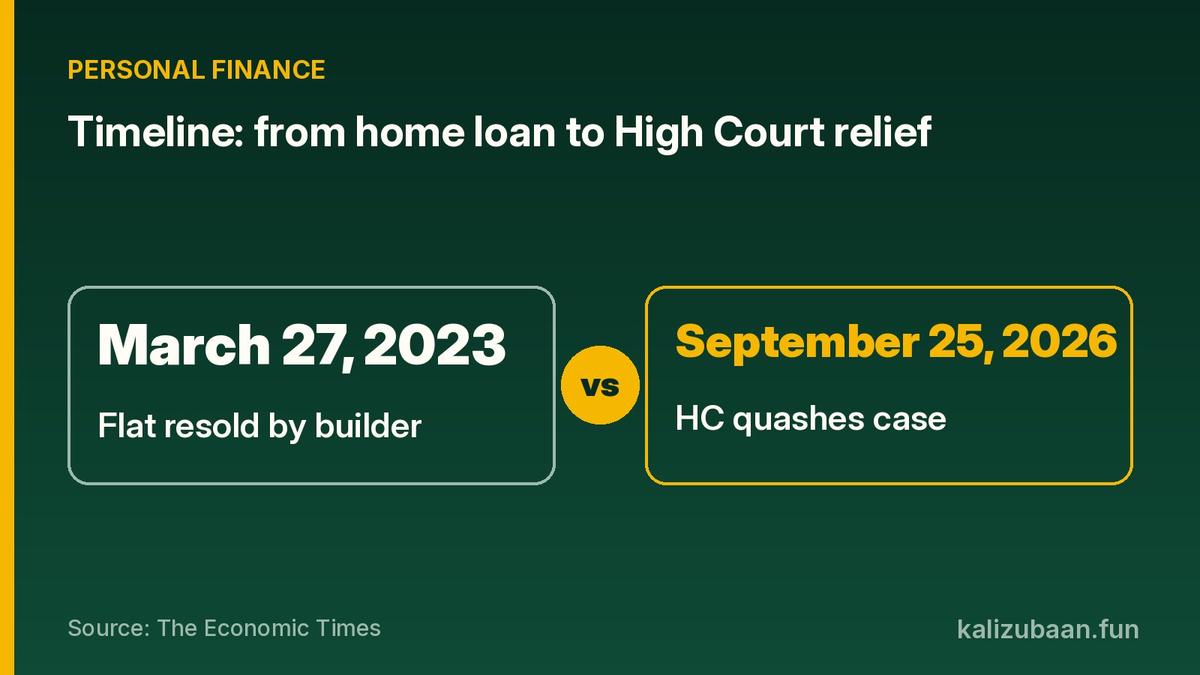
Then, on March 27, 2023, the builder sold the same flat to a third party, without consent from either SBI or Bari.
How a home loan EMI dispute became a criminal case
As soon as Bari learnt his flat had been sold, he stopped paying his home loan EMIs. But the loan was still outstanding in the bank's books.
On September 25, 2024, SBI filed an FIR at Shankarapura Police Station in South Bengaluru against Bari. The bank accused him of cheating, criminal breach of trust and misappropriating the loan amount.
Here is the twist. SBI's own lawyers cited clauses 2, 4, 5 and 6 of the tripartite agreement. They said that if the builder cancelled the booking or the project got shelved, the builder was legally obliged to repay the bank the money it received.
Clause 5 went further. If the builder failed to complete the project, it had to pay the entire amount received from the borrower to the bank.
Bari's lawyer, Advocate Rajath, argued that if anyone was a victim, it was Bari. He had invested his savings, taken a loan and paid EMIs, only to be left without the property.
Source: The Economic Times
What the Karnataka High Court said
On September 25, 2026, the Karnataka High Court quashed the criminal proceedings and the FIR against Bari. Its reasoning came down to a few points:
- Bari never got title to the flat and never signed a sale deed.
- He took no part in the resale and gained nothing from it.
- A public sector bank like SBI is expected to act with due care before using criminal law against a customer.
The court's key line: "The existence of an outstanding loan or the failure of the underlying transaction, by itself, cannot be treated as constituting a criminal offence."
It added that criminal prosecution cannot be used as a way to recover money, unless the basic ingredients of a crime are actually there.
Who carries the risk under a tripartite agreement
Kalpit Khandelwal, Partner at Aekom Legal, explained the win to ET Wealth Online. The tripartite agreement itself made the builder, not the homebuyer, liable to repay the bank if the project failed or the flat was cancelled. Since Bari showed no dishonest intent, the court treated it as a civil recovery matter.
But read this part carefully. The ruling does not settle what happens to Bari's booking or the money he paid. The court only dealt with the criminal case. In Khandelwal's words, an outstanding loan alone is not a crime, "but you remain a borrower in the bank's books."
What to do if you have a home loan on an under-construction flat
- Read your tripartite agreement. Find the clauses on builder default, cancellation and project delay. Khandelwal says this document allocates who bears the risk.
- Visit or track the project. Bari's distance from the site meant he learnt late. Ask a relative, check the builder's updates, and look up the project's status regularly.
- Keep every record. Save EMI receipts, payment proofs to the builder and every email or letter with the bank and builder.
- Tell the bank in writing, right away. If the builder defaults or resells, inform your lender in writing before you take any step.
- Act early, not after default. Stopping EMIs on your own can hurt your credit score and still leave the loan outstanding. Talk to a lawyer about the civil route first.
Mistakes and red flags
- Assuming stopping EMIs is safe. The court protected Bari from criminal charges, but the loan is still owed until a civil remedy settles it.
- Not reading the fine print. Many buyers sign the tripartite agreement without reading it. It is your main protection.
- Ignoring silence from the builder. No updates for months is a warning sign.
FAQs
Can a bank file a criminal case if I stop paying my home loan EMI? A bank can file a complaint, but the Karnataka High Court said an outstanding loan by itself is not a criminal offence. A crime needs dishonest intent.
What is a tripartite agreement in a home loan? It is a three-way contract between you, the builder and the bank. In this case it made the builder liable to repay the bank if the project failed or the booking was cancelled.
Does this ruling mean I don't have to repay my loan? No. The court only quashed the criminal case. You remain a borrower in the bank's books, and the money question is a civil matter.
What should I do if my builder sells my flat to someone else? Inform your bank in writing, keep all records, and consult a lawyer on civil and consumer remedies before stopping payments.
This article is for education only and is not investment, tax or legal advice.
Sources
Tagged Topics
Keep reading


Thanks for reading Kali Zubaan
Explore more articles in Personal Finance or return to the main publication feed.


