150 Minutes a Week: Raveena Tandon's Simple Diet Plan, Decoded
Dal, bhaji and dahi for lunch, no aerated drinks and lots of swimming. Raveena Tandon's diet plan is simple, and it lines up neatly with the WHO's advice on food and the 150 minutes of weekly activity it recommends.

No crash diets. No fancy superfoods. Raveena Tandon's diet plan is dal, bhaji and dahi for lunch, homemade ghee, no aerated sodas and a lot of swimming.
On her birthday on October 26, Hindustan Times looked back at an interview she gave Pinkvilla in November 2020. The routine still holds up, because it matches what the World Health Organization recommends. Here is the plan, and how to copy it.
Quick answer
- Raveena's regular lunch is dal, bhaji (vegetables) and dahi (curd), which she says keeps her stomach full.
- She avoids aerated sodas and high-sugar drinks, uses homemade ghee and drinks a homemade haldi kada.
- She prefers cardio, yoga, swimming, walking and running over heavy weight training.
- The WHO says adults aged 18 to 64 should get at least 150 minutes of moderate activity a week.
Raveena Tandon's diet plan: the dahi rule
When asked about her daily diet, Raveena kept it simple. "The regular, like for lunch, dal, bhaji (veggies) and my dahi (curd), is something that I regularly eat because I feel the stomach needs to remain full," she said.
She called dahi "a lot of probiotics" and said it is something one should have if you do not have access to coconut water.
This is the kind of plate global guidance pushes for. The WHO says a wide variety of foods, including fruits, vegetables, pulses, whole grains and lean protein, helps make a healthy diet.
Why dal, bhaji and dahi work together
Hindustan Times breaks down why this lunch fits the WHO brief:
- Dal gives pulses for plant protein.
- Bhaji gives seasonal vegetables for micronutrients and fibre.
- Dahi gives curd for probiotics.
The WHO also notes that for many adults, a shift towards more plant-based protein may bring health benefits, especially when it replaces red meat. It says foods high in unhealthy fats, free sugars and sodium should be limited.
No sodas, yes to homemade ghee
Raveena was clear about what she cuts out. "We make our own homemade ghee. We try not to have, nor have we encouraged the children to have, aerated sodas. A lot of high-sugar-concentration drinks are also a no-no," she said.
She also makes a kada with organic haldi from her farm, ajwain, laung, kali mirch and adrak, boiled together with a pinch of pure ghee. The children drink it too.
The WHO has flagged that diets with a lot of highly processed foods, which are often high in sodium, sugar or unhealthy fats, are linked to poor health outcomes. Swapping sodas for homemade drinks is a low-sugar, whole-food habit.
Her fitness plan: cardio over heavy weights
"I love doing a lot of cardio because it really suits my body type, whereas a lot of weight training doesn't," Raveena said. "So, I love my yoga, I love my swimming, and I love my walking, running."
No two-hour gym sessions. Her mix of yoga, swimming, walking and running is close to what the WHO recommends for long-term health.
Source: Hindustan Times, citing WHO
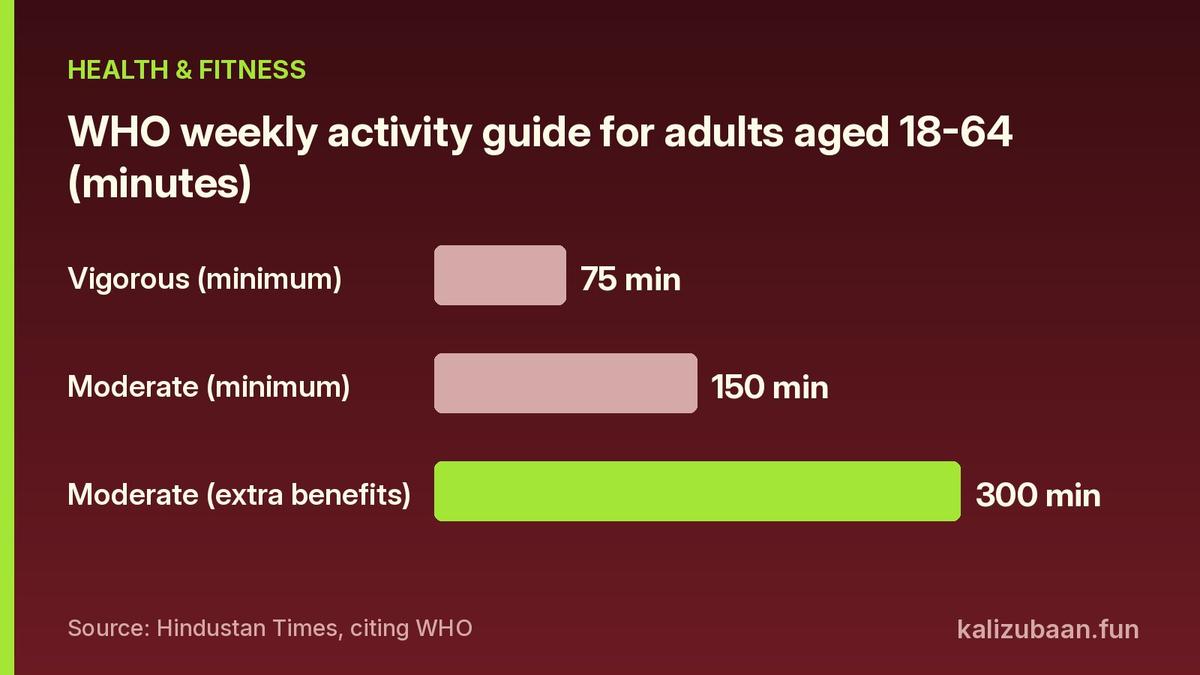
The WHO says adults aged 18 to 64 should do at least 150 minutes of moderate activity a week, or at least 75 minutes of vigorous activity, or a mix of both.
For extra benefits, it suggests going up to 300 minutes of moderate activity a week. It also advises muscle-strengthening work for major muscle groups on two or more days a week.
That last point matters. Raveena skips heavy lifting because it does not suit her, but the WHO still recommends some strength work. Yoga and bodyweight moves can be a gentle way to cover it.
How to copy this diet plan at home
You do not need a celebrity budget for this. A simple version looks like this:
- Make lunch dal, sabzi and dahi. Plant protein, vegetables and curd on one plate.
- Drop the cold drinks. Replace aerated sodas and sugary drinks with water, chaas or a homemade kada.
- Pick cardio you enjoy. Swimming, brisk walking, running or yoga all count. Enjoyment is what makes it last.
- Hit 150 minutes a week. Spread it across the week in sessions that fit your day.
- Add strength on two days. Even simple bodyweight exercises help cover the WHO's muscle-strengthening advice.
Who should be careful
If you have diabetes, PCOS, kidney disease, a heart condition or are pregnant, check with your doctor before changing your diet or exercise. Homemade kadas and ghee are part of Raveena's routine, but portions and health conditions differ from person to person.
FAQs
What does Raveena Tandon eat for lunch? She told Pinkvilla her regular lunch is dal, bhaji (vegetables) and dahi (curd).
Does Raveena Tandon do weight training? She said a lot of weight training does not suit her body type. She prefers yoga, swimming, walking and running.
How much exercise does the WHO recommend? At least 150 minutes of moderate activity or 75 minutes of vigorous activity a week for adults aged 18 to 64, plus muscle-strengthening on two or more days.
Is this a weight loss diet plan? It is a simple everyday eating and exercise pattern, not a weight loss programme. For weight loss goals, talk to a doctor or dietitian.
This article is for information only and is not medical advice. Talk to a doctor before changing your diet or training.
Sources
Tagged Topics
Keep reading


Thanks for reading Kali Zubaan
Explore more articles in Health & Fitness or return to the main publication feed.