12 vs 24 Months: Physical Gold vs Gold ETF Tax This Dhanteras
Physical gold vs gold ETF tax this Dhanteras: ETFs turn long-term after 12 months, jewellery after 24. Here is how STCG, LTCG and 3% GST change what you keep.
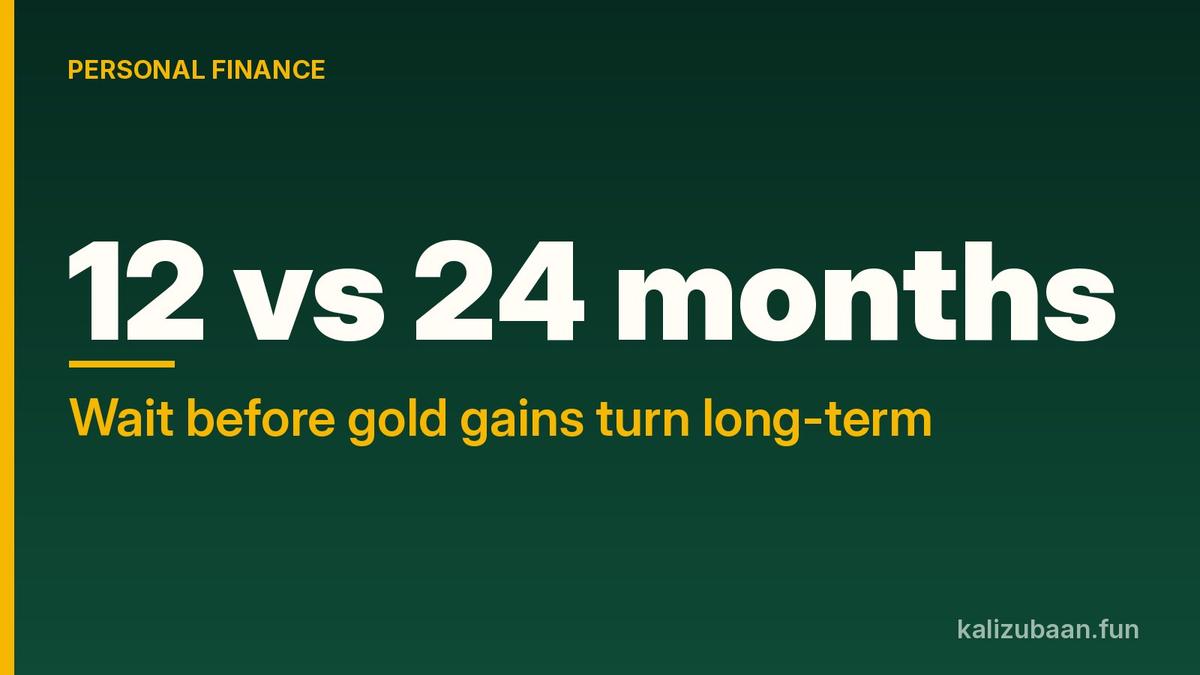
Buy ₹10 lakh of gold, sell it for ₹14 lakh after more than two years, and your ₹4 lakh profit carries an LTCG tax of ₹50,000, before surcharge and cess (Mint).
Here is the twist this Dhanteras. On physical gold vs gold ETF tax, the rate is the same once you qualify for long-term. What changes is how long you have to wait, and what you pay on the way in.
Quick answer
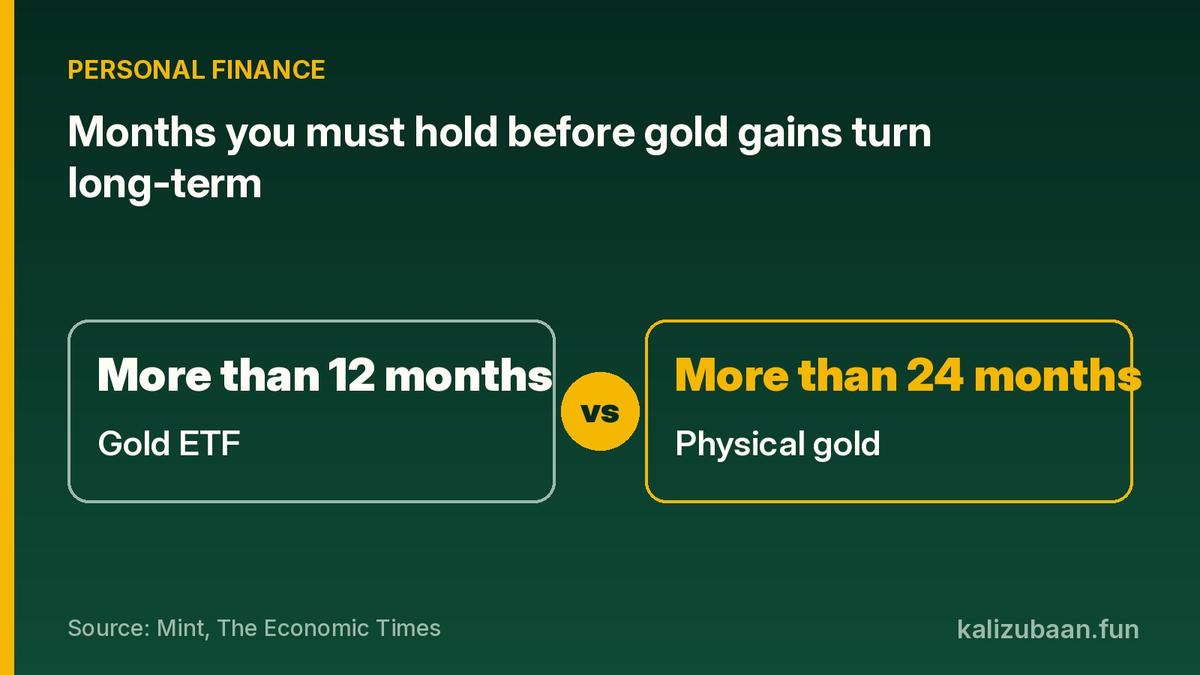
- Gold ETFs become long-term after more than 12 months. Physical gold needs more than 24 months.
- Long-term gains on both are taxed at 12.5%, without indexation, plus surcharge and cess.
- Sell earlier and the gain is short-term, taxed at your income-tax slab rate.
- Jewellery and coins usually carry 3% GST on the full value, including making charges. ETFs have an expense ratio and brokerage instead.
This is general education about gold taxation, not a recommendation to buy gold, gold ETFs or any specific fund. Check your own case with a tax adviser.
How is physical gold taxed when you sell it?
Physical gold held for more than 24 months is taxed as LTCG at 12.5% without indexation; sell within 24 months and the gain is short-term, taxed at your slab rate.
Physical gold includes jewellery, coins, bars and bullion. These holding rules apply to transfers made on or after July 23, 2024, explains Mint. Surcharge and cess are added on top.
Buying costs money too. Chintan Ghelani, Partner, Direct Tax, N.A. Shah Associates LLP, told The Economic Times that finished gold from a jeweller is generally taxed at 3% GST on the total transaction value. That includes making charges, even if the bill shows them separately.
There is one piece of good news. When you sell your personal old gold or jewellery to a jeweller, the sale is generally outside GST, because you are not doing it as a business. Capital gains tax can still apply.
How are gold ETFs taxed?
Gold ETF units held for more than 12 months are taxed as LTCG at 12.5% without indexation; units sold within 12 months are taxed at your slab rate as STCG.
Gold ETFs track domestic gold prices and trade on stock exchanges through a demat account. Because they are listed, the holding period for long-term status is shorter, per The Economic Times.
Source: Mint, The Economic Times
One common mistake: the ₹1.25 lakh yearly LTCG exemption under Section 112A does not cover gold ETFs. It applies only to specified equity shares and equity-oriented mutual funds, notes Mint.
What most guides miss: in the ₹10 lakh to ₹14 lakh example, the LTCG bill is ₹50,000 whether you hold jewellery or ETF units, because both pay 12.5%. The ETF advantage is not a lower tax rate. It is reaching that rate in half the time, and skipping the 3% GST paid upfront on jewellery.
Physical gold vs gold ETF: what happens if you sell after 18 months?
If you buy this Diwali and sell after 18 months, gold ETF gains are taxed as LTCG at 12.5%, while physical gold gains are still short-term and taxed at your slab rate.
That is the exact example Mint uses. For anyone in a higher tax slab who may need the money within two years, this gap can matter more than the purchase price.
Other costs still count. Physical gold needs safe storage and security. ETFs avoid that, but you pay the fund's expense ratio, brokerage and transaction charges, and an ETF's price can differ slightly from the value of the gold it holds.
Gold ETF or silver ETF: what do recent returns show?
Over one year, silver ETFs returned 25.04% on average against 15.79% for gold ETFs, but silver also fell far harder in the last three months.
Value Research data reported by Mint shows gold ETFs down 3.86% over three months, while silver ETFs fell 17.04%. Over three years, silver ETFs averaged 35.96% and gold ETFs 30.58%.
Among gold ETFs, Aditya Birla Sun Life Gold ETF led with a 12.93% one-year return, followed by Quantum Gold ETF at 12.89%. These are past returns as on 3 Nov 2026, not a promise.
Rahul Khetawat, fund manager at 360 ONE Asset, called silver a "high-beta play on gold", pointing to its recent correction of almost 50% from its high. He suggests building either exposure through a SIP rather than trying to time prices.
Which should you buy this Dhanteras?
Buy physical gold if you want jewellery or coins for use, gifting or tradition, and gold ETFs if you only want investment exposure and may sell within two years.
Whichever you choose, keep the paperwork. Ghelani advises preserving purchase invoices, and for inherited or gifted jewellery, documents proving the inheritance or gift and the original owner's purchase details (The Economic Times). Without them, proving your cost and holding period at sale gets hard.
For ETFs, compare expense ratios, tracking error and trading volumes, and check the iNAV before you place an order.
FAQs
Is gold ETF better than physical gold for tax?
Gold ETFs turn long-term after more than 12 months, versus more than 24 months for physical gold. The long-term rate is 12.5% for both, so the gain is in the shorter wait.
Is there GST on buying gold on Dhanteras?
Finished gold bought from a jeweller generally attracts 3% GST on the total transaction value, including making charges.
Do I pay GST when I sell old jewellery?
Generally no. Selling personal old gold to a jeweller is usually outside GST, but capital gains tax may still apply.
Does the ₹1.25 lakh LTCG exemption apply to gold ETFs?
No. That exemption under Section 112A applies only to specified equity shares and equity-oriented mutual funds.
Expert review: pending.
This article is for education only and is not investment, tax or legal advice.
Related reading
- ₹11 Trillion of Gold Is Pledged: Rethink Your Dhanteras Buy
- ₹2 Lakh Gain, ₹9,375 Tax: LTCG on Stocks, Gold and Property
- 17 Fund Houses Shut Gold FoFs: What Happens to Your SIP Now
Sources
Tagged Topics
Keep reading

Thanks for reading Kali Zubaan
Explore more articles in Personal Finance or return to the main publication feed.


