₹11 Trillion of Gold Is Pledged: Rethink Your Dhanteras Buy
Indian families have pledged well over ₹11 trillion of jewellery for loans. Before you buy gold this Dhanteras, see what making charges, GST and resale cuts really cost, and where investment gold belongs.
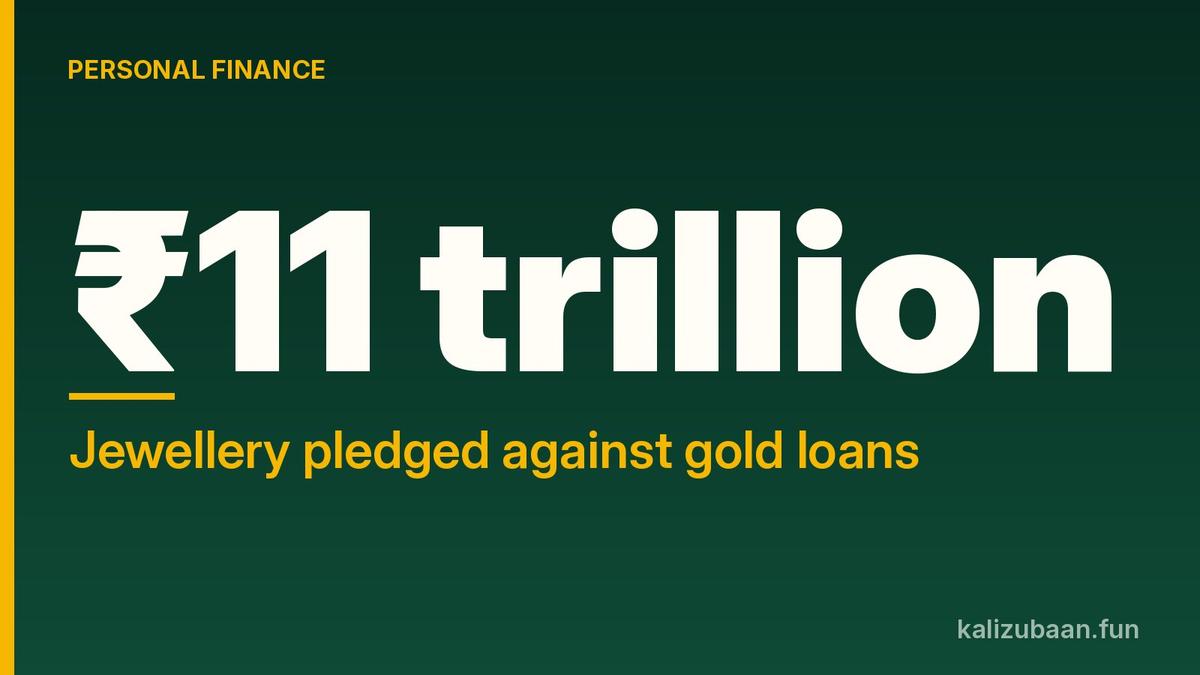
Indian families have pledged jewellery worth well over ₹11 trillion with banks and lenders. That is how much gold sits in vaults today, backing loans people took when cash ran short.
Now Dhanteras is coming, and crores of people will buy more gold on a single day. Before you join the queue, it helps to know what that gold is really for.
Quick answer
- Dhanteras jewellery is mostly consumption, not investment. Making charges of around 8-25% plus 3% GST are lost the day you buy.
- Gold works as a hedge only in a form that is cheap to hold and easy to sell, such as a gold ETF.
- Banks alone had about ₹5 trillion of gold jewellery loans in May 2026, roughly double a year earlier. Family gold is now mostly collateral.
- Enjoy the ritual. Just record the jewellery as an expense, not as part of your investment plan.
Why this matters right now
Value Research founder Dhirendra Kumar made a sharp point in a Mint column this week. No one wakes up on a fixed day to buy mutual funds or shares because the day is auspicious. Yet with gold, almost the whole country does exactly that.
He is careful to say the festival itself needs no fixing. The lamps, the clean homes and the family gatherings are the best part of the season. The problem starts only when we mistake the ritual for a financial decision.
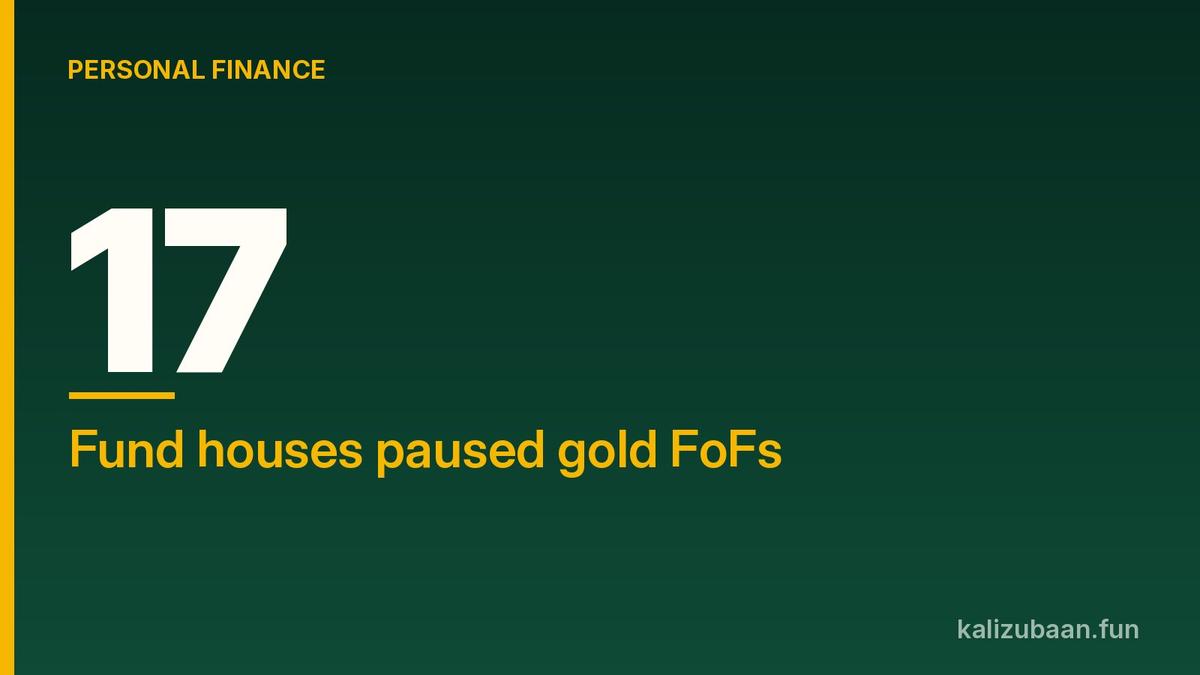
There is a second reason to think twice this year. Most large fund houses stopped taking fresh money into their gold funds of funds from 16 October, reportedly at SEBI's nudge, with the rupee weak and the festive import rush ahead. Gold ETFs on the exchange remain open to anyone with a demat account.
Your gold is already working as collateral
For generations, a family's gold was its emergency reserve. When cash ran out, the jewellery went to the lender. That habit has turned into a huge lending business.
RBI data shows banks alone had about ₹5 trillion of gold jewellery loans outstanding in May 2026. Add NBFCs and the total crosses ₹8 trillion. Lenders usually lend no more than 75-85% of the gold's value, so the jewellery behind these loans is worth well over ₹11 trillion.
Compare that with India's equity mutual funds, which hold ₹37.5 trillion according to AMFI. The pledged gold is worth close to a third of that.
The growth has been fast. BankCreds Research compiled RBI's monthly figures and found bank gold loans have grown 50% or more every month for 24 months in a row.
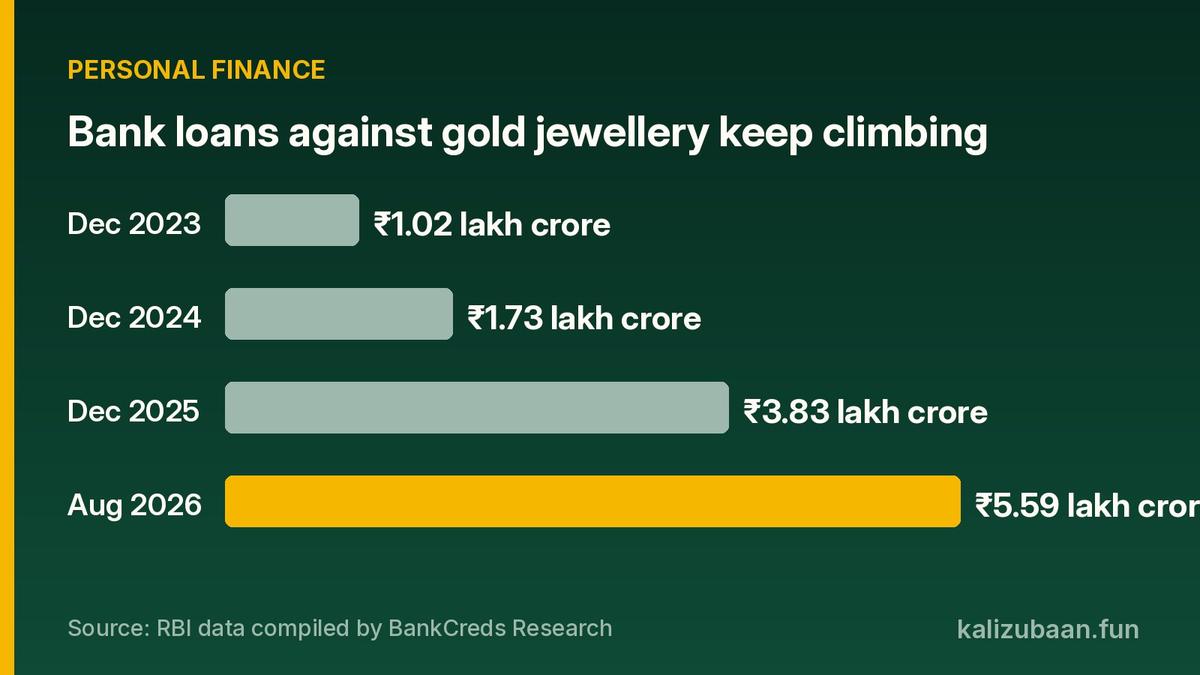
Source: RBI data compiled by BankCreds Research
By 31 August 2026, the figure stood at ₹5,59,468 crore, up 83.2% on a year earlier. In July 2026, gold loans were up 88.1% while the gold price was up 46.1%. So people are not just borrowing more because gold got costlier. More gold is being pledged, or more of its value is being borrowed.
One caution on the data: these figures cover banks only, and part of the jump comes from a bank reclassifying some farm loans from May 2024. Even so, the direction is clear.
A pledged ornament is a fallback. It is useful, but it is not wealth growing for you.
What a Dhanteras jewellery buy actually costs
Jewellery is the most expensive way to own gold. Rohan Goyal of MIRA Money told Moneycontrol that buyers pay 3% GST along with making charges of around 8-25%, depending on the design.
Upstox's explainer adds more detail. Making charges can range from 3% to 25%. GST is charged twice: 3% on the gold value and 5% on the making charges. When you sell, jewellers also apply buy-back deductions that erode another 2–3% of the value.
Then there is the locker. Coins that sit in a bank locker for years quietly cost you rent every year.
Put together, a big chunk of what you pay never comes back. That is why Kumar calls it consumption, often very enjoyable consumption, but not investment.
If you want gold as an investment, pick the right form
Kumar has softened on gold over the years. He now thinks a small allocation makes sense as insurance against an unstable monetary world. But insurance should be bought in a form you can sell when you need it.
Here is how the main options compare, based on Moneycontrol and Upstox:
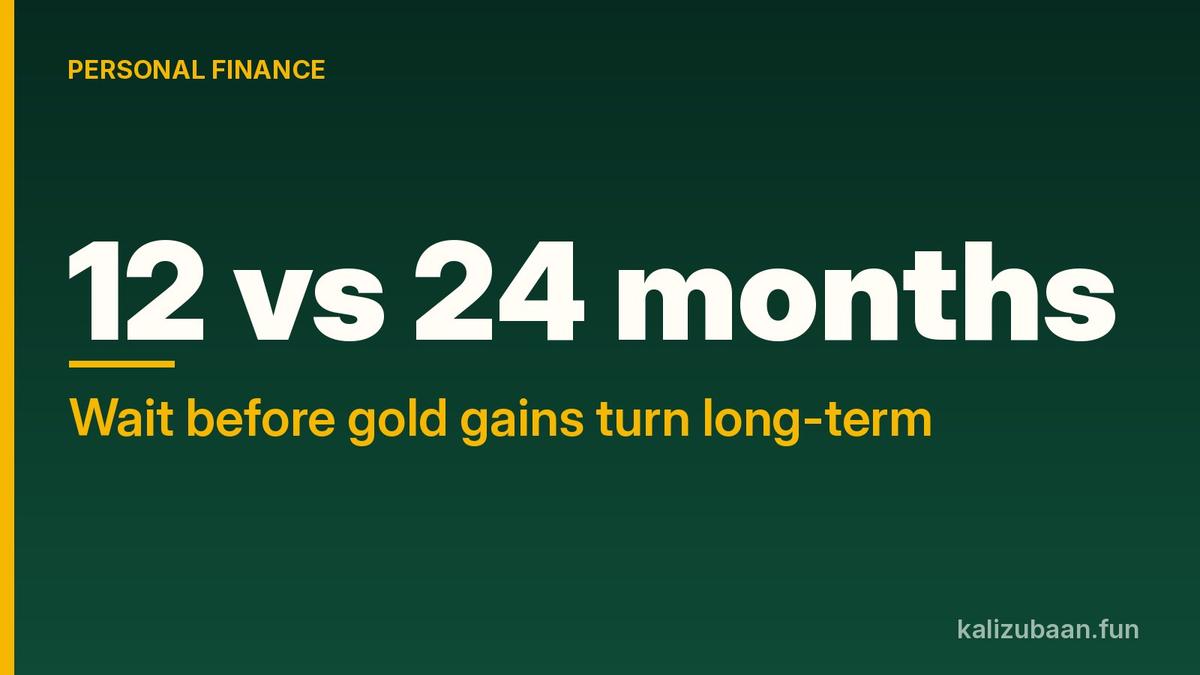
- Gold ETFs. Traded on stock exchanges, regulated by SEBI, no making charges and no storage worry. You need a demat account and pay a small expense ratio. Gains are long-term after 12 months, taxed at 12.5 percent.
- Digital gold. Easy to buy from as little as ₹1 on apps, but not regulated by SEBI. Upstox says the buy-sell spread is 3% to 6% on top of 3% GST, so you start 5%–8% down.
- Jewellery and coins. Physical gold needs a 24 month holding period for long-term tax at 12.5 percent, and carries purity and storage concerns.
BankBazaar CEO Adhil Shetty summed it up for Moneycontrol: gold ETFs give transparent, market-linked exposure, while jewellery should be seen as consumption because making charges are not recovered on resale.
What to do this Dhanteras
- Decide the purpose first. Is this gold for wearing, gifting or tradition? Or is it meant to grow your money?
- For tradition, buy without guilt. Choose a design you will actually wear, and record the cost as a festival expense.
- For investment, skip the jeweller. Use a gold ETF through your demat account, or keep a small allocation inside your overall plan.
- Don't chase digital gold for big sums. The spread and GST make it costly, and it sits outside SEBI's protection.
- Check your existing gold. If family jewellery is already pledged, repaying that loan may matter more than buying new gold.
Red flags to avoid
- Calling jewellery your retirement or emergency fund. Selling it means losing making charges and facing deductions.
- Buying only because the day is auspicious. Kumar notes nobody would accept that logic for shares.
- Assuming a closed gold FoF means gold investing is closed. Gold ETFs still trade on the exchange.
FAQs
Is buying gold on Dhanteras a bad idea? Not as a ritual. It becomes a problem only when you treat expensive jewellery as an investment. Count it as a festival expense.
What is the cheapest way to invest in gold? Gold ETFs avoid making charges and storage costs. You pay brokerage and a small expense ratio, and need a demat account.
Why are gold loans growing so fast? Higher gold prices let the same jewellery support a bigger loan. BankCreds also points to RBI raising the loan-to-value cap for small consumption loans to 85%.
Can I still start a gold SIP? Many gold FoFs stopped new SIPs from 16 October. Gold ETFs bought on the exchange are not covered by those notices.
This article is for education only and is not investment, tax or legal advice.
Sources
Tagged Topics
Keep reading
Thanks for reading Kali Zubaan
Explore more articles in Personal Finance or return to the main publication feed.


