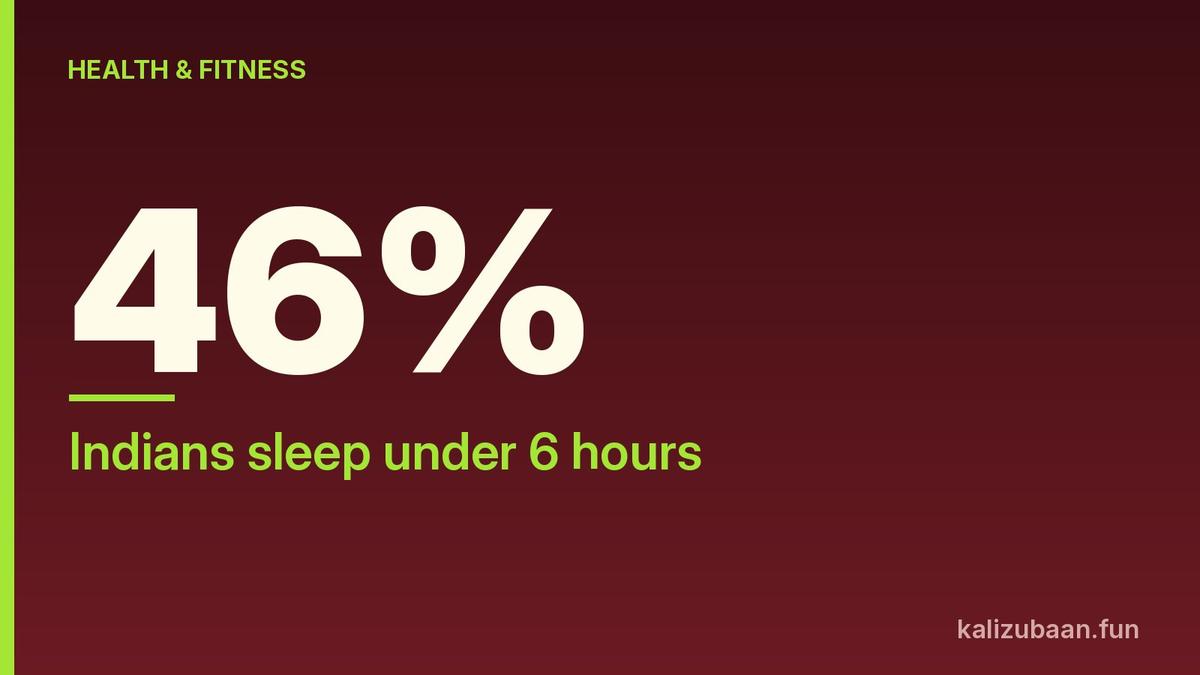
46% of Indians Sleep Under 6 Hours: What Deep Sleep Rebuilds
A LocalCircles survey found 46% of Indians get under six hours of unbroken sleep. New Berkeley research shows how deep sleep drives the growth hormone that maintains muscle and bone.
You hit the gym at 7 AM, eat your paneer and dal, and still feel flat. The missing piece might not be in your plate or your program. It might be in your bedroom.
A nationwide LocalCircles survey found that 46% of Indians got less than six hours of uninterrupted sleep a night over the past year. Meanwhile, new research from UC Berkeley maps how deep sleep switches on growth hormone, the chemical messenger that helps build muscle, strengthen bones and regulate fat.
Quick answer
- 46% of Indians surveyed by LocalCircles get under six hours of uninterrupted sleep, down from 59% a year earlier.
- During deep sleep, the body releases growth hormone, which supports muscle, bone and fat metabolism.
- UC Berkeley researchers found the brain circuit behind this, and showed growth hormone also feeds back to help wake you up.
- The research was done in mice, so it explains a mechanism. It is not a new sleep prescription for humans yet.
How India actually slept this year
LocalCircles ran its survey between December 2025 and March 2026. It got over 89,000 responses from 393 districts.
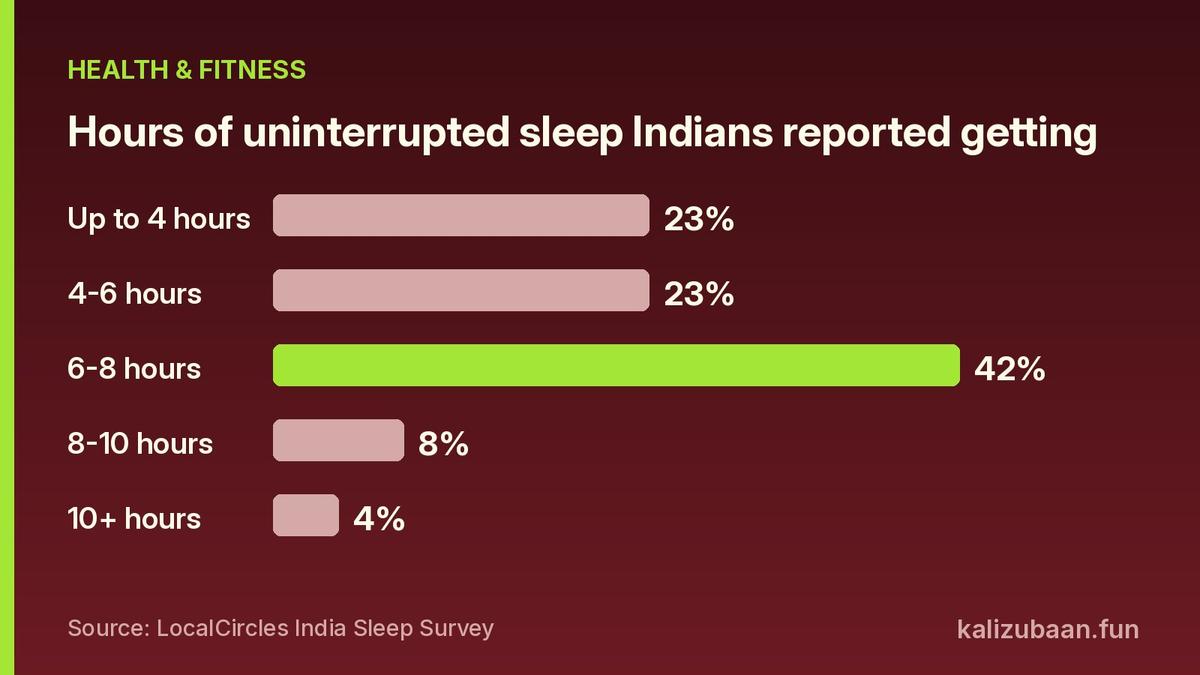
Of the 19,998 people who answered the question on hours of uninterrupted sleep, here's how the numbers split.
Source: LocalCircles India Sleep Survey
Add the first two bars and you get 46% sleeping under six hours. That is better than the 59% LocalCircles recorded in 2025, but it's still almost half the country.
The biggest reason people woke up was the washroom. Among those with broken sleep, 72% said they wake once or more to use it. Another 42% blamed going to bed late with early-morning household work, and 14% pointed to calls and messages.
Catching up isn't easy either. Among those sleeping under six hours, 23% said they generally can't make up the lost sleep on weekends or holidays.
What happens in your body during deep sleep
ScienceDaily summarised the new study, published in the journal Cell by a UC Berkeley team in the lab of neuroscientist Yang Dan.
During deep sleep, the body releases growth hormone. It's best known for childhood growth, but it matters for adults too. It helps maintain muscle and bone, controls how the body uses stored fat, and affects blood sugar.
The researchers looked inside the hypothalamus, a small control centre deep in the brain. Two chemical messengers there work against each other. GHRH pushes growth hormone release up. Somatostatin holds it down.
In non-REM sleep, the deep restorative stage that dominates the early part of the night, somatostatin activity drops and GHRH rises moderately. That combination lets growth hormone flow. In REM sleep, the dreaming stage, both messengers rise together, and that also adds to growth hormone release.
The surprise: growth hormone helps wake you up
The most unexpected finding was a loop running the other way.
As growth hormone builds up during sleep, it stimulates the locus coeruleus, a brainstem region tied to alertness and attention. That nudges the brain toward waking.
"Too little sleep reduces growth hormone release, and too much growth hormone can in turn push the brain toward wakefulness," co-author Daniel Silverman said. In short, sleep and growth hormone keep each other in balance.
First author Xinlu Ding added that growth hormone may also have cognitive benefits, by raising your overall alertness when you wake up.
The honest caveat
The experiments were done in mice, using electrodes in their brains. Mice sleep in short bursts of a few minutes, which gave researchers many sleep-wake switches to study.
The team says more research is needed to see how this works in humans and whether it can be safely targeted with treatment. So treat this as a "why sleep matters" explanation, not proof that one extra hour will add muscle.
Why this matters if you train
The source is clear on one point: when sleep is consistently disrupted, growth hormone regulation can suffer. Because the hormone helps control glucose and fat metabolism, poor sleep may contribute to a higher risk of obesity, diabetes and heart disease.
India Today's report on the LocalCircles data makes a similar point. Chronic sleep loss is linked to heart disease, obesity, diabetes, anxiety and depression.
For anyone lifting weights or trying to lose fat, that means sleep is part of the plan, not an afterthought.
Simple fixes Indians said actually worked
Among people whose sleep got better over the past year, 6 in 10 credited three things: a light dinner, daily exercise and a calm home environment.
Here's a practical routine built from what the sources suggest:
- Eat dinner earlier and lighter. Heavy late meals can cause digestive discomfort at night.
- Move every day. Exercise helps regulate the sleep-wake cycle.
- Keep fixed sleep and wake times, even on weekends.
- Cut evening caffeine and screen time. Put the phone away so calls and messages don't break your sleep.
- Get morning sunlight, which helps regulate melatonin.
Who should be careful
In the LocalCircles survey, 19% of people with broken sleep said a medical condition such as sleep apnoea kept them from sleeping straight through. Loud snoring, gasping at night or heavy daytime sleepiness are worth raising with a doctor.
Waking several times a night to use the washroom is also worth discussing with a doctor, especially if it's new.
FAQs
Does deep sleep really help build muscle? Growth hormone is released during deep sleep and helps maintain muscle and bone. The new Berkeley study explains the brain circuit behind it, but it was done in mice.
How many Indians sleep less than six hours? LocalCircles found 46% of Indians surveyed got under six hours of uninterrupted sleep, down from 59% the year before.
Can I catch up on sleep on weekends? Many try. In the survey, 46% of short sleepers napped on Sunday afternoons, but 23% said they generally can't make up for it.
What is the easiest change to try first? Survey respondents who slept better most often credited a light dinner, daily exercise and a calm home.
This article is for information only and is not medical advice. Talk to a doctor before changing your diet or training.
Sources
Tagged Topics
Keep reading
Thanks for reading Kali Zubaan
Explore more articles in Health & Fitness or return to the main publication feed.


