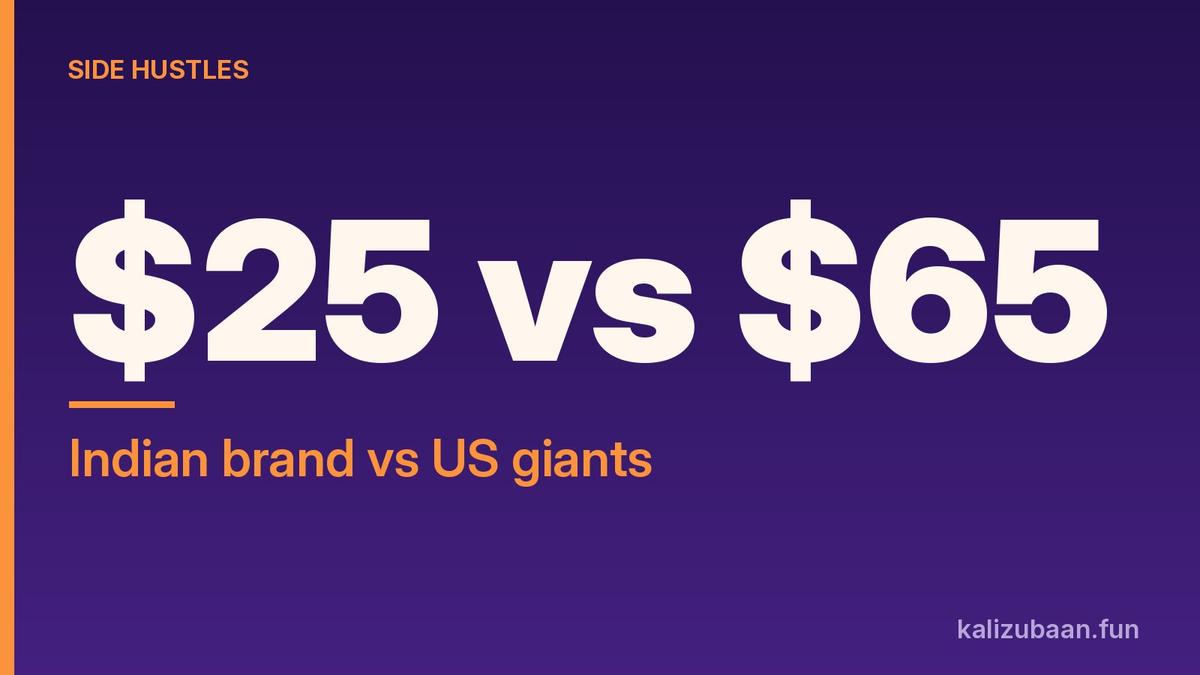
$25 vs $65: The Indian Brand Undercutting US Aromatherapy
Two US aromatherapy giants source over 30% of their production from India. An Indian brand sells similar oils for about $25 against their $65. What that gap teaches small founders about building an export brand.
India makes the essential oils. American brands put their labels on them and charge more. That, in one line, is the gap Ananth Narayanan wants Indian founders to notice.
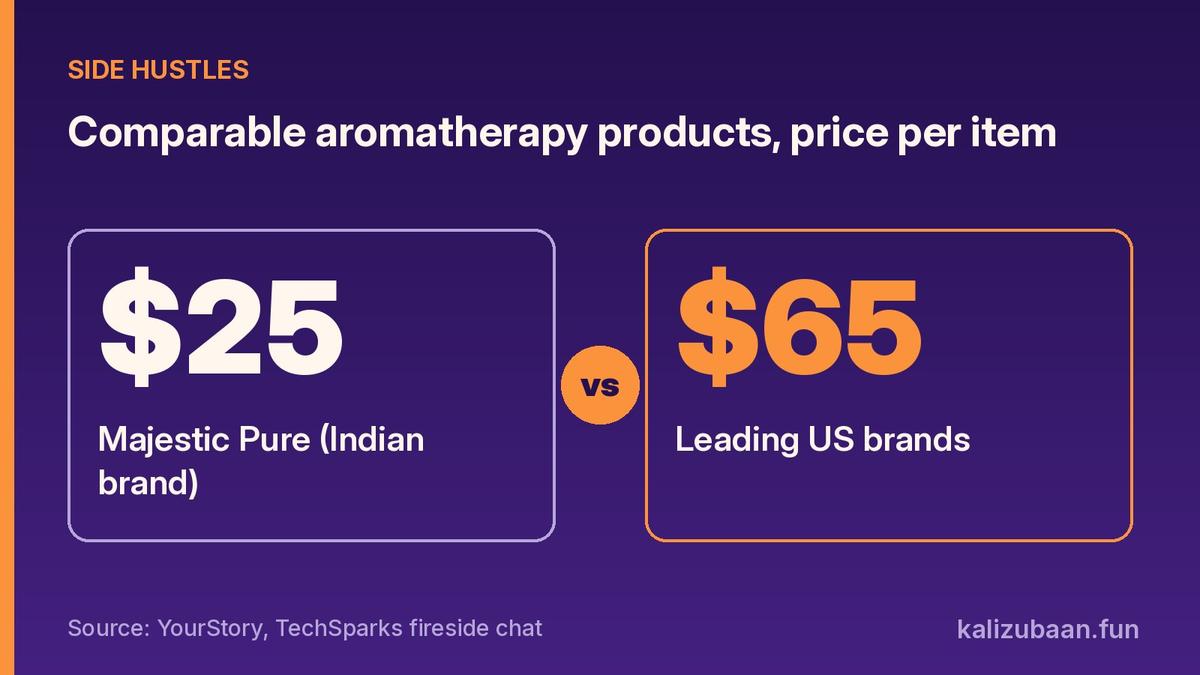
Speaking at the 17th edition of YourStory's TechSparks, the founder and CEO of BRND.ME said the two biggest aromatherapy brands, doTERRA and Young Living, both source over 30% of their production from India. His group's brand, Majestic Pure, sells comparable products at around $25 against their $65.
Quick answer
- Majestic Pure, a BRND.ME brand, sells aromatherapy oils at around $25 versus about $65 for comparable US-brand products.
- Narayanan's tip: look at what India already exports in bulk and ask whether a brand can be built on top of it.
- He says real brand loyalty takes seven to 15 years, so this is a slow build, not a quick flip.
- Keep 8 to 20% of revenue coming from your own channel so you hear directly from customers.
Why the price gap exists
Narayanan was clear that cheaper oil alone does not win. "It is not the same packaging," he said. "There is a story that you have to learn to tell to command the price premium."
In other words, the US brands are not charging $65 for the liquid. They are charging for trust, presentation and a story the buyer believes.
That is good news for a small founder. Sourcing is the part India already does well. The missing pieces are branding, packaging and proof.
The idea: build on what India exports in bulk
His advice to founders was specific. Look at what India exports in bulk, and ask whether a brand can be built on top of it.
He named categories like pet care and health and wellness. Essential oils fit the pattern: Wikipedia notes they are used in aromatherapy through inhalation, or diluted on skin for massage, which gives a clear consumer use that buyers abroad already understand.
Source: YourStory, TechSparks fireside chat
Selling abroad is easier than it was
Narayanan believes India's next big brands will be built for overseas shoppers. The old barriers, understanding foreign consumers and reaching them, are easing, he said.
For reach, he pointed to Amazon Global Selling. For understanding buyers, BRND.ME uses AI agents trained on Reddit threads and Amazon reviews to stand in for foreign consumers during product development. The group now earns more than half its revenue outside India.
A small seller can borrow the cheap version of that idea. Reading reviews of competing products, especially the complaints, shows what buyers want fixed before you spend on stock.
Why the direct-to-consumer route matters
Direct-to-consumer, or D2C, means selling straight to customers without wholesalers or retailers in between, Wikipedia explains. Lower costs let smaller companies compete with large ones on price, and selling directly can build stronger loyalty.
The scale is real. Direct-to-consumer e-commerce sales in the United States were over $128 billion in 2021. In mature markets like the US, direct sales make up roughly 15% of industry revenue.
The trade-off is that you take on jobs a retailer would handle, such as shipping, labelling and payment security, including fraudulent payments and chargebacks.
What makes a small brand last
Narayanan's other lessons translate well for a side-hustle founder:
- Product beats faces. On celebrity-led brands he said, "A face can give you initial momentum, but I don't think it can get you repeat consumers." Spend on the product before endorsements.
- Packaging is marketing. BRND.ME still hires a US agency for design, because its products compete with Korean and European brands on the shelf.
- Proof matters abroad. Its Botanic Heart brand spent two years on efficacy testing so its claims would hold up in the US.
- Own some of your sales. Keep 8 to 20% of revenue coming from your own channel. Marketplaces and quick commerce give little customer feedback.
- Stay frugal. "Most of the large FMCG businesses never took any money," he said, and D2C brands can do the same, though it is hard and "very unsexy".
- Do not mislead. "Maybe you can fool consumers once, but I don't think you can fool them again." Be honest about reviews and ratings.
The catch: this is a long game
There is no shortcut, he said: "I don't think there is a get-rich-quick on brand building." In his experience a brand takes seven to 15 years to earn real loyalty.
He also said the D2C froth is gone. Scaling without product-market fit is no longer valued, and investors want real cash flows. BRND.ME itself has trimmed its portfolio to four brands: MyFitness, Majestic Pure, Botanic Heart and Party Props.
For someone starting part-time, that argues for one product, one marketplace and slow, careful testing, rather than a wide catalogue.
FAQs
What is Majestic Pure? It is the aromatherapy brand of BRND.ME, the consumer group led by Ananth Narayanan. It sells comparable products at around $25, against about $65 for leading US brands.
Which categories did Narayanan suggest for export brands? He told founders to look at what India exports in bulk, and named pet care and health and wellness as examples.
How long does it take to build a brand? Narayanan said a brand takes seven to 15 years to earn real loyalty, so plan for a long build.
Is it hard to get early funding for a D2C idea? He disagreed that it is. He said a lot of money is available for good consumer-brand ideas at the early stage, and that the later stage is much harder.
What Indian product do you think deserves its own global brand? Share it in the comments.
Results vary; nothing here is a promise of income.
Sources
Tagged Topics
Keep reading
Thanks for reading Kali Zubaan
Explore more articles in Side Hustles or return to the main publication feed.