15,000 Steps a Day, Still Osteopenia: What Walking Misses
A mother walked 15,000 steps a day for 15 years and still got osteopenia. Here is what the research says walking does well, where it stops, and what to add for bones after 40.
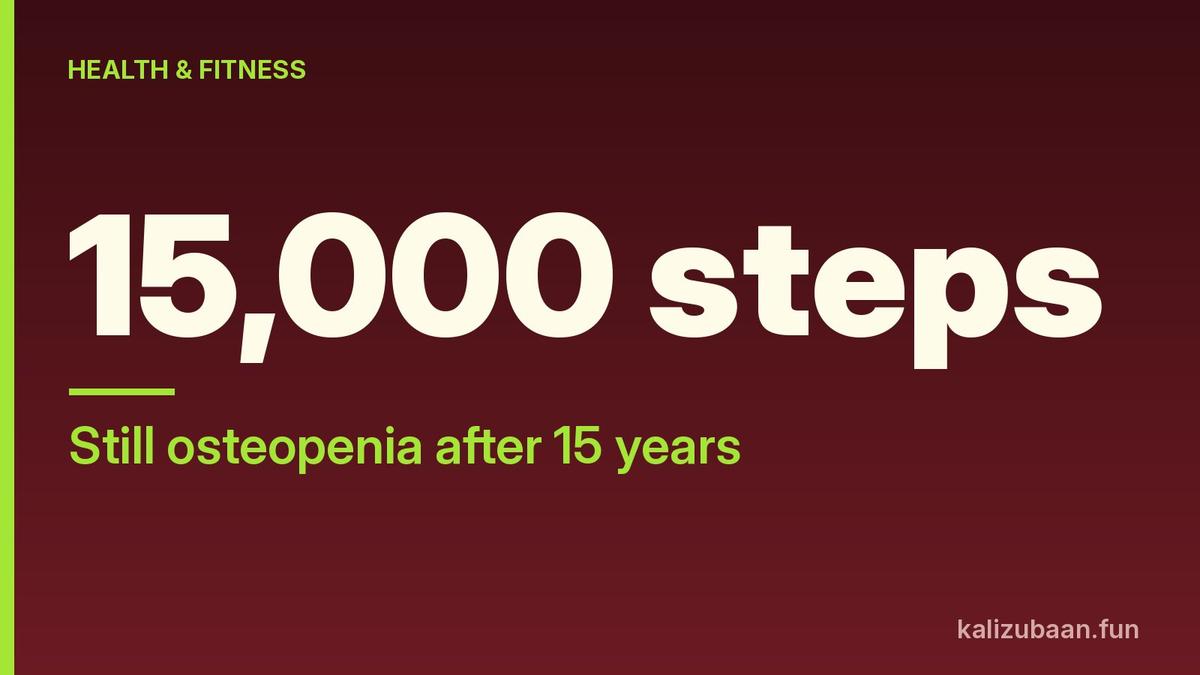
Fifteen years of walking 15,000 steps a day. That was the routine of wellness coach Wendy Wang's mother, and she still ended up with osteopenia.
Wang shared the story on Instagram with a blunt question: is walking alone enough to keep bones strong after 40? Her point was simple. Walking is great for the heart, but bones also need "impact and load".
Quick answer
- Walking is excellent for heart health, mobility and weight, but it may not give bones and muscles enough stimulus on its own after 40.
- Research reviewed in Lancet Public Health found big benefits up to about 7,000 steps a day, with only small gains after that.
- Pace matters too: a UK Biobank study suggests 7,500-10,000 steps a day, with frequent stretches at 100 steps a minute.
- For bones, an orthopaedic surgeon recommends adding resistance work such as squats, lunges, step-ups and resistance bands, plus balance exercises.
Why 15,000 steps did not protect her bones
Dr Ashish Phadnis, Director of Orthopaedics at Jupiter Hospital, Thane, told The Indian Express that walking is beneficial, but it works best as one part of a routine.
"Walking is very beneficial for cardiovascular health, for mobility and for keeping a healthy body weight, but bones and muscles also need resistance and loading in order to stay strong," he said.
Here is the idea in plain words. Bones and muscles need resistance and loading to stay strong. After 40, bone density gradually declines, and relying only on daily walking may not give enough stimulus to keep bone and muscle strength.
That does not make walking useless. Dr Phadnis calls it a good starting point, especially for someone who has been mostly inactive. The problem is doing only one kind of movement for years.
"The main idea is to avoid repeating just one kind of exercise because our muscles, joints and bones get benefits from being subjected to a variety of movements," he said.
What the step research actually says
Walking still deserves its place. The bigger question is how much of it you need, and the famous 10,000 figure is shakier than most people think.
According to Hindustan Times, the 10,000-step target did not come from a clinical trial. It traces back to a Japanese advertising campaign for a pedometer launched ahead of the 1964 Tokyo Olympics.
The better evidence comes from a study published in Lancet Public Health in 2025. It pooled 57 papers published between 2014 and 2025 on daily steps and health. Compared with 2,000 steps a day, people taking 7,000 steps had a 47% lower risk of premature death, a 25% lower chance of developing cardiovascular disease and a 14% lower risk of diabetes.
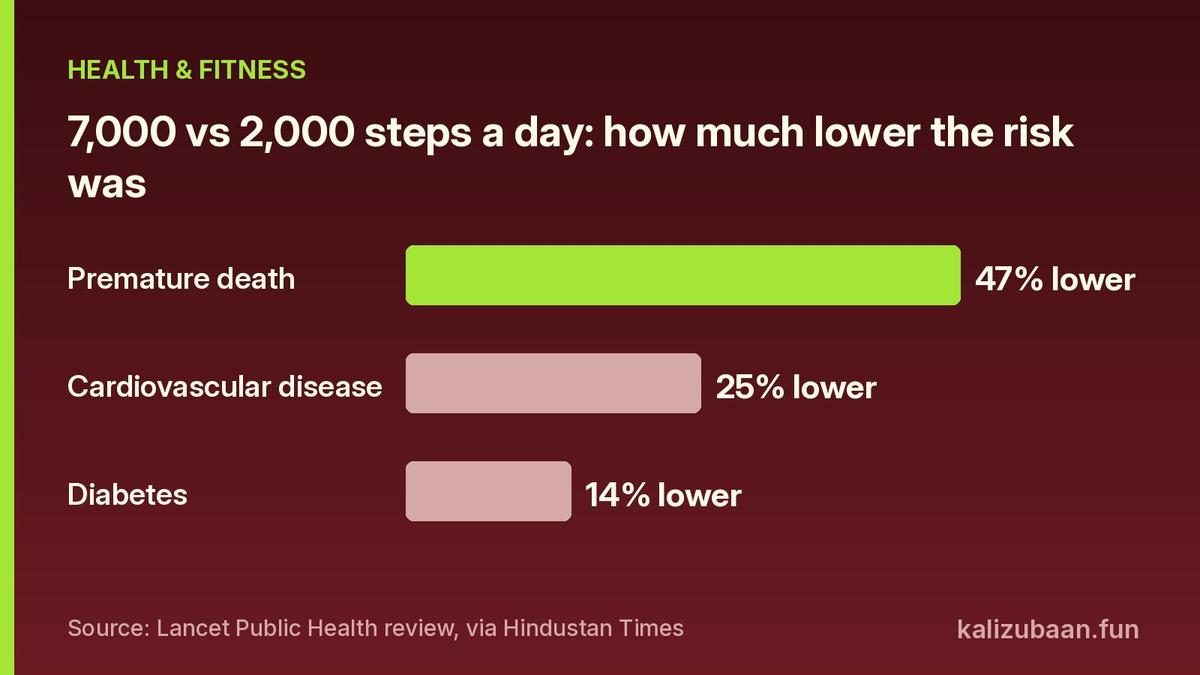
Source: Lancet Public Health review, via Hindustan Times
Even small increases helped. Going from 2,000 daily steps to 4,000 came with a 36% drop in mortality risk over the years tracked.
But the curve flattens. "What we see with most of the health outcomes is a diminishing return on investment after 7,000," epidemiologist Melody Ding of the University of Sydney, who led the study, told the publication. Moving from 7,000 steps to 10,000 brought only a 2% further reduction in mortality risk.
That is the key insight for anyone who already walks a lot. Past a point, extra steps add very little, and more of the same walking is not the loading your bones are asking for.
Speed counts as much as distance
Step count is only one measure. The other is intensity, usually tracked as cadence, or steps per minute.
A study in the British Journal of Sports Medicine, led by Emmanuel Stamatakis of Monash University, followed 64,743 participants for around eight years using UK Biobank data. Faster cadence was generally better.
People who walked between 0 and 5,000 brisk steps a day saw, on average, a similar drop in mortality risk to those who strolled between 5,000 and 7,500 steps. The paper points to a sweet spot of 7,500-10,000 steps a day, with frequent intervals at 100 steps a minute.
In practice, you may get more from fewer steps by picking up the pace. Dr Ding's advice is to get the heart rate up or walk until you are a little out of breath.
What to add to your walking routine
The fix for bones is not walking less. It is walking plus something else. Dr Phadnis suggests mixing weight training, stretching and balance work rather than focusing on one muscle group.
Useful options he lists:
- Strength and loading: squats, lunges, step-ups, resistance-band exercises and weight training.
- Low-impact loading: sit-to-stands, chair squats, step-ups and farmer's carries, for people who cannot handle repeated impact.
- Variety: walk on one day, cycle or swim on another, and add dancing, a sport or a short run if your joints allow it.
- Balance: especially important with age, since it helps with stability and lowers the chance of falling.
You do not have to jump. "It is not necessary to jump, especially if one has joint problems," Dr Phadnis said.
Many of these moves need no gym. Chair squats and sit-to-stands need only a sturdy chair, and step-ups need only a step, which makes them an easy place to start at home.
Who should be careful
Exercise should match your joints and current fitness, not a one-size-fits-all plan.
"Where there is ongoing pain, a previous joint operation, or considerable weakness, the programme should be individually arranged by an orthopaedic specialist or a physiotherapist," Dr Phadnis advised.
If you have already been told you have osteopenia or another bone condition, ask your doctor what kind of loading is safe for you before you add weights or impact.
FAQs
Is walking enough exercise after 40? Walking helps the heart, mobility and body weight. For bones and muscles after 40, an orthopaedic surgeon quoted by The Indian Express recommends adding resistance and balance training.
Do I really need 10,000 steps a day? Not necessarily. The Lancet Public Health review found most benefits level off after about 7,000 steps, with only a 2% further drop in mortality risk at 10,000.
Does walking faster help? The UK Biobank research suggests so. Brisk walking gave similar benefits with fewer steps, and the paper suggests frequent intervals at 100 steps a minute.
What if my knees cannot take impact? Dr Phadnis lists chair squats, sit-to-stands, step-ups, resistance bands and farmer's carries as useful loading without repeated impact. With pain or a past joint operation, have a specialist or physiotherapist plan it.
This article is for information only and is not medical advice. Talk to a doctor before changing your diet or training.
Sources
Tagged Topics
Keep reading
Thanks for reading Kali Zubaan
Explore more articles in Health & Fitness or return to the main publication feed.


