10,000 Steps Not Enough? 5 Habits a Metabolic Coach Adds
You hit 10,000 steps and still crash by 4 pm. A metabolic health coach explains the 5 habits walking alone can't cover, from protein to sleep.
You hit your 10,000 steps, eat what feels like healthy food, and still run out of energy by 4 pm. Your waistline hasn't moved in months either.
That is the exact picture Govind Lohia, a metabolic health coach and co-founder of The Good Weight, painted in an interview with HT Lifestyle. His point is simple: 10,000 steps is a good habit, but it isn't the whole story.
Quick answer
- 10,000 steps is great for your heart and mind, but walking alone does little to keep muscle.
- Many "healthy" Indian days are mostly carbs, with protein showing up as one small katori of dal.
- Strength work two or three times a week, better sleep and short walks after meals fill the gaps.
- If you feel off for months despite doing everything right, ask your doctor about a metabolic panel.
Why 10,000 steps can still leave you tired
The step count became a popular target, and walking every day really is good for you. But according to Lohia, hitting a number on your phone doesn't mean your metabolism is in good shape.
HT Lifestyle put it plainly: the step count is not a universal medical requirement or a guarantee of good metabolic health.
So if you are doing your 10,000 steps and still feel flat, you are not failing. You are probably just missing a few other pieces.
Here are the 5 habits Lohia says make the difference.
Habit 1: Check how much protein your "healthy" day really has
Think about a normal day in many Indian homes. Poha or upma in the morning, two rotis and sabzi at lunch, maybe idli at night, and some fruit in between.
Lohia calls it good food, all of it. But put it on one sheet, he says, and it's mostly carbohydrate, with protein turning up as a small katori of dal. Some days, not even that.
His advice is to look at the overall balance of your plate rather than just picking foods that sound healthy. Protein supports muscle maintenance and recovery.
Pairing carbs with protein, fibre and healthy fats can also make meals more satisfying. In an Indian kitchen, that can be as simple as making sure dal, paneer, curd or eggs show up at more than one meal, if they suit your diet.
Habit 2: Add strength training to your walks
"Walking is great for the heart and the head. For muscle, not so much," Lohia says.
That matters because muscle is where a big share of the glucose you eat ends up. And somewhere after 30, he says, we start losing muscle slowly unless we give it a reason to stay.
Source: Hindustan Times (Govind Lohia)
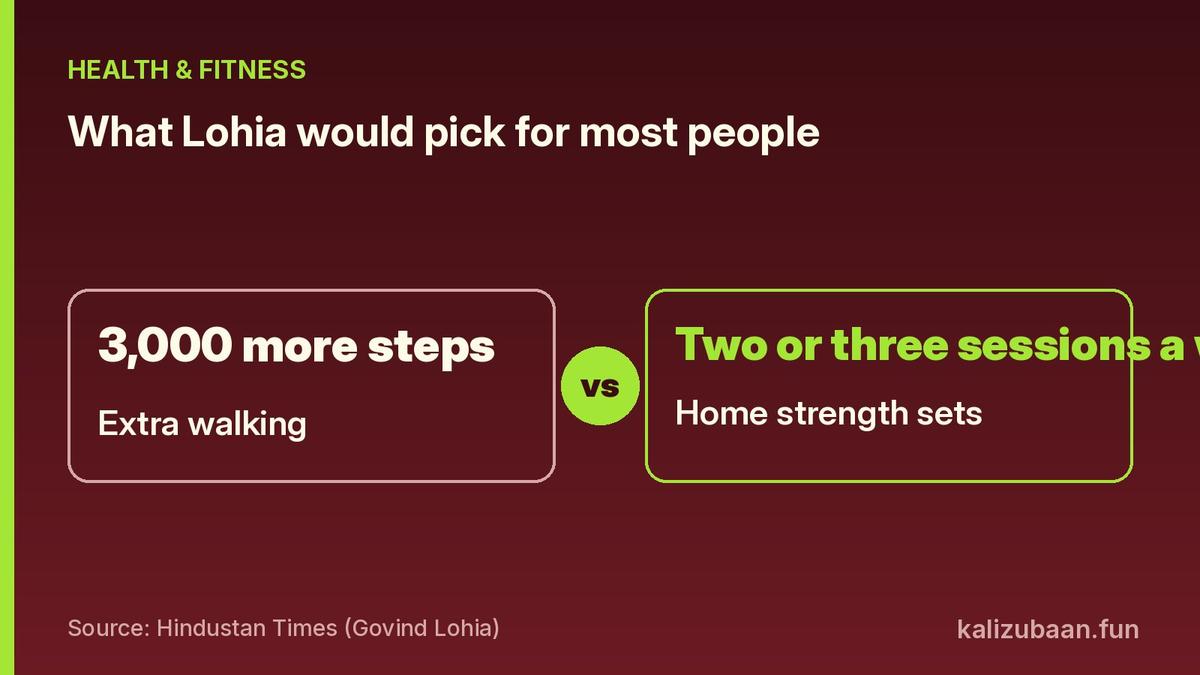
His suggestion is simple: squats, push-ups, or a resistance band at home, two or three times a week. The sets should be hard enough that the last few reps feel properly tough.
"For most people we see, I'd take that over an extra 3,000 steps," he says.
The idea isn't to stop walking. It's to combine your walks with strength work that suits your fitness level and abilities.
Habit 3: Treat sleep as part of your fitness plan
"Sleep is the one nobody wants to talk about," Lohia says. He describes the common pattern: about six hours, the phone in bed, and a long commute on top.
According to him, even one short night can make the body handle sugar less well the next day. Some of the good work you did gets quietly undone.
HT also notes that research has linked too little sleep with changes in glucose regulation and insulin sensitivity.
A practical step is a consistent bedtime and enough hours set aside for rest. Keeping the phone out of bed is a good place to start.
Habit 4: Break up long hours of sitting
An early morning walk is a good habit. But it may not fully make up for spending the rest of the day sitting at a desk or in traffic.
"An hour's walk at 6 am followed by nine hours in a chair is, for most of the day, still a sedentary life," Lohia says.
His fix is small. Ten minutes on your feet after lunch and after dinner, he says, helps more than it sounds like it should.
For office workers, that could mean a short walk after lunch, taking calls standing up, or a quick stroll after dinner instead of going straight to the sofa. These habits add to your regular workouts. They don't replace them.
Habit 5: Rule out an underlying health issue
Sometimes the problem isn't your routine at all.
Lohia says his team often finds things nobody tested for: low vitamin D, low B12, a sluggish thyroid, or early insulin resistance. They see this quite often in people whose fasting sugar was "normal".
"If you've felt off despite doing everything right for months, ask your doctor about a metabolic panel," he says.
If tiredness keeps coming back, speak with a doctor about whether testing is right for you.
A simple weekly plan to try
Here is one way to put these 5 habits together without overhauling your life.
- Keep your daily walk. Your 10,000 steps, or whatever you manage, stays.
- Add strength work two or three times a week. Squats, push-ups or a resistance band at home.
- Add protein to more meals. Check whether dal, curd, paneer or eggs appear beyond one small katori a day.
- Walk after lunch and dinner. Ten minutes on your feet each time.
- Protect your sleep. A fixed bedtime and the phone out of reach.
Start with one or two of these. Consistency matters more than doing everything at once.
Who should be careful
If you have diabetes, PCOS, thyroid issues, kidney disease, are pregnant, or have any other ongoing condition, talk to your doctor before changing your diet or adding strength training.
The same goes if you are new to exercise or have joint or back pain. A doctor or qualified trainer can help you pick a level that's safe for you.
FAQs
Should I stop walking 10,000 steps a day? No. Lohia's own words are: "Keep the walk, by the way. Nobody's asking you to stop." Walking is still valuable; it just works best alongside other habits.
Is 10,000 steps a medical rule? No. HT Lifestyle notes the step count is not a universal medical requirement or a guarantee of good metabolic health.
Do I need a gym for strength training? Not according to Lohia. Squats, push-ups and a resistance band at home, two or three times a week, are what he suggests.
Why does walking after meals help? Lohia says ten minutes on your feet after lunch and after dinner helps break up long sitting hours, which a single morning walk doesn't fully offset.
This article is for information only and is not medical advice. Talk to a doctor before changing your diet or training.
Sources
Tagged Topics
Keep reading
Thanks for reading Kali Zubaan
Explore more articles in Health & Fitness or return to the main publication feed.