11% Had Sleep Apnea in Indian Studies. Your Liver May Pay
Loud snoring and daytime tiredness are easy to shrug off. A Mumbai oncologist explains how untreated sleep apnea is linked to fatty liver, the warning signs, and what treatment involves.
Loud snoring. Waking up tired. Dozing off at your desk after lunch. Most of us shrug these off as part of a hectic life.
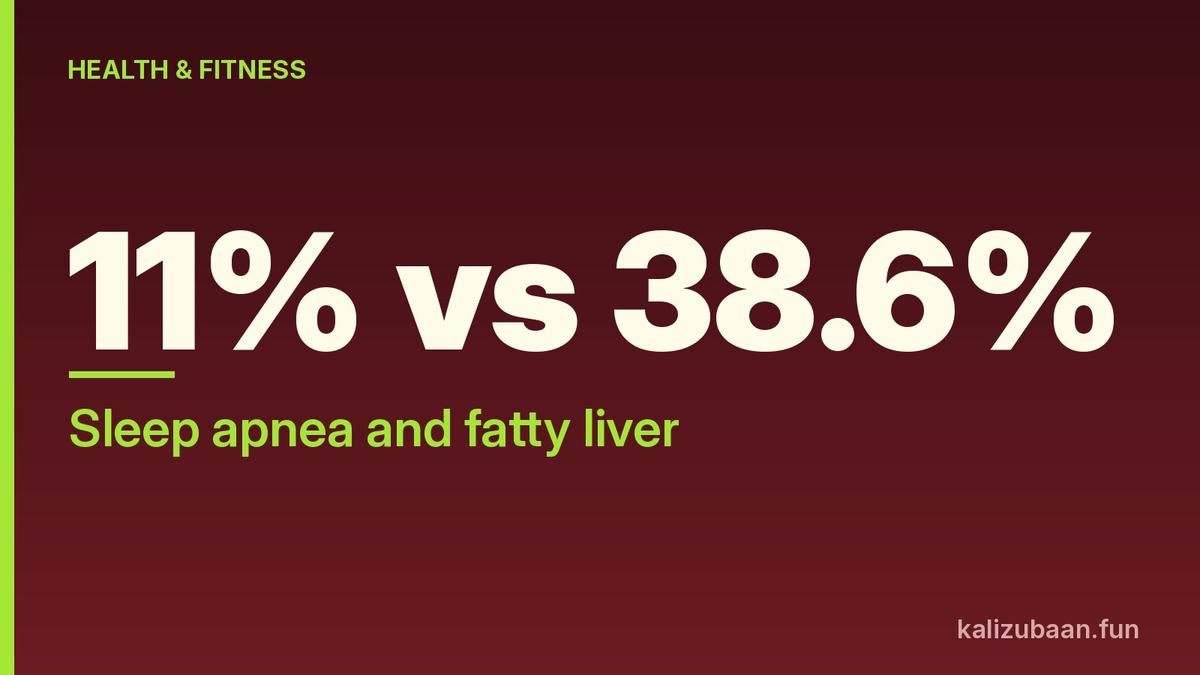
A Mumbai oncologist says that if the cause is obstructive sleep apnea, the damage may not stop at a bad night's sleep. It could reach your liver. And in Indian studies she cites, 11% of adults had the condition.
Quick answer
- Obstructive sleep apnea (OSA) makes breathing stop and start during sleep, lowering oxygen levels again and again.
- Those repeated drops may drive inflammation and insulin resistance, which are linked to fat building up in the liver.
- An Indian meta-analysis found OSA in 11% of adults; another estimated fatty liver disease in 38.6% of adults.
- Heavy snoring, choking at night, pauses in breathing and daytime sleepiness are reasons to see a doctor.
What the doctor said
Dr Kasturi Baruah, a medical oncologist and hemato-oncologist at M|O|C Cancer Care, Mumbai, explained the link in an interview with HT Lifestyle.
Her point is simple. Snoring, broken sleep and constant tiredness are easy to dismiss. But when they come from OSA, the problem can have long-term implications for liver health.
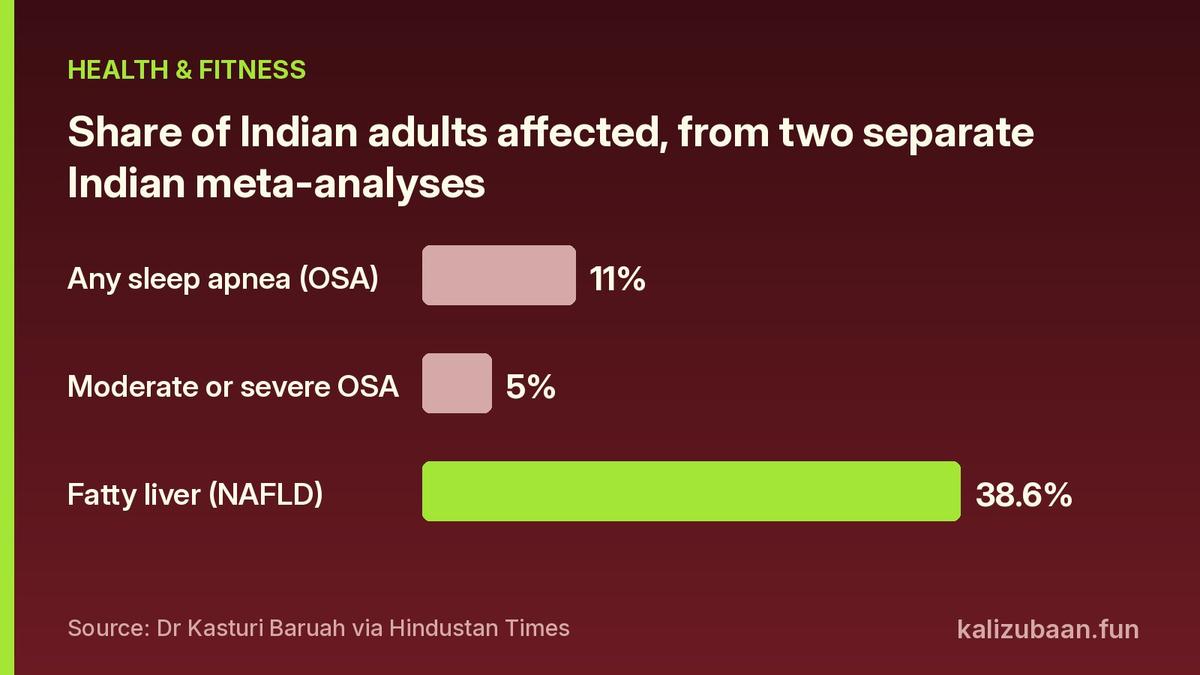
She cited two sets of Indian data. A systematic review and meta-analysis of eight studies, covering 11,009 adults, found that 11% had OSA, and 5% had moderate or severe forms.
Another Indian meta-analysis estimated the prevalence of non-alcoholic fatty liver disease (NAFLD) in adults at 38.6%. Both conditions are clearly present in India.
The numbers side by side
Source: Dr Kasturi Baruah via Hindustan Times
These come from two different studies, so the chart does not show how many people have both. It shows how common each problem is on its own.
How sleep apnea happens
OSA occurs when the upper airway narrows or closes during sleep. Breathing is interrupted and oxygen levels in the body fall.
Wikipedia's overview notes that most people with OSA don't know it, even after they wake up. Often a bed partner or family member is the one who notices the snoring, gasping or choking.
People who sleep alone may go years without realising. Over that time they can get used to the daytime sleepiness, headaches and fatigue.
Why your liver gets involved
Your liver helps control blood sugar, processes fats and manages the body's energy needs.
Dr Baruah explained that repeated oxygen drops at night may disrupt these jobs. That can lead to inflammation and changes in insulin sensitivity and fat metabolism.
"Repeated occurrences of such phenomena during nighttime may lead to inflammation and cause changes in insulin sensitivity and fat metabolism, which are linked to fatty liver disease," she said.
Insulin resistance is a contributing factor to fat building up in the liver. The condition is now called metabolic dysfunction-associated steatotic liver disease, or MASLD, which was earlier known as NAFLD.
Wikipedia's MASLD page also lists hypoxia caused by obstructive sleep apnea among the conditions associated with the disease.
Fatty liver does not always stay mild
MASLD does not progress the same way in everyone, Dr Baruah said. In some people it can lead to inflammation and fibrosis, which is scarring of the liver. In advanced cases it can progress to cirrhosis.
There is an India-specific twist here. According to Wikipedia, India has a very high proportion of "lean MASLD", meaning fatty liver in people who are not obese.
So a normal weight is not a reason to ignore the warning signs.
The warning signs to watch for
Snoring on its own often does not mean sleep apnea. But Dr Baruah says these people should see a physician:
- People who snore heavily
- People who feel like they are choking while asleep
- People whose breathing pauses have been noticed by someone else
- People with excessive daytime sleepiness
A doctor may suggest a sleep test to confirm the diagnosis.
If you are diagnosed with OSA, especially alongside obesity, diabetes or other metabolic risks, she says a liver check may be needed. Whether that means testing for fatty liver or fibrosis depends on your history and examination.
What treatment usually involves
There is no single fix. Dr Baruah says management is tailored to each person and may include:
- Weight loss
- Physical exercise
- Balanced nutrition
- Controlling blood sugar and blood fats
- A CPAP machine, which keeps the airway open with air pressure during sleep
On the liver side, Wikipedia's MASLD page says a loss of 5% to 10% of body weight is recommended and has shown regression of liver damage. A combination of better diet and exercise appears to help more than either alone.
Who should be extra careful
- People with obesity: in the severely obese, Wikipedia puts the risk of sleep apnea between 55 and 90%.
- People with type 2 diabetes, high blood pressure or high cholesterol.
- Lean people with snoring and fatigue, given how common lean fatty liver is in India.
- Anyone whose partner has noticed them stop breathing at night.
FAQs
Is every snorer at risk of liver damage? No. Snoring often does not mean sleep apnea. The concern is OSA, especially when combined with obesity, diabetes or other metabolic risks.
How is sleep apnea diagnosed? A physician may recommend a sleep test after looking at your symptoms, such as heavy snoring, choking or breathing pauses during sleep.
Can fatty liver improve? Wikipedia's MASLD page says losing 5% to 10% of body weight is recommended and has shown regression of liver damage. Your doctor can tell you what applies to you.
Do thin people get fatty liver? Yes. Wikipedia notes India has a very high proportion of lean MASLD, so a normal weight does not rule it out.
This article is for information only and is not medical advice. Talk to a doctor before changing your diet or training.
Sources
Tagged Topics
Keep reading
Thanks for reading Kali Zubaan
Explore more articles in Health & Fitness or return to the main publication feed.


