₹1.5 Crore Limit, ₹100 Fee: Business Ideas for Women at Home
A home food business can now grow to ₹1.5 crore a year on a ₹100 FSSAI registration. Business ideas for women at home, the limits that apply and what the maths says.
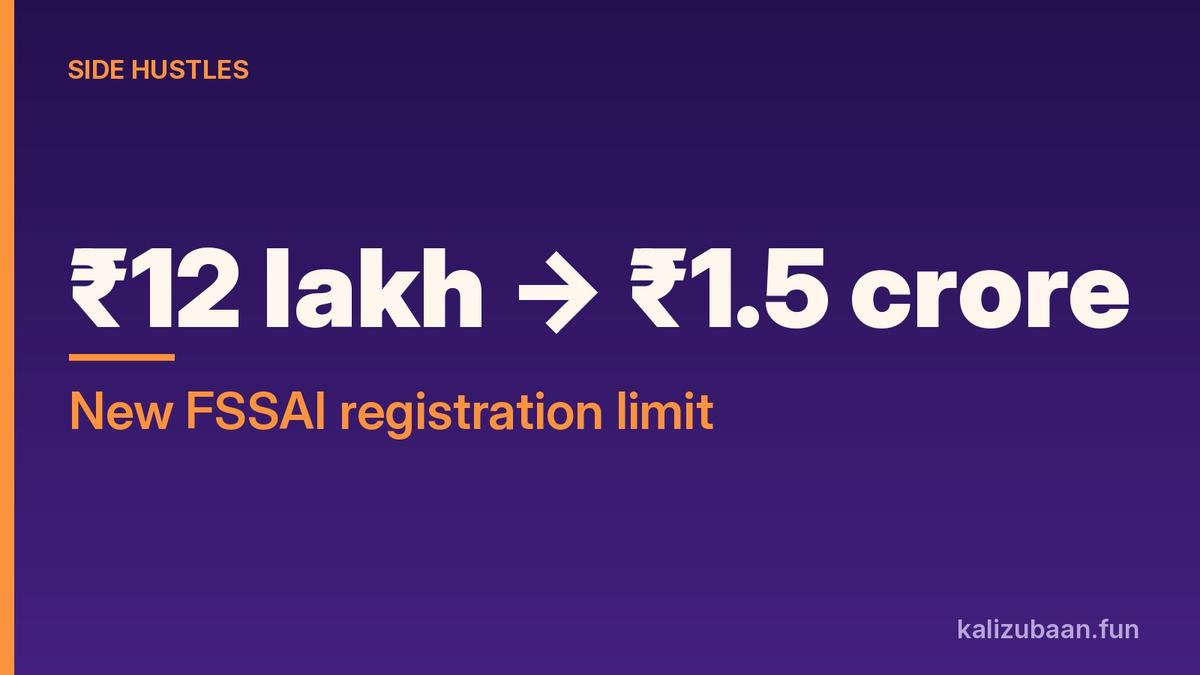
Many guides still say a home tiffin or pickle seller needs a full food licence once sales cross ₹12 lakh a year. That has not been true since 1 April 2026. The FSSAI registration limit is now ₹1.5 crore a year.
For anyone searching business ideas for women at home, this is the most useful rule change of the year. A kitchen business can grow a long way on a basic registration that costs ₹100. Here is what the rule says, which home ideas need the least cash, and what the numbers look like.
Quick answer
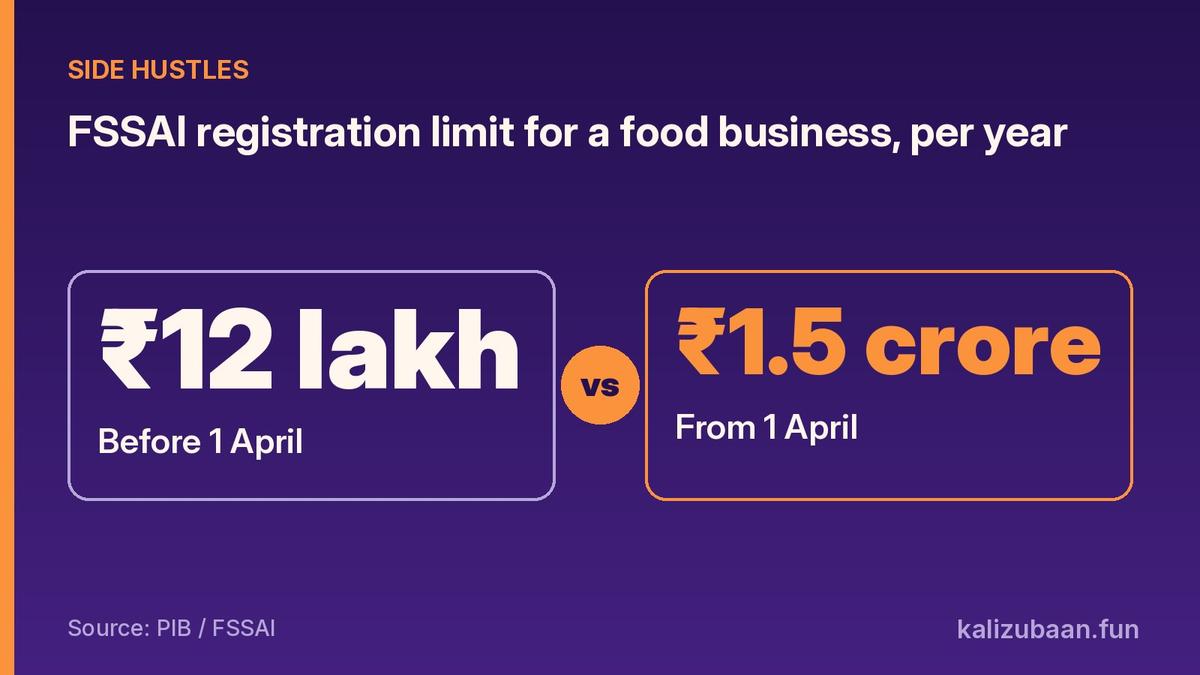
- Food businesses with yearly turnover up to ₹1.5 crore now need only FSSAI registration, not a licence. The old limit was ₹12 lakh.
- Above ₹1.5 crore you need a State licence, and above ₹50 crore a Central licence.
- Registrations and licences now have permanent validity, so no repeated renewals.
- Home ideas that need the least cash are tuition, stitching, freelance work and food made on pre-order.
What changed in FSSAI rules for home food businesses?
The registration limit went up from ₹12 lakh to ₹1.5 crore of yearly turnover, from 1 April 2026. The Health Ministry said the change brings simpler compliance, less paperwork and fees, no pre-inspection and instant registration (PIB).
State licensing now applies up to ₹50 crore, and Central licensing above that.
Registrations and licences also stay valid indefinitely unless suspended, cancelled or surrendered. Earlier, many businesses had to renew every year (The Hindu).
Existing food businesses can move to the new system through the FoSCoS portal.
Which business ideas for women at home need the least cash?
The cheapest ideas are the ones you can sell before you buy anything: tuition, stitching and alterations, freelance writing or design, and home-cooked meals on pre-order. With under ₹50,000, start with one of these (NIIR).
Ideas that need stock first, like reselling or skincare, lock up cash before the first sale.
Homemade cosmetics are the exception to an easy start. Anyone making creams, oils or face packs to sell needs a manufacturing licence from the state.
Source: PIB / FSSAI
How much can a home food business make?
A common example is 20 orders a day at ₹200 for 25 days, which gives ₹1 lakh a month in sales before ingredients, packaging, platform commission and delivery (Godrej Finance).
That is sales, not profit. Godrej Finance calls its revenue examples illustrations, not typical or guaranteed earnings.
Its startup estimate for a home kitchen setup is ₹40,000 to ₹1.5 lakhs. A dedicated cloud kitchen space with hired help costs more.
Profit is what decides the workload. NIIR worked out that ₹2 lakh a month at ₹500 profit per order means 400 orders a month, or about 15 every working day.
What most guides miss: ₹1.5 crore a year works out to ₹12.5 lakh of sales a month. A home seller doing ₹1 lakh a month in sales is far inside that, so the food registration will not be the limit. GST will hit first: services cross the ₹20 lakh yearly GST line long before food sellers come near ₹1.5 crore.
Which registrations apply as your sales grow?
Registrations follow your yearly sales, not your idea. Udyam is free at any level, food needs the ₹100 registration up to ₹1.5 crore, services need GST above ₹20 lakh a year, and goods-only sellers above ₹40 lakh (NIIR).
Sending goods to another state needs GST registration whatever your sales.
The GST limit for services is ₹10 lakh in special category states, so check your state first.
How to start this week
Start small and test demand before you buy equipment. NIIR's advice is to offer one idea to ten people you know first, then register (NIIR).
- Pick one idea. Food, stitching, tuition or freelance work.
- Register on Udyam. It is free on the government portal. Paid agents are not authorised.
- If you sell food, apply on FoSCoS for the basic registration.
- Open a separate bank account. It shows your real sales to you and to a lender.
- Borrow only what orders justify. A MUDRA Shishu loan goes up to ₹50,000 without collateral.
Women held 59.81% of MUDRA loan accounts in 2024-25 but got 37.45% of the amount lent, NIIR notes. Smaller loans are the norm, so ask for what your first orders need.
FAQs
Do I need an FSSAI licence to sell food from home?
No. You need a registration, not a licence, while yearly sales stay within ₹1.5 crore. Above that, you need a State licence.
How much does FSSAI registration cost for a home business?
The fee is ₹100, and you apply on the FoSCoS portal.
Do I have to renew my FSSAI registration every year?
No. From 1 April 2026, registrations and licences have permanent validity unless suspended, cancelled or surrendered.
What business can a woman start at home with ₹50,000?
Pick one where the first sale comes before the big purchase: tuition, stitching and alterations, freelance work, or meals on pre-order.
Which home business would you start first? Tell us in the comments.
Expert review: pending.
Results vary; nothing here is a promise of income. Rules and fees can change, so check the FSSAI and GST portals or a CA before you register.
Related reading
- ₹2,000 a Kilo From a ₹5,000 Start: A Beed Moringa Powder Hustle
- ₹1 Lakh of Diwali Stock: 4 Side Businesses and Their Margins
- ₹1 Lakh, Zero Interest: UP's New Business Loan for SHG Women
Sources
Tagged Topics
Keep reading


Thanks for reading Kali Zubaan
Explore more articles in Side Hustles or return to the main publication feed.


