₹1.3 Crore Lost: Part Time Jobs Near Me Scams and Red Flags
Searching part time jobs near me? Over 20 people in Vizag lost ₹1.3 crore to fake work-from-home tasks. Here is how the scam works and the red flags to spot before you pay a single rupee.

A 19-year-old in Visakhapatnam got a WhatsApp message offering a work-from-home job. The first payment was real: ₹15,000. Then the tasks moved to Telegram, and she was asked to deposit money to unlock her earnings. In three days she sent around ₹2 lakh. The fraudster then asked for another ₹2.15 lakh.
She is one of more than 20 people in Vizag who lost over ₹1.3 crore to fake part-time jobs in recent weeks, police said. If you have been searching "part time jobs near me" or "work from home jobs", this is the pattern to know.
Quick answer
- Real part-time jobs never ask you to pay to start, to unlock earnings or to withdraw your balance.
- The common scam pays you a small amount first, then asks for "deposits" or "investment" in a Telegram group.
- Red flags: WhatsApp or Instagram job offers from strangers, registration fees, task apps, and promised returns.
- If you have paid, call the national cybercrime helpline 1930 quickly and file a complaint.
How does the part-time job scam work?
It starts with a small, real payment to build trust, then turns your "earnings" into a reason to send larger deposits that never come back.
Police in Vizag described exactly this: scams that "begin with small, quick payments to build trust before pushing victims into transferring large sums" (The Times of India).
In one case, two women answered a social media post promising work-from-home income. A man calling himself an office executive asked them to fill forms and do simple online tasks. He paid them ₹5,000 to ₹10,000 at first, so the job felt real.
Then they were added to a Telegram account. The "job" suddenly included an investment scheme promising returns of 30% to 50%. One woman transferred nearly ₹30 lakh. The other sent over ₹15 lakh. After that, the scammer went silent.
How much are people losing?
Losses run from a few thousand rupees to tens of lakhs, and most of it is sent voluntarily after the first small payout.
In Vizag, several victims lost between ₹2 lakh and ₹10 lakh each, and more than 20 victims lost over ₹1.3 crore in total (The Times of India).
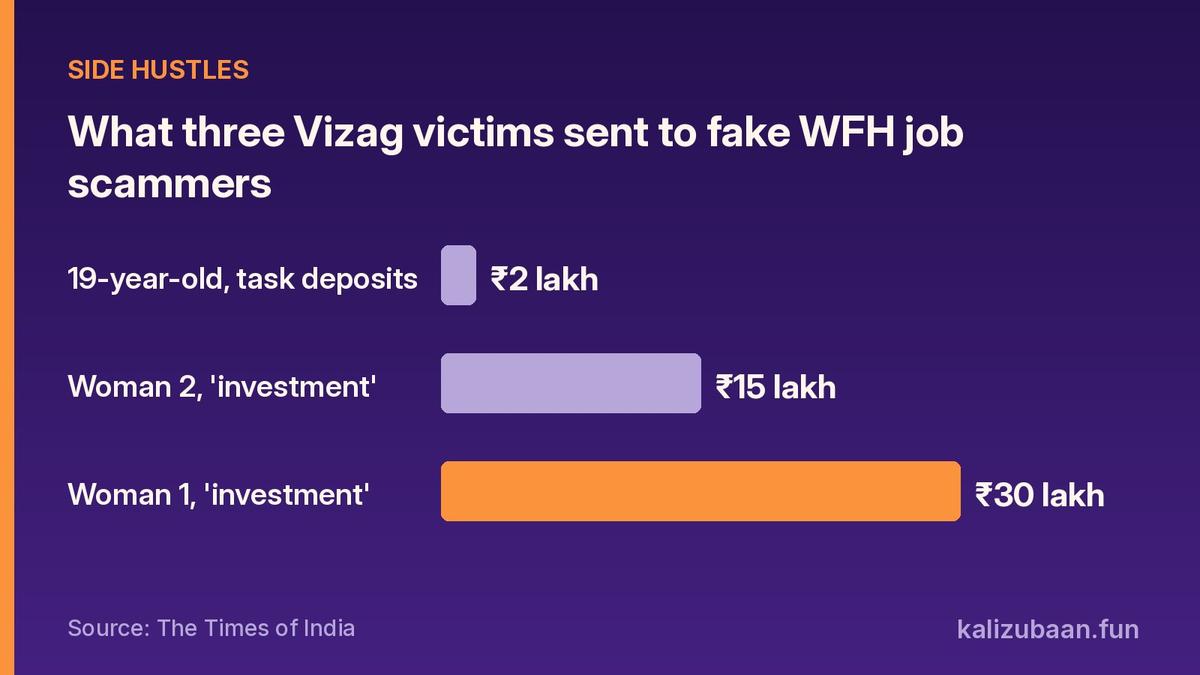
Source: The Times of India
The scam is not limited to one city. A 24-year-old woman from Kathua lost more than ₹1.9 lakh after clicking an Instagram job ad that offered part-time work rating restaurants (The Times of India). She was first asked for a "refundable" registration deposit of ₹2,000. When she tried to withdraw her balance, she was told to pay processing fees.
What most guides miss: the 19-year-old was paid ₹15,000 and then sent about ₹2 lakh, more than ten times what she received. That first payout is not proof the job is real. It is the cost of the scam, and the scammer gets it back many times over.
What do fake work-from-home ads look like?
They promise steady income for easy home tasks, and they ask for a fee before you start.
In and around Bengaluru, ads offer agarbatti packing, copying handwritten books, data entry or assembling small items, all for Rs 20,000 to Rs 30,000 a month from home (Bangalore Mirror).
The fee has many names: registration fee, security deposit, training charge or processing fee. Some applicants never hear back after paying. Others get small tasks and a token payment, then get pushed to invest more.
The targets are people who need flexible income the most. Police named women managing households, students looking for part-time work, and unemployed youth.
Offline offers can be fake too. In Chennai, a 26-year-old woman was told to pay ₹4,500 in advance to install software on her laptop for a work-from-home job. The job never came (The Hindu). Police later arrested three men who allegedly ran offices in the city and collected "advance payments" and "registration fees" from job seekers.
Red flags to check before you take a part-time job
If an offer asks you to pay, move to Telegram, or "invest" for higher earnings, walk away.
Police advice from these cases is simple: verify the company, avoid any job that needs a registration or security deposit before work begins, and report suspicious offers (Bangalore Mirror).
- You pay to work. Any fee to join, train, unlock tasks or withdraw money is the scam itself.
- A stranger messages first. Unsolicited WhatsApp texts and Instagram ads were the entry point in Vizag and Kathua.
- The job moves to Telegram or an outside site. The Kathua victim was sent to an unknown website for "assignments".
- Tasks turn into investment. Promised returns like 30% to 50% have nothing to do with a job.
- You cannot withdraw. Restricted withdrawals and surprise fees are a warning sign Vizag police listed.
- The pay sounds too easy. High pay for a few hours of simple work is the hook.
Look for part-time work through employers you can verify, campus placement cells, or people you know who have done the job. A genuine employer pays you. You never pay them.
What to do if you have already paid
Stop sending money, save every chat and payment record, and call 1930, India's national cybercrime helpline, as early as you can.
Vizag police note that quick reporting can help authorities freeze stolen funds (The Times of India).
Keep the scammer's phone numbers, Telegram usernames, website links and the bank accounts or UPI IDs you paid. The Kathua victim's complaint asked police to trace exactly these. Do not pay anyone who offers to "recover" your money for a fee.
Many people who lose small amounts never report it out of embarrassment, police in Karnataka said. That silence helps the next scam. Report it anyway.
FAQs
Are part time jobs that pay daily through WhatsApp real?
Treat them as fake unless you can verify the employer. Many scams in these cases started with a WhatsApp message and a small first payment.
Is a refundable registration deposit safe?
No. The Kathua victim paid a "refundable" ₹2,000 deposit and was then asked for more fees to withdraw.
What is the cybercrime helpline number in India?
Call 1930 to report online financial fraud. Report quickly, because early reporting can help freeze the money.
Can students find genuine part-time work from home?
Yes, but genuine work never needs a fee from you. Use verified employers, college placement cells and contacts you trust.
Have you received a fake job message like this? Tell us how it started in the comments, so others can spot it.
Expert review: pending.
Results vary; nothing here is a promise of income.
Related reading
- ₹630 Bait, ₹10 Lakh Lost: The Earn Money Online Task Scam
- ₹50 to ₹200 Bait: The Truth About Earn Money Watching Ads Apps
- $2.60 an Hour to Film Chores: India's Newest Side Hustle Jobs
Sources
- The Times of India: 20 from Vizag city lose over ₹1 crore in work-from-home cyberfraud
- Bangalore Mirror: Work from home, pay up, get duped
- The Times of India: Kathua woman falls for work from home scam reported in Chandigarh
- The Hindu: Three persons arrested for cheating job seekers with fake work-from-home offers
Tagged Topics
Keep reading



Thanks for reading Kali Zubaan
Explore more articles in Side Hustles or return to the main publication feed.


