HOMA-IR Fell From 3.2 to 1.9 After 20 Weeks of Exercise
Exercise cannot cure PCOS, fitness expert Deepti Sharma told Hindustan Times. A North India Cureus pilot still found clear metabolic shifts after 20 weeks of home aerobic work.
Exercise cannot cure PCOS. That is the blunt line fitness expert Deepti Sharma gave Hindustan Times, even as gym advice keeps getting sold as a fix.
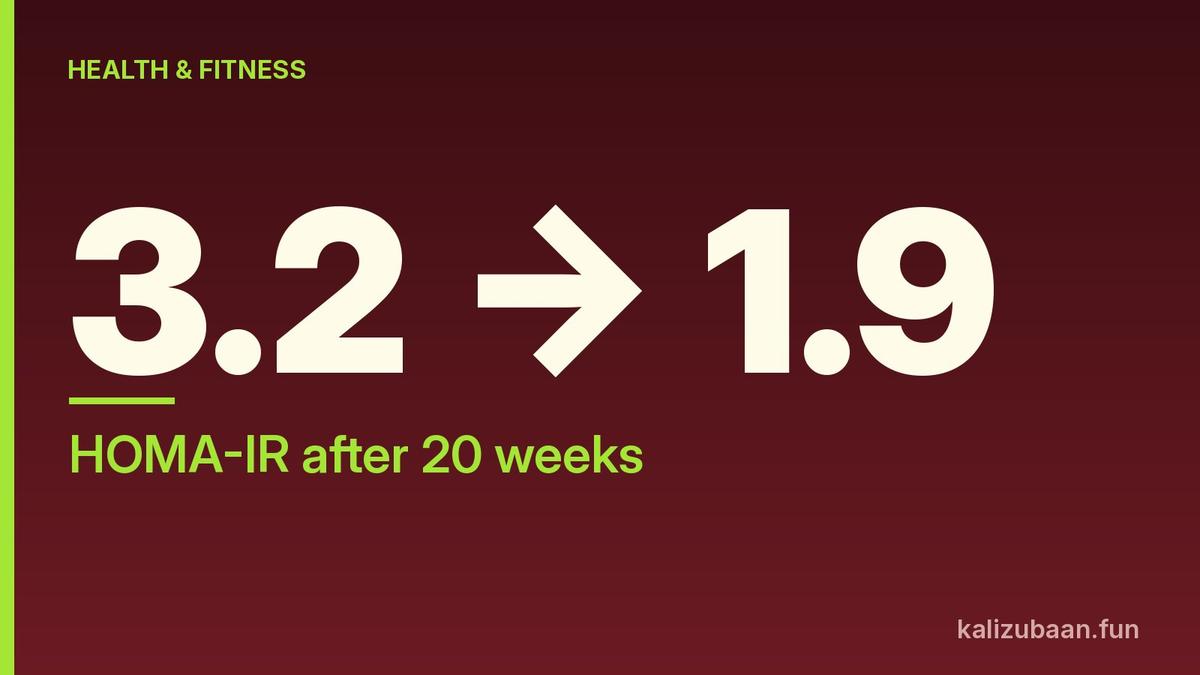
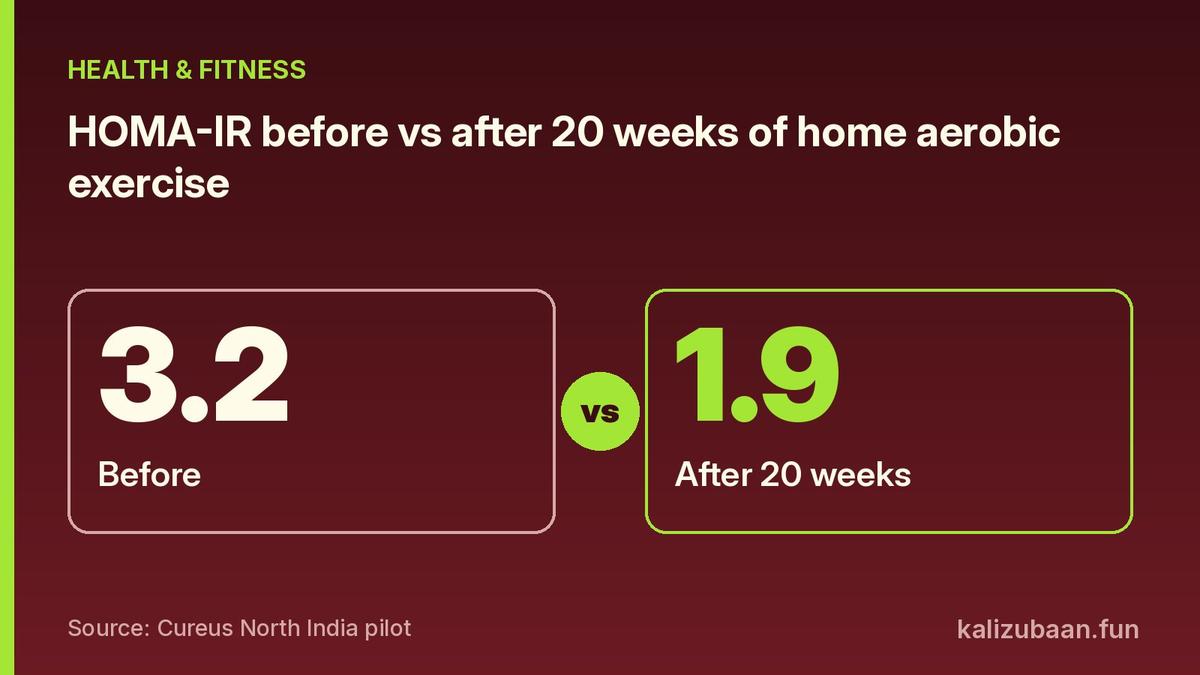
A North India pilot published in Cureus still found something useful. After 20 weeks of home aerobic exercise, women with PCOS saw HOMA-IR fall from 3.2 to 1.9, with BMI and inflammation markers moving in the same direction.
Quick answer
- Exercise does not reverse or cure PCOS, but it can improve insulin handling, heart health and some symptoms, according to Deepti Sharma.
- Adults are advised to build toward 150 to 300 minutes of moderate aerobic activity a week, plus muscle-strengthening on at least two days.
- In a Delhi-based Cureus pilot of women aged 20 to 40, 20 weeks of home aerobic exercise cut HOMA-IR from 3.2 to 1.9 and hs-CRP from 6.7 to 4.2 mg/L.
- Strength work can start with two sessions a week; HIIT is optional, and yoga or Pilates can help if a gym feels hard to stick with.
Exercise helps, but it is not a cure
Deepti Sharma, director of MultiFit and an ACPT Level 5-certified professional, told HT Lifestyle that movement might help, though exercise cannot cure PCOS.
The condition affects every woman differently, so what works for one may not work for another. Where movement does help, she said, is in how the body handles insulin, in heart health, and in making a few symptoms easier to live with.
That framing matters in India. Worldwide, PCOS affects around 6.6% of reproductive-aged women, and Indian prevalence ranges between 2.2% to 26% among reproductive-aged women, the Cureus paper notes. Plenty of women hear "just hit the gym" as if that alone would settle irregular cycles, acne or shifting weight. Sharma's point is simpler: treat exercise as long-term support, not a miracle reset.
What changed after 20 weeks at home
The Cureus pilot was run in Delhi at a tertiary care teaching hospital linked to Lady Harding Medical College. Researchers enrolled 60 women with PCOS, aged 20 to 40, then analysed N=48 after dropouts.
The programme was home-based aerobic work for 20 weeks, with five sessions per week. Sessions included brisk walking, cycling or other aerobic exercise at a pace faster than normal walking, sustained for at least 30 minutes on at least three days per week. A heart rate monitor was used to keep activity at 120 beats per minute or above.
Dropout was real: 16.7% (5/30) in the study group and 23.3% (7/30) in the control group. Among those who stayed, the study group's numbers moved clearly.
Source: Cureus North India pilot
BMI fell from 22.8 to 21.1. Average weight fell from 67.4 kg to 62.7 kg. hs-CRP, a marker of inflammation, fell from 6.7 to 4.2 mg/L. The control group did not show the same pattern across those measures.
This was a pilot, not a large multi-city trial. It still gives an India-specific signal that steady aerobic work can shift insulin resistance and inflammation even when the label "cure" is off the table.
Why insulin sensitivity is the practical target
Sharma starts with insulin resistance. In PCOS, the body's cells often respond poorly to insulin, which makes blood sugar harder to control and ties into the hormonal changes of the condition.
When you exercise, muscles pull in glucose for energy. Keep at it and the body gets better at responding to insulin. That is why the Cureus drop in HOMA-IR matters more than chasing the scale alone.
She also warns against judging everything by weight. Being able to lift heavier, walk longer without getting tired, or simply keep a routine can reflect real change even when the weighing scale barely moves.
A beginner plan that matches the expert advice
Sharma's order is strength first, then cardio you will actually repeat.
- Strength: squats, lunges, rows and chest presses, covering the major muscle groups. New to weights? Start with body weight or light resistance and get the form right. Two sessions a week is a reasonable start; do more once you feel stronger.
- Cardio: brisk walking, cycling, swimming and dancing all count. If your job keeps you seated, a walk after work is a start.
- Volume target: build toward 150 to 300 minutes of moderate aerobic activity a week, with muscle-strengthening on at least two days. Nobody has to hit that in week one.
- HIIT: optional. Bursts of hard effort can improve fitness, but women with PCOS can see benefits without them. Add slowly only if you enjoy them.
- Yoga and Pilates: useful for flexibility, balance and body awareness if a gym feels uncomfortable, ideally alongside some aerobic and strength work rather than alone.
Training harder is not always better. Train hard with little recovery, especially when sleep or food is short, and it gets difficult to carry on at all. A rest day does not put you behind.
Who should be careful
PCOS is rarely managed well in one flawless week. Nutrition, sleep and medical care all play a part, Sharma said.
If periods remain irregular or other symptoms trouble you, she recommends speaking to a gynaecologist or endocrinologist. Some women may also need medication or other treatment alongside lifestyle changes.
If you are just beginning, skip the hunt for a perfect programme. Pick a few sessions that suit your week, see how you feel, then adjust. A routine you can keep up, with the right medical support, goes further than a plan you dread.
FAQs
Can exercise reverse PCOS? No. Deepti Sharma told Hindustan Times that exercise cannot cure PCOS. It can still help insulin handling, heart health and some symptoms when paired with nutrition, sleep and medical care.
What results did the North India pilot show? After 20 weeks of home aerobic exercise, the study group’s HOMA-IR fell from 3.2 to 1.9, BMI from 22.8 to 21.1, weight from 67.4 kg to 62.7 kg, and hs-CRP from 6.7 to 4.2 mg/L.
How much exercise should beginners aim for? Sharma suggests two strength sessions a week to start, then building toward 150 to 300 minutes of moderate aerobic activity a week with muscle-strengthening on at least two days.
Is HIIT required for PCOS? No. Sharma says HIIT is optional. Walking, cycling, swimming or dancing can be enough if you stick with them, and yoga or Pilates can help if a gym is uncomfortable.
This article is for information only and is not medical advice. Talk to a doctor before changing your diet or training.
Sources
- Hindustan Times: Can exercise help reverse PCOS? Fitness expert Deepti Sharma weighs in on what actually works and what doesn't
- Cureus / PMC: The Effect of Exercise Training on Body Composition, Insulin Resistance and High Sensitivity C-reactive Protein (Hs-CRP) in Women With Polycystic Ovary Syndrome: A Pilot Study From North India
Tagged Topics
Keep reading
Thanks for reading Kali Zubaan
Explore more articles in Health & Fitness or return to the main publication feed.