₹9,000 Tuition to ₹1.25 Lakh: Inside a Varanasi Cloud Kitchen
A Varanasi tutor earning ₹9,000 a month started a cloud kitchen. Here are the reported numbers, what they leave out, and what to check before you try it.
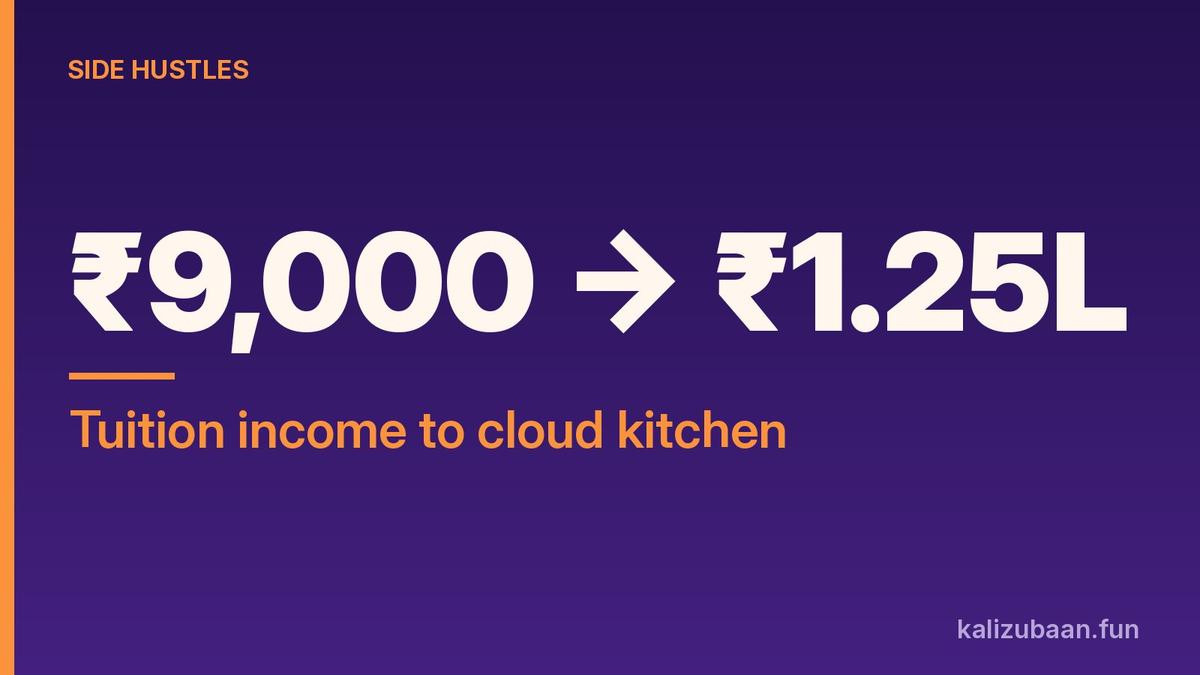
She taught kids for 4–5 hours a day and earned ₹9,000 a month. Some months she still had to ask her father for money.
Today, according to a friend's post on X, her cloud kitchen brings in ₹1.25 lakh+ a month. The interesting part is not the big number. It is the cost lines underneath it.
Quick answer
- The story comes from Ankit Pandey's X post about a friend in Varanasi, as reported by Moneycontrol and The Economic Times. Moneycontrol says it has not independently verified the claims.
- She put in ₹30,000 of her own money, and Pandey helped with ₹20,000.
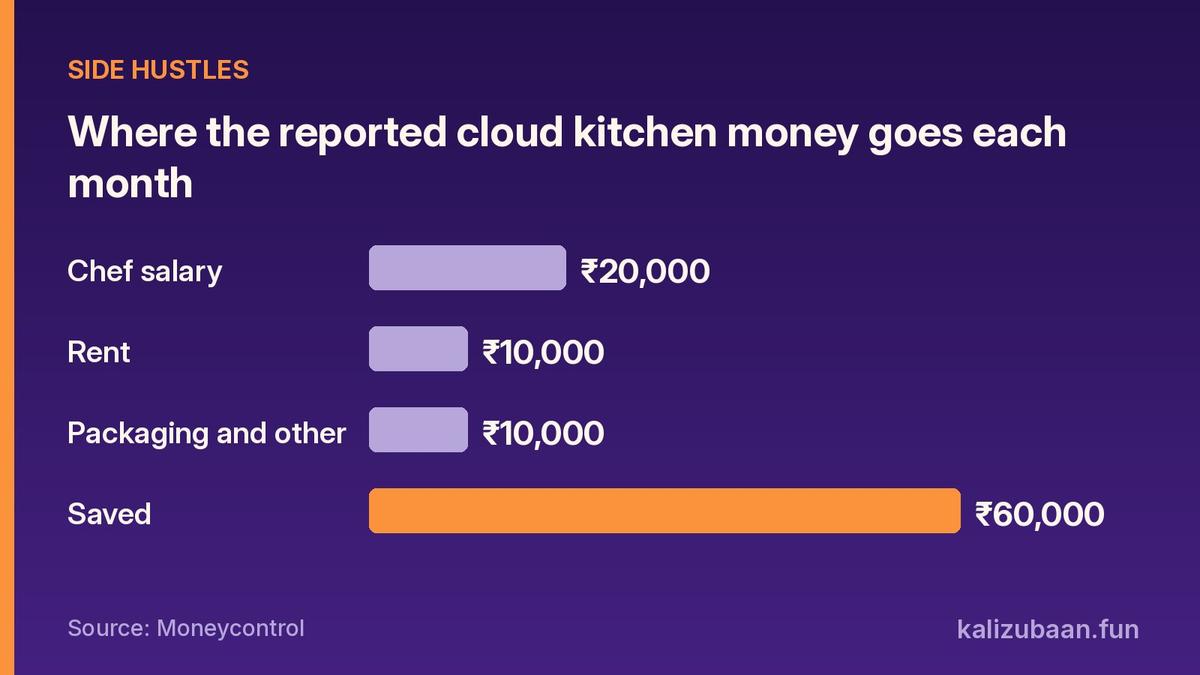
- Reported numbers: ₹1.25 lakh+ monthly revenue, ₹20,000 chef salary, ₹10,000 rent, ₹10,000 packaging and other expenses.
- After all expenses, she reportedly saves around ₹60,000 a month, with 15–20 daily customers via Zomato and Swiggy.
The before: time sold for money
Pandey's friend lived alone in Varanasi, far from her family. She handled rent, food, electricity and daily expenses on her own.
Her income came from home tuitions. ET describes nearly four to five hours of teaching every day for around ₹9,000 a month.
That is the classic trap of hourly work. Your income has a hard ceiling, because the day has a fixed number of hours and you are already tired at the end of it.
Pandey's advice to her, in his words: "Stop selling time for money." He noticed she was a genuinely good cook and suggested a cloud kitchen.
The numbers, line by line
Here is everything the two reports actually give us. Nothing below is audited; these are figures from Pandey's X post as reported by Moneycontrol and ET.
Starting money. She invested ₹30,000. Pandey helped her with ₹20,000.
Early days. "The beginning was brutal," he wrote. Some days she got zero orders. Some days only one or two.
Today. Around 15–20 daily customers, consistently. Orders come mainly through Zomato and Swiggy. She hired a local chef and expanded the menu.
Monthly money. ₹1.25 lakh+ revenue. ₹20,000 for the chef. ₹10,000 rent. ₹10,000 for packaging and other expenses. Around ₹60,000 saved every month.
Source: Moneycontrol
What the numbers do not tell you
Read the breakdown slowly and a few gaps show up. That does not make the story false. It just means you should not copy it as a business plan.
Revenue or profit? In one line of the X post, ₹1.25 lakh+ is called "profit". In the detailed breakdown, the same figure is called "revenue". ET also uses revenue. The breakdown only makes sense as revenue.
The missing cost lines. The listed costs (chef, rent, packaging) and the ₹60,000 saved do not add up to the full revenue. The post does not say where the rest goes.
For any real cloud kitchen, the obvious candidates are raw ingredients, gas, electricity and the delivery apps' commission. None of these is itemised in either report, so we cannot say what she pays.
Saving is not the same as profit. "Saves around ₹60,000" may mean what is left after her own living costs too. The reports do not clarify.
One headline, two figures. ET's headline mentions a bigger monthly number than its own article text. The body of both reports uses ₹1.25 lakh, so that is the figure we use here.
Why this model can work
Strip away the viral framing, and the logic is sound. A tuition teacher's income is tied to her hours. A kitchen's income is tied to orders, and orders can grow while a hired chef does part of the cooking.
She also started with a real skill. One user's comment on the post put it simply: "It worked out because she had a skill." Food quality and pricing are what customers liked, according to Pandey.
The delivery apps solved the hardest problem for her: finding customers without a shopfront. A cloud kitchen has no dining area, so rent can stay small.
How to test a cloud kitchen in India without betting everything
If this story has you thinking about your own kitchen, start small and measure.
- Cook for real buyers first. Sell to neighbours, hostel students or office groups before you sign any rent agreement. Repeat orders matter more than praise.
- Get your food licence sorted. Delivery platforms generally ask for FSSAI registration and other documents before listing you. Check the current requirements on the partner pages of Zomato and Swiggy.
- Write down every cost line. Ingredients, gas, packaging, rent, staff and platform commission. The Varanasi breakdown skips several of these; your sheet should not.
- Price after commission. Work out what you actually receive per order after the app's cut, not the menu price.
- Keep your current income at first. She survived the zero-order days. Plan for a slow start with savings or an existing income.
- Hire only when orders are steady. She brought in a chef after orders grew, not on day one.
Mistakes to avoid
- Treating viral numbers as a target. These are one person's reported figures, shared by a friend. Your city, menu and costs will differ.
- Quitting during the slow phase without a buffer. Pandey himself says most people quit when orders are zero or one or two a day.
- Ignoring hidden costs. Ingredients and commission can quietly eat your margin.
- Skipping hygiene and licensing. One bad review about food safety can sink a small kitchen.
A quick tax note
Income from a cloud kitchen is business income and needs to be reported in your income tax return. GST registration and presumptive taxation options may apply depending on your turnover.
This is information only. Check with a chartered accountant (CA) before you file.
FAQs
Is the ₹1.25 lakh figure profit or revenue? The detailed breakdown in Pandey's post calls it monthly revenue, and ET reports it as revenue. Treat it as revenue; she reportedly saves around ₹60,000 of it.
How much did she invest to start? According to the X post, she invested ₹30,000, and her friend helped with ₹20,000.
Are these numbers verified? No. Moneycontrol says the report is based on social media content and that it has not independently verified the claims.
Do I need a shop to start a cloud kitchen? No dining space is needed, which is the point of the model. She took orders through Zomato and Swiggy and pays ₹10,000 in rent, according to the post.
Results vary; nothing here is a promise of income.
Have you tried selling home-cooked food online? What did your first month of orders look like? Tell us in the comments.
Sources
Tagged Topics
Keep reading


Thanks for reading Kali Zubaan
Explore more articles in Side Hustles or return to the main publication feed.


