8 States Sue OpenAI Over ChatGPT Child Safety Claims
Eight US states have filed separate lawsuits saying ChatGPT harms children and that OpenAI misled the public about its safety. What they want, how OpenAI responded, and what parents can take from it.
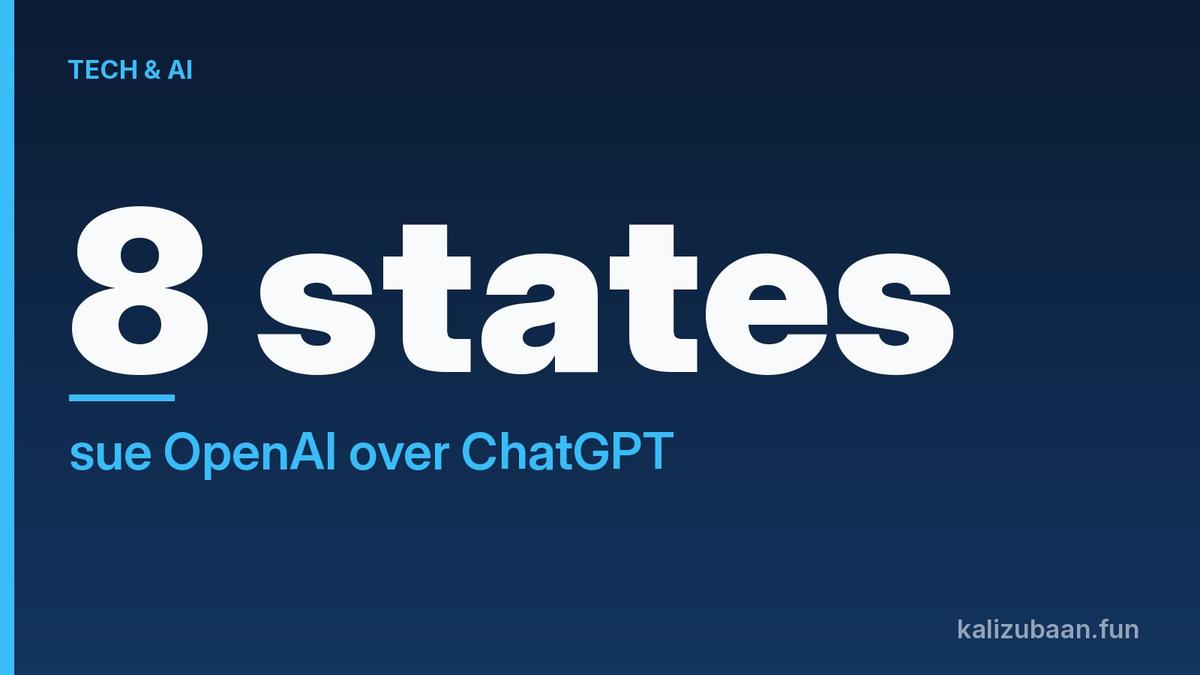
OpenAI told parents ChatGPT was safe for teens. Eight US states now say that claim was misleading, and they have taken the company to court.
Reuters, via KELO, calls it the most significant coordinated state action yet against an artificial intelligence company. OpenAI says it has built industry-leading protections for young users.
Quick answer
- Iowa, Kansas, Nebraska, West Virginia, Arkansas, Arizona, Idaho and Montana each sued OpenAI separately in their own state courts.
- They allege ChatGPT has harmed children, that OpenAI misled the public about its safety, and that it broke state consumer protection laws.
- The states want changes to how ChatGPT works for children, civil penalties, and in some cases deletion of unlawfully collected data and surrender of profits made from young users.
- OpenAI points to its parental controls, break reminders and age-appropriate model protections, and says it wants industry-wide rules, not rules for one company.
Why this matters now
The lawsuits were announced on Wednesday, October 14, 2026. CNBC says Iowa Attorney General Brenna Bird announced the coordinated filings in a release.
This is not the first state case. Florida's attorney general, James Uthmeier, sued OpenAI in June over similar claims, according to CNBC and The Economic Times.
The timing matters too. KELO's Reuters report says this wave adds to the legal challenges OpenAI faces as it prepares for a public listing. The Economic Times adds that the company already faces dozens of lawsuits alleging ChatGPT aided in mass shootings or other violence.
From one state to eight
The jump from a single state suit to a coordinated group is the real story here.
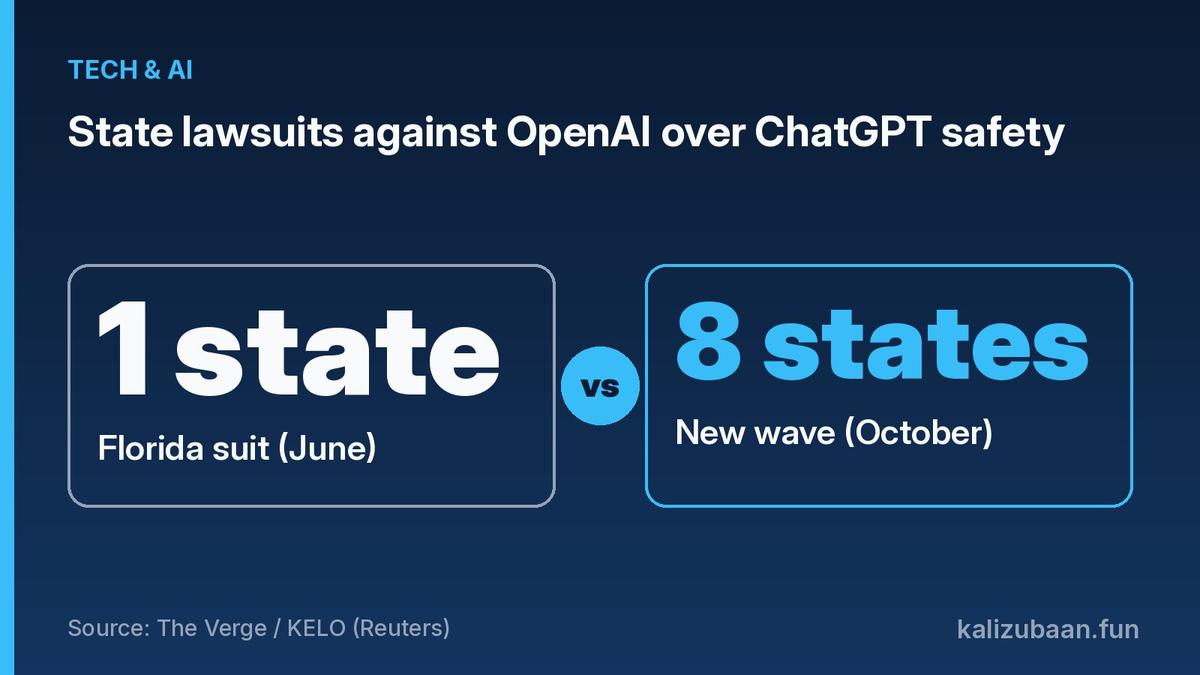
Source: The Verge / KELO (Reuters)
KELO describes the group as bipartisan. Each attorney general filed independently in state court, rather than joining one combined case.
That structure means OpenAI must defend itself in eight different courts, under eight different sets of state consumer protection laws.
What the states are alleging
The complaints share a core argument, as The Verge summarises it. OpenAI presented ChatGPT as a "safe, youth-appropriate tool that puts safety first," but the states say it was actually "dangerous to vulnerable users."
The lawsuits list specific harms. According to The Verge, they include "degrading critical thinking skills, encouraging paranoias and delusions, offering dangerous medical advice, and promoting unhealthy behaviors and relationships."
KELO's Reuters report adds the design argument. The states claim ChatGPT is built to be agreeable and engaging to earn users' trust, but that it reinforces delusions, encourages dangerous behaviour and assists users in planning violence.
Other claims in the filings:
- Failure to warn. The states say OpenAI violated consumer protection laws by not warning customers about ChatGPT's dangers, citing lawsuits filed by families of teens and adults who died.
- Children's data. The Verge reports the states accuse OpenAI of collecting data from minors and not doing enough to keep underage users off the chatbot.
- Public nuisance. KELO says the states also allege OpenAI created a public nuisance by endangering residents' health.
- Profit over safety. Arizona's lawsuit, quoted by The Verge, says OpenAI turned into "a cautionary tale" driven by "a profit-at-all-costs mindset that sidelines essential safeguards."
Iowa's Brenna Bird was the most direct. "OpenAI is hurting kids and they are lying to Iowans," she said in a statement quoted by CNBC.
These are allegations. None of them has been proven in court.
What the states want
The demands go beyond fines. Here is what the reports say the states are asking for:
- Changes to ChatGPT for children. The Economic Times says the suits seek an order forcing OpenAI to change how ChatGPT works for children.
- Civil penalties and damages. The Verge and KELO both report that the states want civil penalties, and KELO adds damages.
- Profits from young users. The Economic Times says the states want OpenAI to give up profits generated from young users.
- Data deletion. Some states want unlawfully collected personal data deleted, per The Verge.
- A limit on self-improving AI. KELO reports the states want OpenAI barred from developing AI models that can improve themselves unless it can ensure they are aligned with human values.
- An end to misleading safety claims. The Verge says the states want OpenAI to stop misleading the public about ChatGPT's safety.
How OpenAI responded
OpenAI spokesperson Drew Pusateri told The Verge the company has "built industry-leading age-specific protections" into ChatGPT. CNBC quotes him saying these protections are ones "many other AI products lack."
His full statement:
"While no system can be perfect, we'll continue to work with experts to inform our work and build additional safeguards, such as the parental controls, break reminders and age-appropriate model protections that exist today. We're committed to working with states on advancing pragmatic AI policies that apply to the entire AI industry - not just one company."
CNBC also notes that in August, OpenAI launched ChatGPT for Teens, a dedicated experience for minors with educational features and age-appropriate safeguards. At the time, OpenAI said teens should be able to use AI to learn, create and explore, with protections that reflect their developmental stage.
What Indian parents and students can take from this
These cases are being fought in US state courts, so they do not directly change how ChatGPT works in India today. But the safety questions they raise apply to every family whose children use chatbots.
A few practical takeaways, based on what the lawsuits and OpenAI's response describe:
- Know the tools exist. OpenAI says parental controls, break reminders and age-appropriate protections are already in ChatGPT. If your teen uses it, look at those settings together.
- Do not treat a chatbot as a doctor. One of the harms the states allege is dangerous medical advice. Health questions belong with a qualified professional.
- Watch for over-reliance. The states argue ChatGPT is designed to be agreeable and engaging. A tool that always agrees is not the same as a friend or counsellor.
- Students, keep thinking for yourselves. The complaints claim heavy use can degrade critical thinking skills. Use AI to check your work, not to replace it.
FAQs
Which states sued OpenAI? Iowa, Kansas, Nebraska, West Virginia, Arkansas, Arizona, Idaho and Montana. Florida had already sued separately in June.
Is this one big lawsuit? No. Each state filed its own case in its own state court, though the filings were announced together.
What does OpenAI say? It says ChatGPT has industry-leading age-specific protections, including parental controls, break reminders and age-appropriate model protections, and that it wants rules for the whole AI industry.
What if someone I know is in distress? CNBC's report points US readers to the Suicide & Crisis Lifeline at 988. In India, reach out to a trusted doctor, counsellor or a local crisis helpline right away.
Should AI chatbots face stricter rules for children, or is that the parents' job? Tell us what you think in the comments.
This article summarises allegations in lawsuits as reported by the publications below. The claims have not been tested in court.
Sources
Tagged Topics
Keep reading

Thanks for reading Kali Zubaan
Explore more articles in Tech & AI or return to the main publication feed.