619 Million Have Back Pain: When Young Adults Should Worry
Low back pain affected 619 million people worldwide in 2020, and a Mumbai spine surgeon says younger adults are not immune to disc problems. The warning signs, and why most slipped discs never need surgery.
A weekend of heavy lifting or pickleball. Then a week glued to an office chair. Then a lower back that won't stop aching.
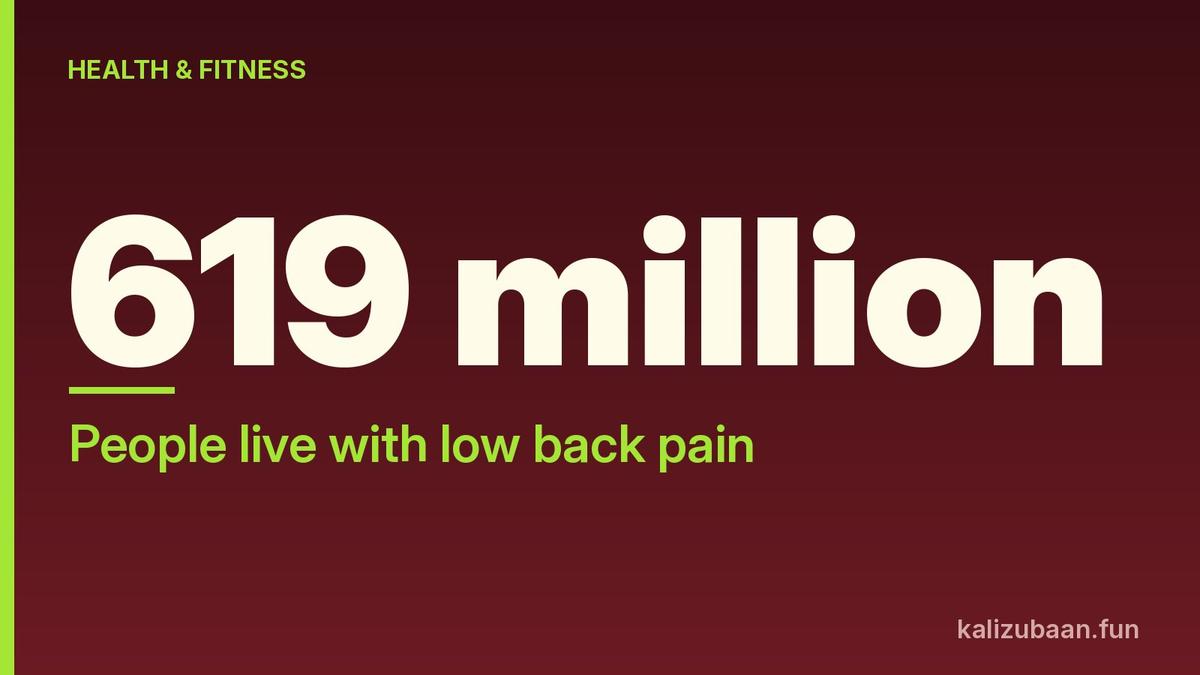
If that sounds familiar, you are in big company. Low back pain affected 619 million people worldwide in 2020, and the WHO calls it the single leading cause of disability on the planet.
Quick answer
- Slipped discs are not only an old person's problem. Younger adults can get disc degeneration too, says Dr Amit Sharma, consultant spine surgeon at Saifee Hospital, Mumbai.
- The usual triggers are long hours of sitting, poor posture, intense training with bad form and too little recovery.
- Pain that lasts, gets severe, or shoots down the leg with numbness or tingling should be checked by a doctor.
- Most patients do not need immediate surgery. Medicines, physiotherapy and changing aggravating activities usually come first.
Why younger backs are hurting
Fitness has become a priority for many young adults, in Indian cities too. Tennis, pickleball, running and heavy weight training are all popular.
That is mostly good news. But Dr Sharma told HT Lifestyle that excessive training, repetitive strain and poor recovery can put extra stress on the spine.
"Slipped discs are not exclusively an age-related problem," he says. Changes in exercise habits, long sitting, poor posture and inadequate recovery can all add to spinal stress.
There is another reason we hear about it more now. Better access to MRI scans and more awareness of symptoms mean more people are getting persistent pain checked.
How big the back pain problem really is
The WHO's numbers are startling. Low back pain has the highest prevalence of any musculoskeletal condition worldwide, and most people get it at least once in their lives.
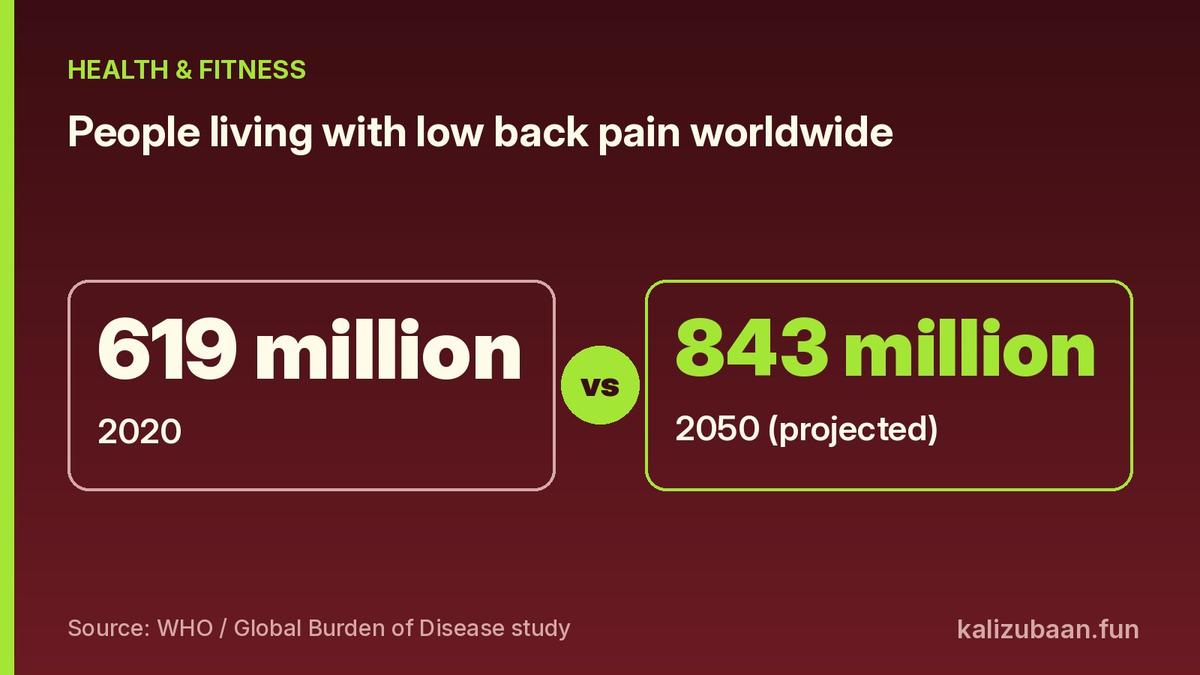
Source: WHO / Global Burden of Disease study
The Global Burden of Disease study, published in The Lancet Rheumatology, projects 843 million cases by 2050, driven largely by a growing and ageing population.
The number of cases peaks at 50–55 years, and women get low back pain more often than men. But it can strike at any age, including in children and teenagers.
Here is the reassuring part. In about 90% of cases, low back pain is "non-specific". That means doctors can't point to one disease or structural injury behind it. The WHO lists low physical activity, smoking, obesity and high physical stress at work as risk factors.
What a "slipped disc" actually is
Between the bones of your spine sit soft, cushion-like discs. In a disc herniation, a tear in the tough outer ring lets the jelly-like centre bulge out.
The name "slipped disc" is actually misleading. Discs are firmly attached between the vertebrae and can't slip out of place.
Most herniations happen in the lower back. According to Wikipedia's summary of the research, 95% of lumbar herniations occur at the two lowest levels, L4–L5 or L5–S1. Lumbar disc herniation is 15 times more common than herniation in the neck.
Discs also have a limited direct blood supply. Dr Sharma notes they depend largely on nutrients moving in from surrounding tissue, so regular movement and a balanced diet support general spine health. Ageing, genetics and mechanical stress still play a big role.
Gym-goers: form matters as much as effort
Dr Sharma is clear that the answer is not to stop exercising. "The way people exercise matters as much as staying active," he says.
His warning list for the gym:
- Pushing beyond your physical limits
- Lifting excessive weights
- Using improper technique
Instead, he advises a gradual increase in intensity, correct form and enough recovery between hard sessions.
Desk workers: sitting is its own strain
Long sitting and inactivity can add to back pain, especially for people who already have spine problems, Dr Sharma says.
His fixes are simple:
- Set up a comfortable workstation. Your chair, screen and keyboard should not force you to hunch.
- Change position often. Don't stay frozen in one posture.
- Take short movement breaks. A quick walk or stretch through the day helps reduce discomfort.
The WHO's self-care list adds staying active, keeping a healthy weight, not smoking, sleeping well and making ergonomic changes at work.
Warning signs you should not ignore
Not every backache is a slipped disc. But Dr Sharma says pain that persists, becomes severe or radiates down the leg needs a clinical exam, especially with numbness or tingling. The doctor will then decide whether an MRI is needed.
Some signs need urgent medical help:
- New problems controlling your bladder or bowels
- Numbness around the groin or "saddle" area
- Leg weakness that is getting worse quickly
These can point to serious nerve compression and should never wait.
Does a slipped disc mean surgery?
Usually not. "Most patients do not require immediate surgery," Dr Sharma says. Conservative treatment, such as appropriate medicines, physiotherapy and avoiding activities that aggravate symptoms, is often the first approach.
Surgery may be considered when significant symptoms persist despite an adequate period of non-surgical care, often around six to twelve weeks, and when the exam and scans support it.
There is good news on recovery too. One study of sciatica, the leg pain linked to lumbar disc herniation, found about one-third of patients recovered within two weeks with conservative care alone, and about three-quarters after three months.
The WHO adds that painkillers should not be the first-line treatment for low back pain. Physical therapy, staying active and support to return to normal activities come first.
FAQs
Can someone in their twenties get a slipped disc? Yes. Dr Sharma says younger adults can experience disc degeneration and related back pain, often linked to exercise habits, long sitting and poor recovery.
Should I stop going to the gym if my back hurts? Not necessarily. Dr Sharma's advice is to respect your limits, fix your form, increase intensity gradually and recover well. If pain persists or spreads down the leg, see a doctor first.
Do I need an MRI for back pain? Not always. A clinical examination decides whether further tests, including an MRI, are necessary.
When is back pain an emergency? New bladder or bowel trouble, numbness in the groin area, or rapidly worsening leg weakness needs urgent medical assessment.
This article is for information only and is not medical advice. Talk to a doctor before changing your diet or training.
Sources
Tagged Topics
Keep reading
Thanks for reading Kali Zubaan
Explore more articles in Health & Fitness or return to the main publication feed.