Google Felled 330 Hectares of Finnish Forest for Data Centres. Vizag Is Watching
Finland ordered Google to halt work on two data centre sites after forest was cleared without an environmental assessment. Here is why it matters for Google's $15 billion Vizag AI hub.
Update (October 2026): A Finnish regulator has ordered Google to suspend work on two data centre sites. Meanwhile, protests are growing around its planned AI hub in Visakhapatnam.
TL;DR
- What happened: Finland's Licensing and Supervision Authority (LVV) told Google to stop "preparatory measures" at two data centre sites in Muhos and Kajaani. The company representing Google had felled 330 hectares of forest in Muhos without completing an environmental impact assessment (EIA).
- The verdict: Finland didn't find Google guilty of a crime. It found that the company moved faster than the environmental process allowed, and Google itself admits it "fallen short of our own high standards".
- Who it's for: Anyone following India's data centre boom, especially in Andhra Pradesh, where Google is clearing land for a $15 billion AI facility.
Why this matters now
Data centres are the physical backbone of AI. Every chatbot answer, cloud backup and streaming video runs on racks of servers in large, power-hungry buildings. Governments and tech firms worldwide are spending trillions of dollars to build more of them.
But the rush is now running into local resistance. Within the same week, two very different places put Google's construction practices in the news: a forest region in northern Finland and the southeast coast of India.
What exactly happened in Finland
The Finnish sites are part of a €13bn project spread across multiple locations in northern Finland. According to The Guardian:
- Muhos: Tuike Finland Oy, the company representing Google, felled 330 hectares (815 acres) of forest before the EIA was completed.
- Kajaani: logging reportedly covered just under 200 hectares (494 acres).
- The order: LVV issued a notice to "immediately suspend", by 23 October at the latest, preparatory work that "significantly changes the environment" until the assessment is finished. Google was given until the following Wednesday to submit a written explanation.
- The stakes: if Google doesn't comply, LVV said it would consider enforcement proceedings and a fine.
LVV said Google had gone ahead with "extensive preparatory measures", including removing trees, stripping topsoil and building site roads. Tommi Muilu, who heads LVV's environmental department, argued that these steps change the environment in exactly the ways an EIA is meant to identify and assess before they happen.
Is it "illegal"? That's how the story has been shared online, but it's more nuanced. Google says it "acted in good faith under the Forestry Act" and ran nature surveys. The regulator's issue is that the work went ahead before the separate environmental assessment process was finished. Formally it's a compliance order, not a criminal finding.
Google also said it plans tree planting across 130 hectares (321 acres) at Muhos as part of its landscaping and biodiversity plans.
The Finnish Association for Nature Conservation was blunt. Its chief operating officer, Tapani Veistola, said the Muhos site is "not a forest any more. It is a sand area," and called the problems a "systemic problem". He blamed an "overheated" market that pushes companies to move fast and overwhelms small municipalities that lack expertise.
The India angle: Vizag's $15 billion AI hub
This isn't only a European story. In Visakhapatnam, Andhra Pradesh, excavators are already clearing forest and farmland for the $15 billion construction of Google's largest data centre outside the United States, according to an AFP report published by The Economic Times.
Key facts from that report:
- The site covers 600 acres, which is more than 340 football pitches. Vizag is a landing point for submarine internet cables linking India to Singapore.
- Google says the hub will generate $688 million in local economic activity each year and support about 4,200 jobs during construction, with hundreds of specialist roles once it becomes operational in 2028.
- The Andhra Pradesh government expects "188,000 direct and indirect jobs".
- A joint venture of Reliance Industries, Brookfield and Digital Realty is investing $11 billion in another AI data centre in Vizag.
- Land prices have risen by an average of "more than 45 percent" since the city announced its development plans, according to a local real estate developers' body.
- India generates nearly a fifth of the world's digital data but has only about three percent of global data-centre capacity, according to government figures.
The human side is harder to put into numbers. Farmer Chandala Sadamma was paid more than $82,000 for a two-acre plot of mango and cashew trees. She told AFP that seeing the cleared red earth makes her "feel like crying". Shopkeeper Gubbala Ramanamma, standing beside a dry well, said: "we are already struggling with water scarcity."
Activists at the Human Rights Forum want a moratorium on new data centres in the state until independent environmental and social impact studies are published. Former senior government official E.A.S. Sarma has called for an independent water audit.
Finland vs. Vizag: side by side
| Finland (Muhos and Kajaani) | India (Visakhapatnam) | |
|---|---|---|
| Scale | Part of a €13bn multi-site project | $15 billion, 600-acre site |
| Land cleared | 330 hectares at Muhos; just under 200 hectares at Kajaani | Forest and farmland being cleared |
| Regulator action | LVV suspension order pending EIA | Activists demanding a moratorium |
| Main concern | Forest loss before assessment | Water, power, jobs, land |
| Google's response | "Fallen short of our own high standards" | "Obligation to be a good neighbour" |
What Google promises in India
Google says it will use "advanced" air cooling instead of water cooling at the Vizag hub. That directly addresses the most common complaint about data centres worldwide. The state plans six 1.2-gigawatt nuclear power plants as energy demand soars. Alexander Smith, Google's head of infrastructure and energy for Asia-Pacific, said "the watershed, the grid and the communities around our facilities must be better off for our being here."
Andhra Pradesh Technology Minister Nara Lokesh has said that "residential requirements will always be prioritised over data centres." The state also says new housing is being built for people who lived on the site.
Red flags to watch
- Speed over process. Finland shows that even a country with strong regulators can see work run ahead of environmental review. Indian projects moving "at a pace that the country has never seen", as Lokesh has put it, face the same risk.
- Job numbers that mix construction and operations. Thousands of construction jobs are not the same as permanent roles. Google itself says operational jobs will number in the hundreds.
- Water promises without independent audits. Air cooling is a real commitment, but residents are asking for independent verification, not press statements.
- Land-price spikes. A jump of more than 45 percent helps landowners who sell but hurts locals trying to rent or buy.
FAQs
Did Google illegally cut down a forest in Finland? The regulator ordered Google to suspend work because forest clearing and other preparatory work went ahead before the required EIA was complete. Google says it acted under the Forestry Act. LVV may pursue enforcement and a fine if Google doesn't comply.
How big is Google's Vizag data centre? It's a $15 billion project on a 600-acre site, Google's largest data centre outside the United States.
Will the Vizag data centre use a lot of water? Google says it will use advanced air cooling. Residents and campaigners still want an independent water audit.
When will it open? Google expects it to be operational in 2028.
India clearly needs more data centre capacity. The real question is whether it can build it faster than its environmental checks can keep up. What would you want an independent audit in Vizag to check first?
Sources
- The Guardian: Google told to halt work on datacentres in Finland over environmental concerns
- The Economic Times: Google faces backlash against India data centre
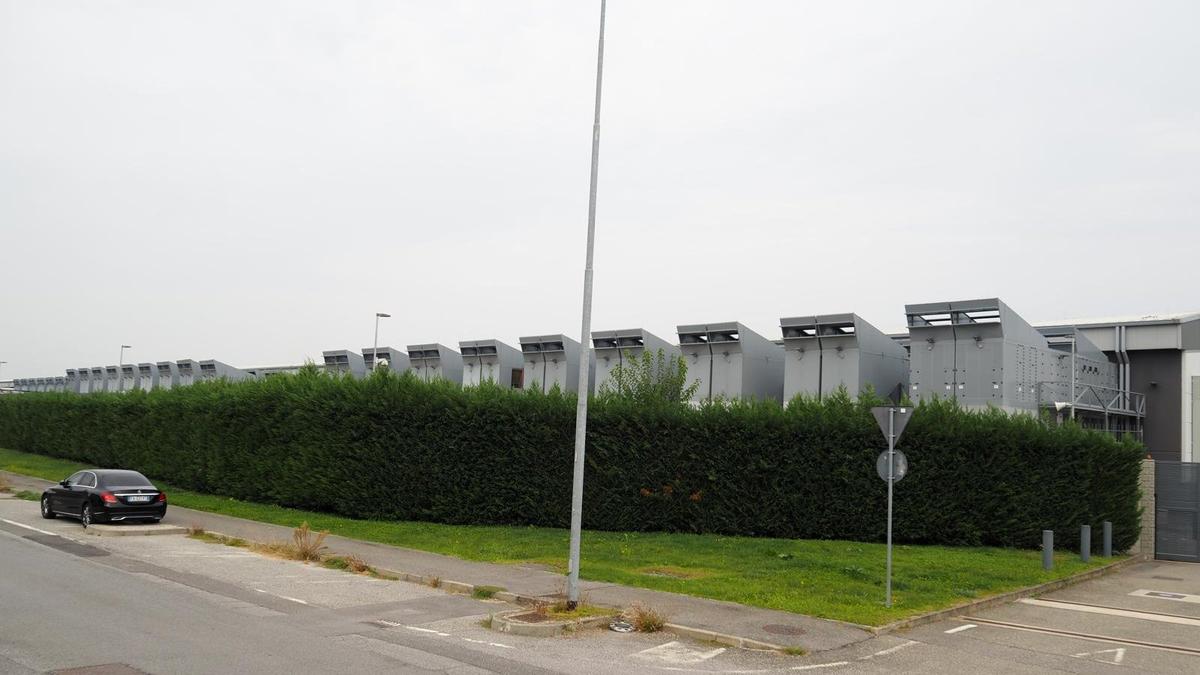
Cover image: Le torrette con i bocchettoni per il raffreddamento ad aria dei server in un data center attivo dal 2015 by Lapalmauz, CC BY-SA 4.0, via Wikimedia Commons.
Tagged Topics
Keep reading


Thanks for reading Kali Zubaan
Explore more articles in Tech & AI or return to the main publication feed.


