$640,000 From a Free Run Club, and the Founder Took None of It
A 27-year-old banker turned a free New York run club into a side hustle with over $640,000 in revenue. He kept none of it. Here is how the money works, and what Indian run club organisers can learn.
The first run drew just 12 people. The runs were free, and they stayed free.
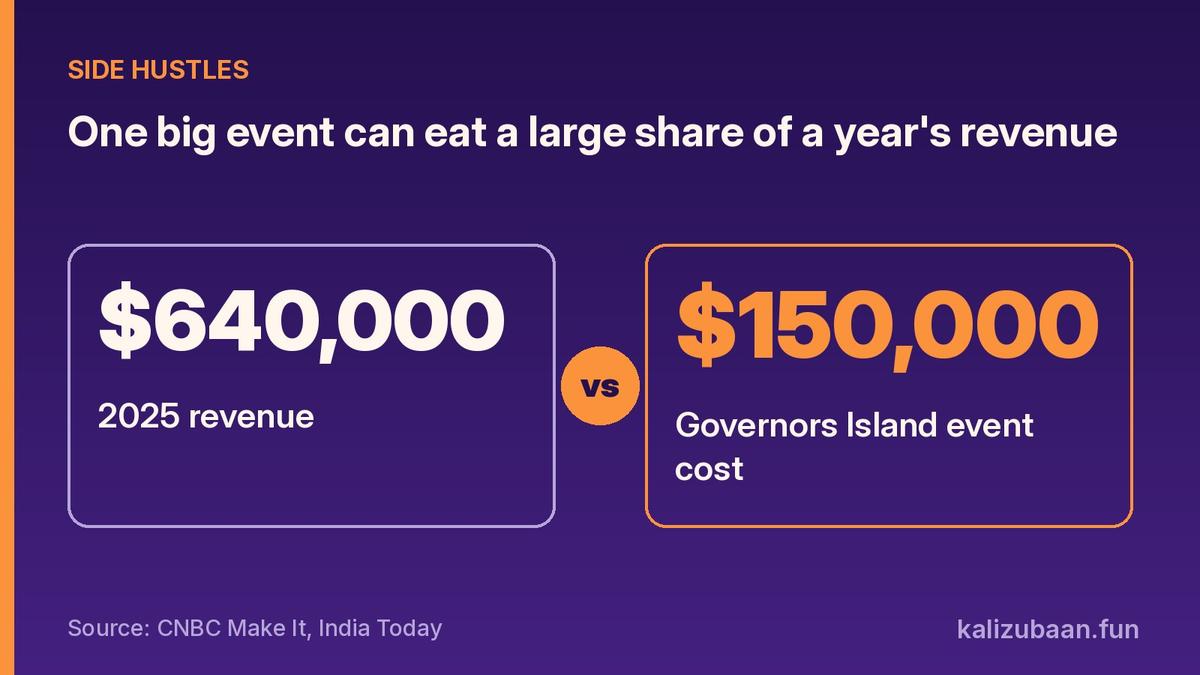
Yet in 2025, the club behind them brought in over $640,000, or about ₹6 crore, in revenue. And the founder says none of it went into his own pocket.
That is the story of Peak and Pace, a New York social fitness group started by Owen Akhibi Herrera, 27, while he worked in algorithmic trading sales at J.P. Morgan. It is a useful case study in how a community side hustle earns money, and why revenue is not income.
Quick answer
- Peak and Pace earned over $640,000 in 2025 revenue, almost entirely from ticketed parties, according to documents reviewed by CNBC Make It.
- The runs are free. Party tickets typically cost $15 to $25.
- The club runs at about a 15% profit margin overall, and the founder reinvests profits instead of taking a second salary.
- The cost was time: he worked 18-hour days for about a year alongside his job.
How a free run club makes money
The model is simple. The run is the free entry point, and the social events are the product.
Akhibi launched Peak and Pace in July 2024, after moving to New York from London. He wanted a way to make friends beyond nightlife.
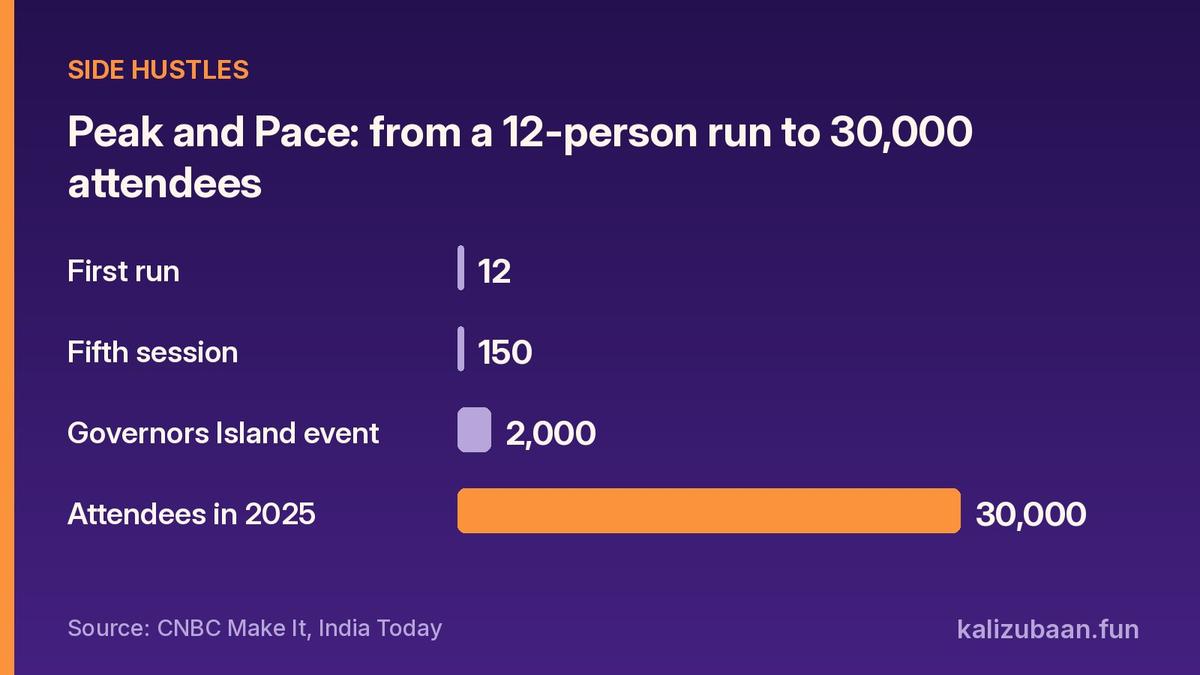
He posted on social media every day. By the fifth session, roughly 150 runners were showing up.
Then he hosted a party at a Manhattan bar that cost about $20 per person. As the runs grew, so did the parties, with DJs and food vendors to justify the ticket price.
Today the club also runs comedy nights, hiking trips and ski trips. Those ticketed events, not the runs, bring in almost all of the money.
The growth, in four numbers
Source: CNBC Make It, India Today
More than 30,000 people attended Peak and Pace events in 2025, Akhibi told CNBC Make It.
The biggest single event was a 5K run and after-party on Governors Island, an island off Manhattan reachable only by water. About 2,000 people bought tickets.
Revenue is not take-home pay
This is the part the viral headlines skipped. India Today points out that the $640,000 is revenue, not the founder's personal earnings.
At a 15% overall margin, most of the money goes straight back out to venues, DJs, food vendors, transport and staff. Not every party is profitable, Akhibi says.
The Governors Island run and festival alone cost $150,000 to organise, according to his LinkedIn post cited by India Today.
Source: CNBC Make It, India Today
And the profits he does make go back into the club. He has not taken a second salary from it.
The hidden cost: time and stress
Akhibi says running the club began to feel like a second full-time job. Including his day job, he worked 18-hour days for about a year.
Event days can go wrong in a big way. Before the island event, the boat meant to carry 18 trucks of supplies broke down, and he spent hours on the phone to avoid refunding 2,000 ticket holders. The last of about 30 portable toilets arrived as the first guests did.
He has since moved to San Francisco for a full-time role at an AI robotics lab. Peak and Pace now runs with a team of nine contractors, and he is looking for a head of operations.
Can this work in India?
Running is turning social in Indian cities too. India Today notes that in Bengaluru, groups meet at spots like Cubbon Park, Sankey Road and Kaikondrahalli Lake, often followed by breakfast or coffee.
India hosts more than 1,500 running events every year, the same report says. Globally, run club participation grew nearly 60% in 2024, according to Strava data cited by CNBC.
Ways Indian organisers could earn, as India Today suggests:
- Paid fitness experiences and weekend getaways.
- Merchandise.
- Collaborations with cafes and sports brands.
- Sponsored community events.
The same warning applies here. Venues, permissions, staff, transport and equipment cost money, and in India registration fees for big running events often cover only part of the cost, with sponsors filling the gap.
If you want to start one
- Keep the core activity free. That is what built Peak and Pace's crowd.
- Show up daily on social media. Akhibi credits daily posts for his early growth.
- Charge for experiences, not for the run. Parties, trips and collaborations carried his revenue.
- Track profit, not just ticket sales. A 15% margin leaves little room for one bad event.
- Check your job contract. He built this alongside a full-time job. Many Indian employers have moonlighting clauses, so read yours first.
- Tax note. Event income is taxable. This is information only, so check with a CA.
FAQs
Did the founder earn $640,000? No. That was the club's 2025 revenue. He says he reinvests the profits and takes no second salary from it.
How does a free run club make money? Through ticketed parties, comedy nights, hiking and ski trips. Party tickets typically cost $15 to $25.
How many people did it reach? More than 30,000 people attended its events in 2025, starting from a first run of 12.
Is it profitable? Overall it runs at about a 15% profit margin, though not every party makes money.
Do you run with a club in your city? Would you pay for its events?
Results vary; nothing here is a promise of income.
Sources
Tagged Topics
Keep reading

Thanks for reading Kali Zubaan
Explore more articles in Side Hustles or return to the main publication feed.