₹50,000 Salary to ₹2.28 Lakh: Her 4 Income Streams, Checked
An ex-Zomato employee says four income streams brought her ₹2,28,892 in September. Here is the breakdown, what was still unpaid, and what it means if you want to try it from India.
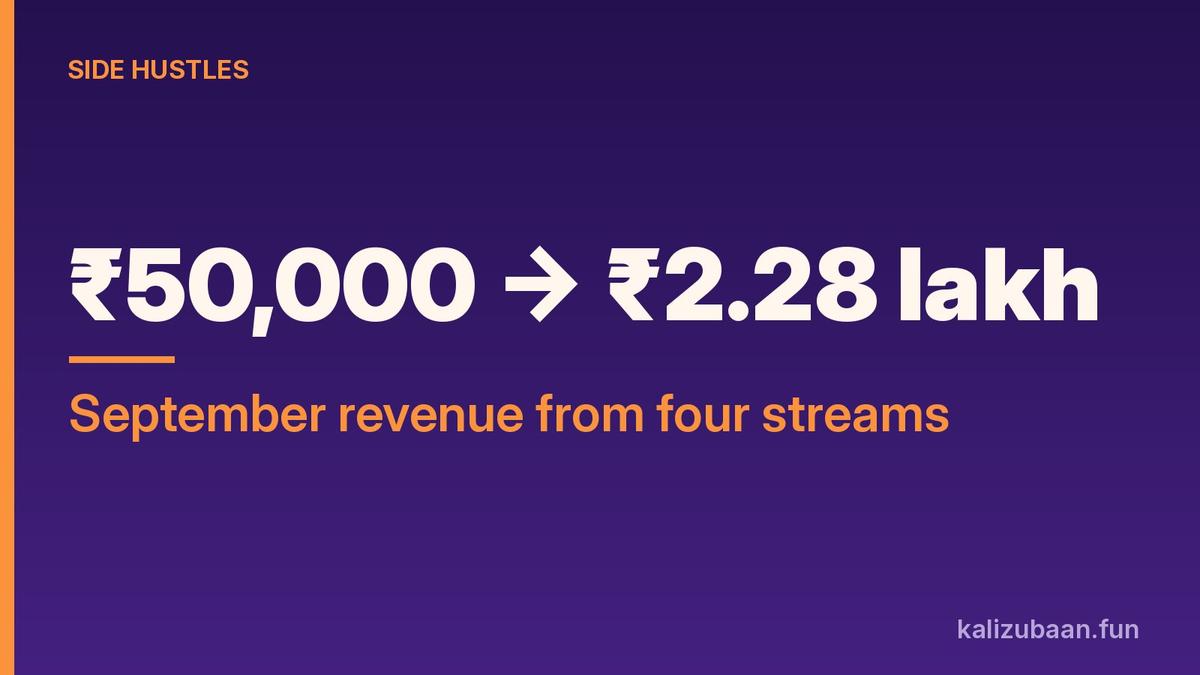
Five months ago, Varsha walked away from what she called her "perfect job" at Zomato. It paid Rs 50,000 a month. In September, by her own count, four separate income streams brought in ₹2,28,892, and she still called it a "down month".
That last line is the part most people scroll past. It is also the most useful part of the story.
Quick answer
- Varsha says she replaced a ₹50,000 monthly salary with four income streams that earned ₹2.28 lakh in September.
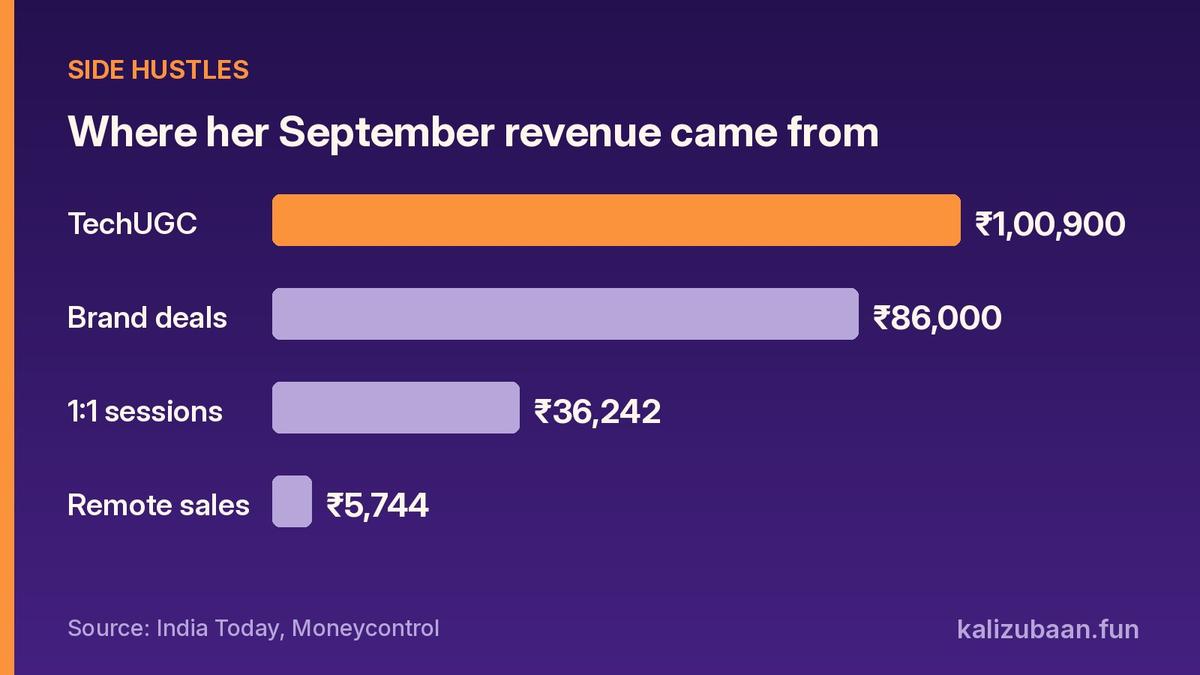
- Her biggest earner was tech user-generated content (TechUGC) at ₹1,00,900, followed by brand deals at ₹86,000.
- 66,000 of that brand money had not reached her bank account when she shared the numbers.
- These are self-reported figures from an Instagram video; Moneycontrol notes it has not independently verified them.
Who she is and what she claims
Varsha shared the breakdown in an Instagram video titled around replacing her Zomato salary with four income streams. India Today and Moneycontrol both reported the numbers.
"I quit my perfect job at Zomato five months back, and here's exactly how I replaced my Rs 50,000 monthly salary with my four different income streams in September," she said in the video, as quoted by Moneycontrol.
So the claim is specific. It is not "I make lakhs online". It is one month, four line items, and a total to the rupee. That kind of detail is rare in viral money posts, and it makes the story easier to study.
The four streams, line by line
Here is how the September total breaks down, using the figures she gave.
Source: India Today, Moneycontrol
1. TechUGC: ₹1,00,900. This was the largest stream. TechUGC means making content about technology products and services, such as apps, software and digital tools. Moneycontrol describes it as product demos, tutorials, explainers and videos that show how a product works. Brands often use this content in their own marketing.
2. Brand partnerships: ₹86,000. These are paid posts on her own social media page. This stream depends on her having an audience that brands want to reach.
3. One-on-one sessions: ₹36,242. She teaches people how to earn through TechUGC. In other words, part of her income comes from teaching the first stream.
4. Remote sales: ₹5,744. She was candid that this one "does not make me as much money yet".
Add them up and you get her reported total of ₹2,28,892.
The part that isn't on the thumbnail
Three details in her own words change how you should read the headline number.
It was revenue, not profit. She called the figure "total revenue". The reports don't mention her costs, taxes or tools, so you can't treat ₹2.28 lakh as take-home pay.
A big chunk hadn't arrived. Of the ₹86,000 in brand deals, she said "66,000 is yet to hit the bank". Brand payments that land weeks after the work is done are normal in creator work. Your rent, though, is due on a fixed date.
It swings month to month. She said September was "way less than what I made in July and in August". India Today put it plainly: unlike a fixed salary, income from brand deals, content projects and sessions can vary, and some payments take time to arrive.
None of this makes the story less impressive. It just means a salaried job and a stack of income streams are different kinds of money. One is predictable. The other has a higher ceiling and a lower floor.
Why stacking streams works better than one gig
Look at how her streams feed each other. The UGC work builds skill and a portfolio. The skill becomes something she can teach in paid sessions. Her own page earns brand deals, and also shows future clients what she can do.
That is the real lesson here. Instead of four random side gigs, she runs one skill sold four ways. If one stream has a slow month, the others can cover some of the gap.
How you could test this from India
If you are curious about tech content as a side hustle, here is a careful way to start without quitting anything.
- Pick one product category you already use. Apps, budgeting tools, AI tools, or gadgets you own. You need to explain them well, not just film them.
- Make three or four sample videos for free. Show a product solving one real problem. These become your portfolio.
- Pitch small brands directly. Many app startups need short demo videos and can't afford big agencies. LinkedIn and email work better than waiting to be discovered.
- Get paid properly. Use written agreements with payment dates. For foreign clients, PayPal, Wise or a bank transfer with a FIRA (the bank's foreign inward remittance certificate) keeps a clean record.
- Check your employment contract first. Many Indian companies have moonlighting or conflict-of-interest clauses. Read yours before you take paid work on the side.
Only once a stream pays reliably for a few months is it worth thinking about adding a second.
Mistakes to avoid
- Counting invoices as income. Track money received separately from money billed, because unpaid brand deals are common.
- Buying a course before trying the work. Make a few free samples first and see if you enjoy it.
- Quitting on one good month. Varsha's own numbers show how much a single month can dip.
- Ignoring tax. Freelance and creator income is taxable in India. Keep records and talk to a CA about how to file it.
FAQs
Is ₹2.28 lakh her monthly salary now? No. It is the revenue she reported for September from four streams, and she said it was lower than July and August. Part of it had not been paid yet.
What exactly is TechUGC? It is user-generated content about tech products: demos, tutorials, explainers and how-to videos that brands can use in their own marketing.
Have these numbers been verified? Not independently. They come from her Instagram video, and Moneycontrol's report carries a disclaimer that it has not verified the claims.
Do I need a big following to do UGC? Not for the UGC itself, since brands use the content on their own channels. Brand deals on your own page are the stream that depends on your audience.
What would you charge a brand for one product demo video? Share your rate in the comments.
Results vary; nothing here is a promise of income. Tax and contract points are general information only, so check with a CA or lawyer for your situation.
Sources
Tagged Topics
Keep reading
Thanks for reading Kali Zubaan
Explore more articles in Side Hustles or return to the main publication feed.